
Quick answer: TikTok’s new AI ad agent automates campaign creation and bidding, but regulated brands still need a human compliance check before anything goes live. Healthcare, legal, and finance advertisers should treat automated outputs the same way as agency-drafted creative: reviewed against industry rules before scaling spend, since the tool optimizes for performance, not compliance.
TikTok’s new AI ad agent automates campaign creation and optimization, which creates immediate compliance risks for healthcare, finance, and legal brands. These sectors must ensure that automated content adheres to strict advertising regulations before deploying the tool.
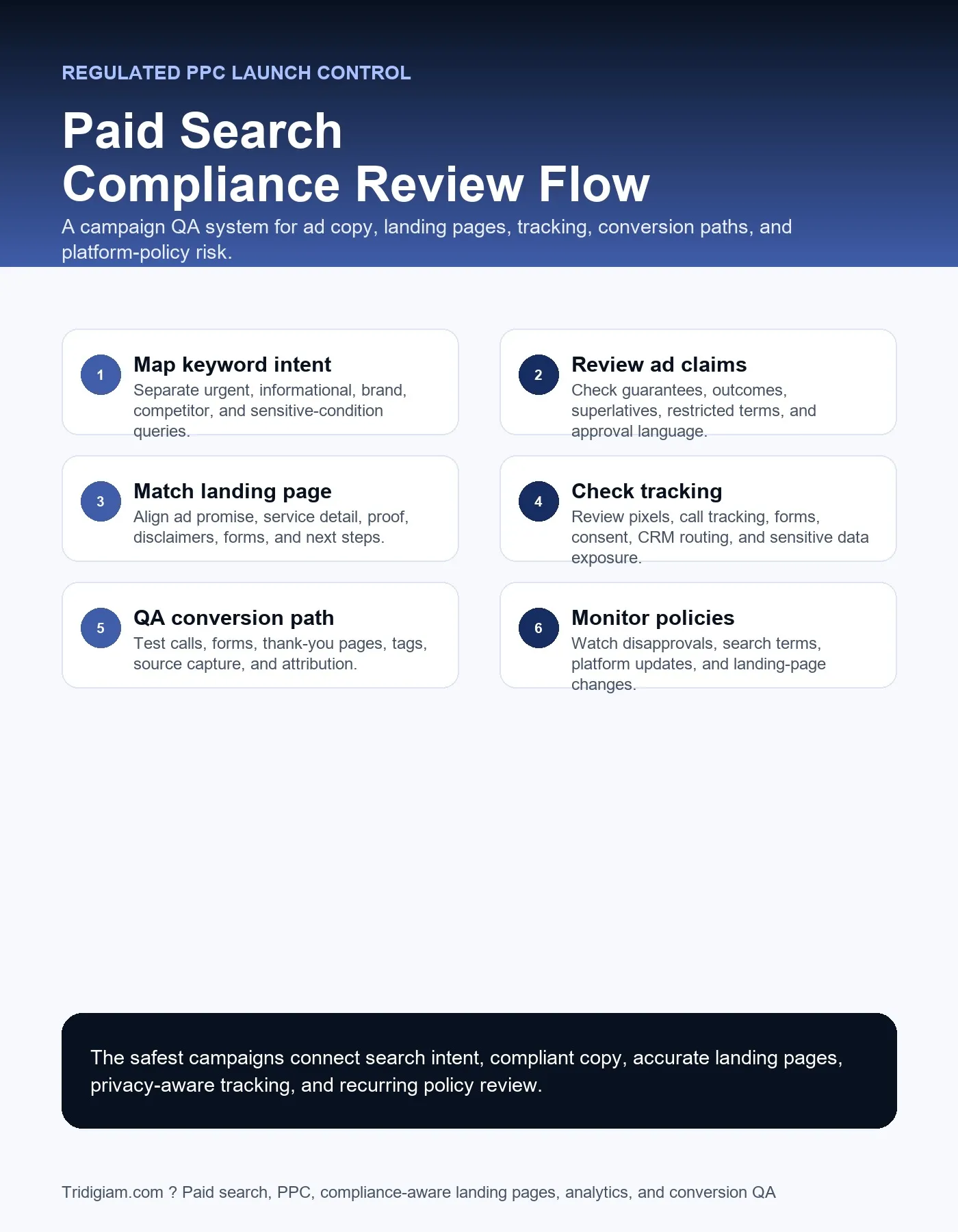
TikTok AI ad automation answer map
TikTok’s AI and automation tools can speed campaign setup, creative variation, optimization, and reporting, but regulated brands still need human review before automated outputs go live. Healthcare, finance, legal, addiction treatment, and other sensitive categories should treat AI-generated or auto-optimized TikTok ads as draft campaign assets, not compliance-approved creative.
- Separate automation from approval: Smart+, Automate Creative, Smart Creative, and automated rules can improve efficiency, but they do not replace legal, medical, financial, or brand review.
- Control creative claims: AI-enhanced videos, text variations, music swaps, hooks, and creator-style assets should be checked for personal attributes, sensitive claims, guarantees, and misleading outcomes.
- Protect sensitive audiences: regulated advertisers should avoid targeting, retargeting, lead forms, or event signals that expose health, financial, legal, or treatment-related intent.
- Use guardrails before scale: define what automation can change, who approves assets, which placements are allowed, and when a human must pause or override campaign changes.
- Measure qualified quality: track lead quality, compliant engagement, booked consults, downstream revenue, review outcomes, and creative fatigue-not only low-cost impressions or clicks.
Useful source anchors include TikTok’s overview of Smart+ automation, TikTok Ads Help on Automate Creative, TikTok Ads Help on Smart Creative, and TikTok Ads Help on Automated Rules. Tridigiam connects TikTok AI ad strategy to HIPAA-conscious paid ads, Meta AI ad review compliance, Google AI Mode ads, AI search trust signals, and HIPAA-compliant marketing.
Questions to answer before using TikTok AI ad automation
What parts of the campaign can AI change without review?
Define whether automation can adjust creative, copy, budget, bidding, placements, targeting, music, landing pages, or lead forms. Regulated brands should keep sensitive claims and audience decisions behind a human approval gate.
Which claims or signals could create regulated risk?
Review health, finance, legal, treatment, pricing, outcome, testimonial, before/after, and personal-attribute language before launch. Also inspect conversion events, lead forms, audiences, and retargeting rules for sensitive data exposure.
How will campaign quality be measured beyond automation efficiency?
Measure lead quality, booked consults, revenue quality, compliance review outcomes, creative fatigue, disapproved ads, complaint risk, and downstream conversion quality-not only CPM, CTR, or automated optimization lift.
Key Takeaways
- TikTok AI agents automate bidding but require human oversight for regulated industry compliance.
- Pre-approval workflows prevent automated tools from violating sensitive content adjacency rules.
- Native user-generated content formats outperform polished studio productions on TikTok feeds.
- Hyper leads in multi-platform agent autonomy for complex advertising campaign management.
- Strong first-second hooks capture attention before users scroll past short-form video ads.
How TikTok’s AI Ad Agent Automates Campaign Management
TikTok’s AI Ad Agent shifts the operational model from manual bid adjustments to automated decision-making across bidding, placement, and audience targeting. The system analyzes real-time performance data to optimize spend without requiring constant human intervention for routine tasks. This automation reduces the administrative burden on marketing teams while maintaining control over budget caps and campaign objectives.
Regulated brands in healthcare, finance, and legal sectors face a unique challenge with this level of autonomy. The AI does not inherently understand HIPAA privacy requirements, FTC advertising guidelines, or state-specific legal disclaimers. An algorithm optimizing for engagement might select targeting parameters or ad placements that conflict with strict compliance standards. Marketers must configure the agent within rigid guardrails to prevent unauthorized data usage or non-compliant creative variations.
The platform allows users to set specific constraints before the AI begins its optimization cycle. You can define maximum cost-per-acquisition thresholds and restrict audience exclusions based on sensitive interest categories. This setup ensures the automation works toward efficiency without violating industry regulations. The goal is to let the machine handle volume while humans manage risk.
Hyper research indicates that leading AI agents focus on cross-platform consistency, but TikTok’s native tool operates within its own ecosystem. This means compliance checks must happen at the input stage rather than relying on post-campaign reviews. Teams should audit pre-approved creative assets and target lists before activating automated bidding.
Manual oversight remains necessary for strategic alignment.
The AI executes tactics based on historical data patterns, which may not account for sudden regulatory changes or nuanced brand safety concerns. Marketing directors must review performance reports frequently to identify any drift in audience quality or messaging tone. By defining clear boundaries, agencies can leverage automation for scale while preserving the integrity of their client relationships. This approach balances speed with the careful stewardship required in regulated industries.
Navigating New Pre-Approval and Content Adjacency Rules for Regulated Brands
TikTok’s automated systems scan ad placements before they go live to ensure compliance with platform policies and adjacent content standards. This pre-approval process means your creative assets face stricter scrutiny than manual campaigns did in previous years. The AI agent does not just optimize for clicks; it evaluates whether the surrounding feed content aligns with brand safety guidelines.
Regulated industries must treat this automated review as a non-negotiable compliance checkpoint. Healthcare providers cannot assume that general wellness messaging will pass if it borders on medical advice. Legal firms must ensure their ads do not promise specific case outcomes or imply attorney-client relationships before engagement. Financial institutions need to verify that all risk disclosures are visible and unambiguous within the video frame. The platform’s adjacency rules prevent your ad from appearing next to controversial or adult content, which protects brand reputation but requires precise targeting controls.
You must build compliance checks into your creative production workflow before uploading assets to TikTok Ads Manager. Do not rely on the AI agent to self-correct regulatory violations after launch. Review every script and visual element against current advertising standards for your specific sector. This proactive approach reduces the risk of campaign disapproval or account suspension. It also ensures that your messaging remains consistent with broader compliance frameworks.
Work with legal counsel to define clear boundaries for automated content generation. Specify which claims require manual review before the AI agent can scale budget allocation. Use TikTok’s native targeting options to narrow audience reach and minimize exposure to inappropriate contexts. Monitor performance metrics closely during the initial launch phase. Adjust creative elements if disapproval rates exceed acceptable thresholds. This disciplined method allows you to leverage automation while maintaining strict regulatory adherence.
Compliance Challenges: Why Healthcare and Finance Brands Must Proceed with Caution
Regulated brands face immediate friction when automated systems select placements next to unvetted user content. TikTok’s AI agent optimizes for engagement and conversion metrics without inherent awareness of industry-specific compliance boundaries. A healthcare advertisement appearing beside a video discussing unverified medical treatments creates immediate reputational risk and potential regulatory scrutiny. The platform’s automation handles bidding and targeting efficiency, but it does not automatically filter for contextual safety in the way a human reviewer would.
Finance and legal sectors operate under strict advertising standards that prohibit misleading claims or unauthorized endorsements. An AI-driven campaign might inadvertently place a loan advertisement adjacent to content featuring financial advice from unlicensed sources. This adjacency risk requires brands to implement additional oversight layers beyond standard platform settings. Marketing teams must define clear negative placement parameters and monitor feed context regularly to prevent brand association with non-compliant material.
Data privacy regulations impose further constraints on how user information flows into automated decision-making processes. Healthcare organizations must ensure that patient data never enters the optimization loop, regardless of the AI agent’s ability to infer audience segments from broader signals. Finance brands dealing with sensitive credit or investment data face similar restrictions under federal and state privacy laws. Relying solely on platform defaults exposes these industries to significant compliance gaps.
- Audit automated placement reports weekly for contextual alignment.
- Define strict exclusion lists for sensitive content categories.
- Verify that no personally identifiable information feeds into AI targeting models.
Proactive governance separates compliant automation from reckless deployment. Brands that integrate human review checkpoints with TikTok’s automated tools maintain control over their messaging environment. This approach allows marketers to leverage efficiency gains while protecting against regulatory violations. Tridigiam helps regulated clients build these safeguards into their automated workflows.
Hyper vs. Native Tools: Comparing Multi-Platform AI Agent Autonomy in 2026
Platform-native AI tools restrict automation to the specific ecosystem they inhabit. TikTok’s internal agent optimizes bids and placements strictly within its own ad server. It cannot push creative assets or adjust budgets for Facebook or Google campaigns in a single workflow. This siloed approach forces marketing teams to manage multiple dashboards and reconcile data across separate platforms.
Multi-platform agents like those from Hyper operate with broader autonomy. These tools connect directly to the API layers of several major ad networks simultaneously. A regulated brand can deploy a unified strategy that adjusts spend based on cross-channel performance metrics rather than isolated platform data. This centralization reduces the risk of conflicting messages appearing across different social channels.
The difference in control depth matters for compliance-heavy sectors. Native tools often lack granular oversight features required by healthcare or financial institutions. They may optimize for engagement without checking if a placement violates industry-specific advertising standards. External agents allow teams to set hard boundaries on budget allocation and content approval before the algorithm executes changes.
Agencies serving these clients must evaluate where automation ends and human oversight begins. Native solutions offer ease of use but limit strategic flexibility. Multi-platform tools provide higher autonomy but require rigorous configuration to prevent policy breaches. Choosing the right tool depends on whether the priority is speed or strict regulatory adherence.
Crafting High-Converting Creative with First-Second Hooks and Native UGC
The first two seconds of video determine whether a viewer scrolls past or watches the full message. TikTok’s algorithm weighs early engagement heavily, forcing creative teams to front-load value immediately rather than building up to a point. This structural requirement changes how regulated brands approach storytelling. Complex topics like legal services or healthcare benefits cannot rely on slow-burn narratives. The hook must appear before the audience loses interest.
User-generated content (UGC) style assets perform better than polished corporate videos because they feel native to the platform. TikTok data shows that creators who mimic organic posting styles see higher retention rates. Brands should script hooks that address a specific pain point in the first sentence. A finance brand might start with “Stop paying hidden fees.” A healthcare provider could open with “Three signs you need a specialist now.” These direct statements capture attention without violating compliance standards.
Visual cues matter just as much as audio. Text overlays that appear instantly reinforce the spoken hook for viewers watching without sound. Keep the first frame static and clear. Avoid rapid cuts or flashy transitions that distract from the core message. The goal is clarity, not spectacle.
Regulated industries must balance this need for speed with strict messaging guidelines. Every second counts toward conversion, but every word also carries legal weight. Tridigiam.com structures creative briefs to satisfy both requirements. We draft hooks that are engaging and compliant simultaneously. This approach prevents costly revisions later in the approval process.
- Start with a direct statement or question related to the user’s problem.
- Use natural lighting and casual settings to mimic authentic UGC.
- Place on-screen text at eye level within the first second.
Native content drives trust. Polished ads often trigger skepticism, especially in sensitive sectors. Audiences respond to authenticity. Automated tools can optimize delivery, but humans must craft the initial creative strategy. The AI agent handles bidding and placement efficiency. Your team focuses on message integrity and hook effectiveness. This division of labor ensures campaigns run smoothly while staying within regulatory boundaries.
Integrating TikTok One Features for Enhanced Ad Performance and Analytics
TikTok One consolidates creative testing, campaign management, and performance data into a single interface. Regulated brands use this unified dashboard to monitor automated campaigns without switching between disconnected analytics platforms. Centralizing these functions reduces the administrative overhead of tracking compliance metrics across multiple tools.
The platform’s AI features generate recommendations for budget allocation and audience segmentation based on real-time engagement signals. Marketing teams in healthcare or finance can review these suggestions before applying them to live ads. This manual approval step preserves control over sensitive targeting parameters while leveraging machine learning efficiency. The system identifies high-performing creative elements and suggests similar variations for A/B testing.
TikTok One provides detailed attribution data that links ad spend directly to conversion events.
Finance brands track cost per lead with greater precision when using native reporting tools. Legal firms monitor click-through rates to ensure their automated bids align with strict budget caps. Healthcare organizations verify that their ad placements remain within acceptable content adjacency boundaries. The dashboard flags anomalies in spend patterns or performance dips before they escalate into larger issues.
Teams integrate custom conversion pixels to capture specific user actions beyond standard metrics. These pixels feed data back into the AI agent, refining its optimization logic over time. Regulated industries benefit from this closed-loop system because it maintains a clear audit trail for every automated decision. Compliance officers can review historical performance data to demonstrate adherence to internal policies and external regulations.
The platform supports advanced segmentation options that allow brands to exclude sensitive audiences or restrict geographic targeting. This level of control ensures that automated campaigns do not inadvertently reach prohibited user groups. Marketing directors configure these rules within TikTok One before launching any AI-driven initiatives. The combination of automated efficiency and manual oversight creates a sustainable workflow for regulated sectors.
Regular audits of the dashboard data help teams identify trends in user behavior and campaign performance. These insights inform future creative strategies and budget allocations. Brands that maintain disciplined monitoring practices can scale their TikTok presence while minimizing compliance risks. The integration of analytics and automation tools streamlines the entire campaign lifecycle from planning to execution.
Strategic Roadmap: Launching Compliant Automated Campaigns on TikTok in 2026
Regulated brands must establish strict boundary parameters before allowing AI agents to adjust bids or shift budgets. Without predefined constraints, automated systems may optimize toward high-volume placements that violate industry-specific advertising standards.
Start by defining acceptable audience segments and exclusion lists within the TikTok Ads Manager. This prevents the algorithm from targeting protected groups or serving financial advice content next to unrelated lifestyle material. Set daily spend caps that align with your compliance review cycle so human oversight remains possible at each budget threshold.
Integrate a pre-flight checklist for every creative asset before uploading it to the automated queue. Review all claims against current FTC guidelines and internal legal approval records. Remove any language that implies guaranteed returns or definitive health outcomes, as these trigger manual reviews regardless of automation settings.
Use TikTok’s built-in performance analytics to monitor early campaign signals. Look for sudden spikes in traffic from non-compliant demographics or regions where you lack licensing. Pause the agent immediately if metrics deviate from the baseline established during the initial testing phase.
Maintain a documented audit trail of every automated decision and manual override. This record supports internal compliance reviews and external audits. It also provides clear data for refining your strategy in future quarters based on what drove legitimate engagement versus what triggered policy flags.
| Tool Type | Automation Scope | Compliance Trade-off |
|---|---|---|
| Native (platform-specific) | Restricted to one ad ecosystem (e.g., TikTok’s own agent) | Easy to use, but often lacks the granular oversight features regulated industries need |
| Multi-platform (e.g., Hyper) | Connects to the API layers of multiple ad networks at once for a unified cross-channel strategy | Higher autonomy, but requires rigorous configuration to prevent policy breaches |
Conclusion
TikTok’s AI ad agent changes how brands manage paid social traffic. Automated tools can optimize bids faster than manual teams. Regulated industries face stricter compliance requirements for ad content. You must review automated outputs to avoid policy violations. Tridigiam.com helps healthcare, finance, and legal clients balance automation with strict regulatory standards. We focus on measurable growth while protecting your license. Contact us to build a compliant strategy that leverages new AI capabilities safely.
Frequently Asked Questions
How does TikTok’s AI ad agent affect compliance for regulated industries?
The AI agent automates campaign management, which requires brands to implement stricter pre-approval workflows. Regulated sectors must verify that automated content adheres to specific industry rules before publication. This prevents non-compliant material from appearing in ads or adjacent placements without human oversight.
What are the primary risks of using AI for ad automation?
Automated systems may generate content that violates platform policies or industry regulations if not properly constrained. Brands face compliance risks when AI selects inappropriate creative assets or targets sensitive audiences. Human review processes remain necessary to validate output against legal and brand standards.
Which features should regulated brands prioritize in TikTok AI tools?
Brands should look for platforms offering granular control over content approval and targeting parameters. Tools that support multi-platform consistency while allowing manual overrides provide better safety. Features enabling strict adherence to brand guidelines help maintain compliance across automated campaign executions.
Does AI automation replace the need for human strategy?
No, AI handles execution tasks like bidding and placement optimization. Human strategists must define compliance boundaries, creative direction, and performance goals. Expert oversight ensures that automated actions align with regulatory requirements and long-term brand objectives rather than just short-term metrics.
How can brands measure the success of AI-driven campaigns?
Success depends on tracking compliance adherence alongside standard performance metrics like engagement and conversion rates. Brands should monitor for policy violations or negative sentiment. Regular audits of automated content ensure it meets regulatory standards while achieving desired business outcomes.
Want more like this? Browse our free CRO, SEO, and AI search guides.

Written and reviewed by Chris Goodman, CEO of Tridigiam
Founder of a Las Vegas marketing agency building AI-visibility and compliance-aware marketing systems for regulated industries – healthcare, addiction treatment, and aesthetics. LinkedIn
Resources
Need marketing that actually moves the needle?
Tridigiam is a Las Vegas marketing and advertising agency built for regulated and growth-focused businesses. Call (702) 748-7005 or request a consultation.

Explore knowledge from Chris Goodman, a marketing expert with extensive agency and small business experience, specializing in innovative advertising strategies. Chris has a Bachelor’s in Marketing from RMIT, years working in advertising agencies servicing clients, and years of experience working with small to medium sized businesses operating within regulated industries.