

Quick answer: Meta is moving ad review to automated, AI-driven systems that flag nuanced compliance issues faster than manual review did. For healthcare, finance, legal, and med spa advertisers, that means creative and copy need to meet regulatory standards before submission, since automated flags can pause or reject a campaign with less warning than before.
Meta’s transition to automated ad review systems changes how healthcare, finance, and legal firms manage their digital campaigns. These agencies must adjust their workflows to ensure every ad meets strict regulatory standards before the algorithm flags or blocks it.
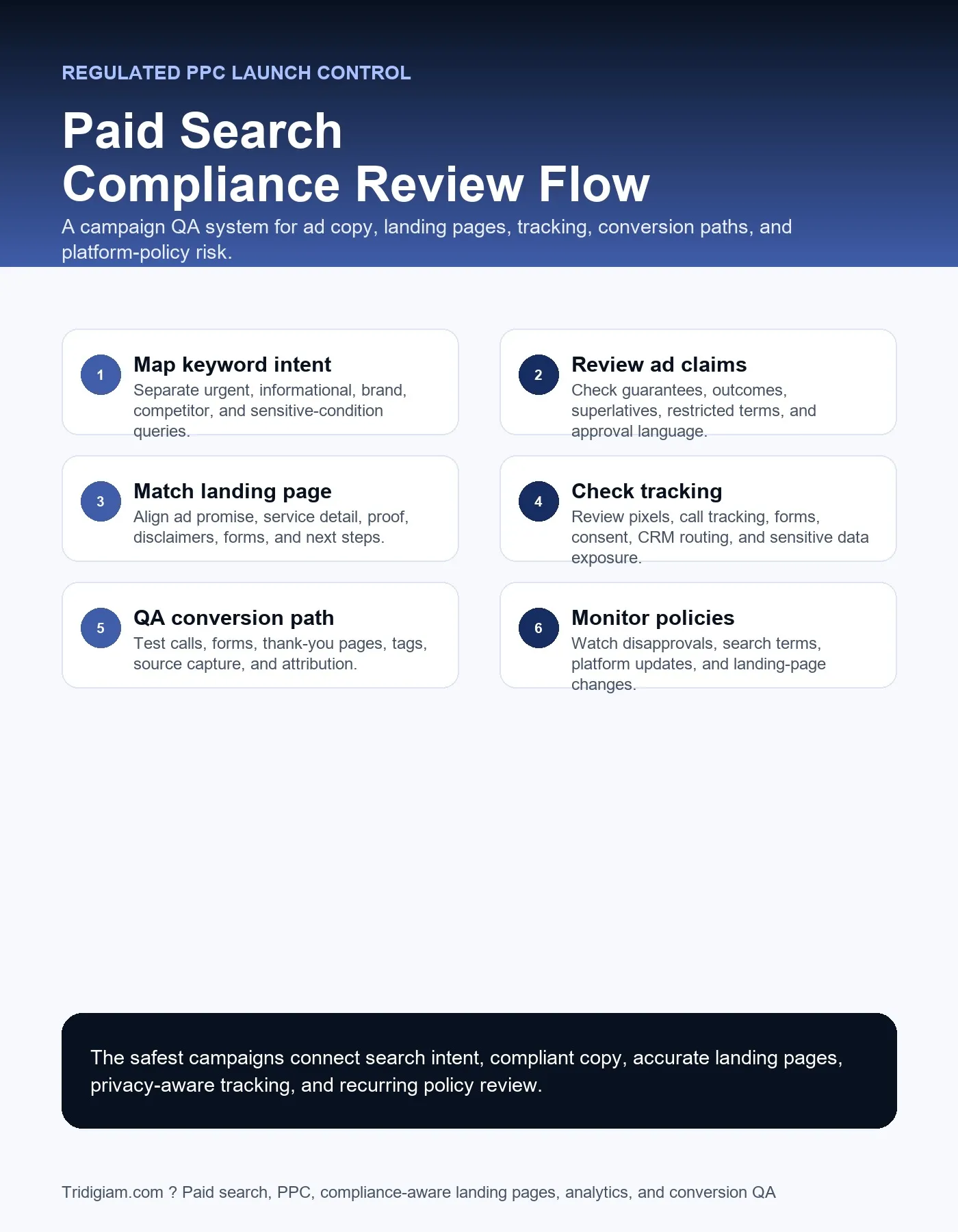
Meta AI ad review compliance answer map
Meta’s AI-driven ad review can speed policy enforcement, but regulated brands should not treat automated approval as compliance approval. Healthcare, finance, legal, addiction treatment, and other sensitive advertisers still need human review for claims, targeting, data use, landing pages, and lead forms before ads go live.
- Separate platform approval from legal compliance: an ad can pass Meta review and still create HIPAA, FTC, state privacy, financial, legal, or professional-board risk.
- Review sensitive claims before upload: health outcomes, financial benefits, legal results, testimonials, before/after language, and personal-attribute copy need human review before Meta’s systems evaluate the ad.
- Audit data flows: pixels, Conversions API, lead forms, CRM syncs, custom audiences, and retargeting workflows should not send prohibited or sensitive information to Meta.
- Prepare appeal documentation: regulated advertisers should keep claim substantiation, landing-page versions, approval notes, and policy rationale available when automated review misclassifies an ad.
- Measure safe performance: track qualified leads, booked consults, compliant engagement, CRM outcomes, and review friction—not just approvals, CPM, or CTR.
Useful source anchors include Meta’s Advertising Standards, Meta’s Health and Wellness ad standard, Meta Business Help on prohibited information, and Meta Business Help on privacy and data use requirements for Meta Business Tools. Tridigiam connects Meta AI ad review to Meta ads without pixels, HIPAA-conscious paid ads, TikTok AI ad automation, Google AI Mode ads, and HIPAA-compliant marketing.
Questions to answer before relying on Meta AI ad review
Which risks does Meta review not cover for this campaign?
List the legal, medical, financial, privacy, professional-board, and client-specific requirements that exist outside Meta’s platform rules. Platform approval should be treated as one checkpoint, not the final compliance decision.
Could the ad, landing page, or tracking reveal a sensitive personal attribute?
Review copy, creative, forms, events, custom audiences, CRM syncs, retargeting, and conversion tracking for signals that could reveal health conditions, financial status, legal issues, addiction treatment interest, or other sensitive attributes.
What documentation is needed if an ad is rejected or approved incorrectly?
Keep substantiation, approval notes, screenshots, landing-page copies, policy rationale, and escalation paths so the team can appeal rejected ads or pause approved ads that still create regulated-industry risk.
Key Takeaways
- Meta now requires clear disclosure for all AI-generated advertising content.
- Healthcare advertisers face stricter verification under updated Meta policies.
- Automated tools help teams detect compliance violations before ads launch.
- Multimodal review systems scan text, images, and video simultaneously.
- Transparency in AI usage remains a core requirement for 2026 campaigns.
Understanding the Shift to AI-Driven Ad Review in Meta’s 2026 Policy
Meta processes billions of ad impressions daily, making human review for every submission impossible. The company has moved from manual checks to automated systems that scan text, images, and video simultaneously. This multimodal approach allows the platform to detect policy violations in real time rather than after a campaign launches. Regulated industries must understand this technical shift because their ads face immediate rejection if they trigger specific compliance flags.
The 2026 update focuses on transparency regarding artificial intelligence. Advertisers using AI-generated content must disclose it clearly. This rule applies to healthcare providers, financial services, and legal firms alike. The system flags ads that fail to meet these disclosure standards or that promote unverified claims. Meta states that AI drives performance improvements while enforcing stricter health, environmental, and consumer (HEC) policies.
Traditional keyword filtering is no longer sufficient. The new system analyzes context and intent across multiple media formats. An image might appear neutral, but combined with specific copy, it could violate financial advice regulations or healthcare advertising standards. Marketers can no longer rely on vague disclaimers to bypass these filters. The algorithm evaluates the entire creative package for compliance risks.
This shift changes how agencies prepare campaigns for launch. Teams must audit assets before submission rather than hoping for approval. Understanding the mechanics of this AI review process helps prevent account suspensions. It also reduces wasted budget on disapproved ads. Research indicates that proactive compliance strategies yield better long-term results than reactive fixes. Agencies should align their creative workflows with these automated review capabilities to maintain steady ad delivery.
Key Changes: Stricter HEC Enforcement and Multimodal Review Processes
Meta’s 2026 policy updates require advertisers to submit verifiable credentials for healthcare offerings, moving beyond simple self-declarations. This shift targets the Health Care and Medical Services category with renewed scrutiny.
The platform now employs multimodal review systems that analyze text, images, and video simultaneously. AI models detect discrepancies between visual claims and textual descriptions in real time. A med spa ad showing dramatic skin results must align precisely with the copy’s medical assertions. If the image implies a clinical outcome not supported by the text, the system flags the creative for further inspection or rejection.
This automated scrutiny reduces the window for non-compliant ads to run before detection. Regulated marketers face stricter enforcement on health claims that lack proper substantiation. Financial services advertisers encounter similar hurdles when promoting investment products without clear risk disclosures. The system scans for missing disclaimers in both audio tracks and overlay text.
Legal professionals advertising case results must ensure their creatives do not promise specific outcomes. Meta’s tools now cross-reference visual cues with policy databases to identify prohibited language patterns. This approach limits the effectiveness of vague or misleading imagery that previously slipped through human review queues.
Advertisers need to audit their creative assets against these updated standards before submission. Using compliance-focused AI tools can help identify potential violations early in the production process. Brands that integrate these checks into their workflow reduce rejection rates and maintain account standing. Meta’s enforcement mechanisms prioritize user safety by filtering out unverified health and financial claims.
The multimodal approach ensures consistency across all ad formats. Short-form video ads on Instagram Reels face the same rigorous standards as static image posts on Facebook. This uniformity simplifies compliance efforts for agencies managing cross-platform campaigns. Marketers must adapt their creative strategies to meet these heightened technical and regulatory requirements.
Failure to comply results in immediate ad disapproval or account restrictions. The system does not offer grace periods for repeated violations in sensitive categories. Advertisers should document their compliance verification steps to support any appeals. This documentation provides evidence of good faith efforts during manual reviews if automated decisions are contested.
Mandatory Compliance: Disclosing AI-Generated Content and Verifying Healthcare Advertisers
Meta requires advertisers to label creative assets produced by generative AI. This disclosure rule applies to text, images, and video content in campaigns across Facebook and Instagram platforms. Healthcare marketers must verify that their ad copy meets this transparency standard before submission.
The platform’s automated review systems scan for undisclosed synthetic media. If the algorithm detects AI-generated elements without a proper label, it flags the ad for policy violation. This enforcement mechanism reduces manual oversight but increases the risk of automatic disapproval for non-compliant creatives. Regulated industries face stricter scrutiny because misleading health claims can cause immediate account suspension.
Verification steps extend beyond simple content labeling. Advertisers in healthcare, finance, and legal sectors must provide proof of professional credentials or business legitimacy. Meta cross-references these details against public databases and internal compliance records. The goal is to prevent unqualified entities from promoting medical services or financial products. This process adds friction to the campaign launch timeline but protects consumers from fraudulent offers.
- Label all AI-generated visuals and text using Meta’s designated disclosure tool.
- Submit valid professional licenses for healthcare practitioners featured in ads.
- Audit legacy campaigns to ensure older assets meet new transparency rules.
Failure to disclose AI use results in restricted reach or account penalties. The platform prioritizes user trust by making synthetic content obvious. Marketers should integrate disclosure checks into their creative approval workflow. This proactive approach prevents last-minute rejections during peak advertising periods. Clear labeling builds audience confidence and aligns with broader regulatory expectations for honesty.
Tools like Meta’s AI performance updates highlight the shift toward automated enforcement. Agencies must adapt their review processes to match these technical changes. Consistent compliance ensures long-term access to Meta’s advertising inventory.
Navigating Transparency Requirements for Regulated Industry Advertisers
Advertisers must provide clear disclaimers for any content created with artificial intelligence tools. Meta’s updated guidelines require explicit labeling of AI-generated imagery and text to maintain user trust and regulatory alignment. This transparency rule applies across all verticals, but it carries heavier weight for healthcare providers and financial institutions facing strict disclosure mandates.
Regulatory bodies like the FTC monitor advertising claims closely. The Federal Trade Commission has issued guidance stating that deceptive practices in digital advertising violate consumer protection laws. FTC enforcement actions often target ambiguous health claims or hidden financial risks rather than mere formatting errors. Advertisers who fail to distinguish between human-written copy and machine-generated assets risk violating truth-in-advertising statutes.
Med spa marketers face specific scrutiny regarding before-and-after photos. These images must accurately represent typical patient outcomes without digital manipulation that misleads viewers. Legal firms advertising personal injury services must clearly state that results vary based on individual case facts. Financial advisors promoting investment products need to include risk disclosures that remain legible even when AI resizes assets for mobile feeds.
The platform’s multimodal review system scans text overlays, video audio, and visual elements simultaneously. This means a compliant headline does not save an ad if the accompanying video contains unsubstantiated claims. Teams should audit creative assets against both Meta’s policy handbook and applicable industry regulations before submission. Tridigiam.com builds workflows that embed these checks into your production cycle.
- Verify all AI-generated disclosures appear in the primary ad copy, not just in landing page footers.
- Audit video captions to ensure they match the spoken message and include required risk warnings.
- Confirm that image editing tools do not alter factual representations of medical results or financial projections.
Leveraging AI Tools for Automated Compliance Checks and Risk Mitigation
Automated compliance scanners analyze ad copy against regulatory databases before campaigns launch. This pre-flight check catches prohibited claims in healthcare and financial services ads that human reviewers might miss during high-volume periods.
Regulated industries face strict scrutiny on truth-in-advertising standards. A single misplaced guarantee or unverified health claim can trigger account suspensions under Meta’s updated enforcement protocols. AI-driven review platforms scan text, images, and video metadata to flag potential violations related to HIPAA privacy concerns or FTC disclosure requirements. These tools reduce the risk of accidental non-compliance by identifying risky keywords and visual cues before submission.
The speed of automated checks matters for campaign agility. Marketers can iterate on creative assets without waiting days for manual policy reviews. This efficiency allows teams to maintain strict compliance standards while keeping ad spend active. Tools that integrate directly with Meta’s advertising API provide real-time feedback on policy adherence. They highlight specific sections of an ad that may violate current rules regarding sensitive health conditions or financial promises.
- Use AI to scan for prohibited medical claims before publishing healthcare ads.
- Verify that all financial performance statements include required risk disclosures.
- Check visual assets for unauthorized use of licensed brand elements or patient data.
AdAmigo.ai notes that leveraging artificial intelligence for policy adaptation helps brands stay ahead of shifting platform rules AdAmigo.ai. Their research suggests that automated tools can identify compliance gaps faster than manual review processes. This approach supports consistent adherence to industry-specific regulations across multiple ad formats. Teams using these systems report fewer account disruptions and smoother campaign launches. The technology acts as a first line of defense against policy violations.
Optimizing Ad Performance While Maintaining Strict Regulatory Standards
Regulated advertisers must align creative testing with compliance checkpoints to prevent wasted spend on rejected assets. Meta’s 2026 policy updates prioritize speed through AI-driven review, which accelerates approval cycles for compliant ads but instantly blocks those violating healthcare or financial service rules Meta. This shift demands that performance optimization strategies integrate legal and regulatory standards from the initial concept phase rather than treating compliance as a final review step.
Marketers in healthcare, finance, and legal sectors face unique constraints where standard A/B testing methods can trigger policy violations. For instance, varying claims about treatment outcomes or financial returns often crosses into prohibited territory under stricter Health, Beauty, and Consumer Goods enforcement guidelines 1ClickReport. Ad creatives must remain within specific textual boundaries while still engaging target audiences effectively.
Audience segmentation provides a safe avenue for performance improvement without altering risky creative elements. Refining targeting parameters based on verified demographic data allows advertisers to improve relevance scores and lower cost-per-click metrics while keeping ad copy static and compliant AuditSocials. This approach separates performance variables from compliance risks.
- Test landing page variations to improve conversion rates without changing the ad creative that underwent review.
- Adjust bidding strategies and budget allocations based on real-time performance data rather than modifying prohibited claims.
- Utilize Meta’s Advantage+ shopping campaigns, which rely on existing product catalogs that have already passed compliance checks Birchbox.
Focusing optimization efforts on technical delivery and audience precision preserves campaign longevity. This method ensures that high-performing ads continue to run without interruption from automated review systems. Advertisers achieve sustainable growth by respecting regulatory boundaries while maximizing platform efficiency.
Strategic Action Plan: Adapting Your Meta Advertising Workflow to the New Policy
Build a pre-launch review checklist that addresses Meta’s multimodal analysis before you submit any creative asset. The platform now evaluates text, audio, and visual elements simultaneously, meaning a compliant headline paired with misleading imagery will trigger an automatic rejection. You must audit every component of the ad unit against specific regulatory constraints for your sector.
Healthcare advertisers need to verify that patient testimonials include required consent disclosures and do not imply guaranteed outcomes. Legal professionals must ensure disclaimers remain visible across all device formats, including mobile stories where screen real estate is limited. Financial institutions should check that risk warnings appear with equal prominence as performance claims. This step prevents the AI reviewer from flagging subtle non-compliance issues that human reviewers might miss during initial submission.
Implement a standardized approval workflow within your team to catch these errors early. Assign specific roles for creative review, compliance verification, and final authorization. Use project management tools to track asset versions and approval timestamps. This structure creates a clear audit trail should Meta request documentation regarding your advertising practices. It also reduces the friction of last-minute edits when campaigns are ready to launch.
- Define strict handoff protocols between creative teams and compliance officers.
- Schedule weekly audits of active campaigns to ensure ongoing alignment with policy updates.
- Maintain a centralized library of approved disclaimers and verified credentials for quick access.
Meta’s shift toward AI-driven review demands proactive process adjustments rather than reactive fixes. Advertisers who integrate compliance checks into their production timeline experience fewer rejection rates and smoother campaign launches. The About Meta report highlights how AI tools enhance performance, but only when advertisers feed the system high-quality, compliant data. Structured workflows protect your budget and maintain brand integrity in regulated markets.
| Compliance Step | What It Involves |
|---|---|
| Label all AI-generated visuals and text | Use Meta’s designated disclosure tool for any generative-AI content in the ad |
| Submit valid professional licenses | Required for healthcare practitioners featured in ads, cross-referenced against public databases |
| Audit legacy campaigns | Ensure older assets meet the new AI-disclosure and transparency rules |
Conclusion
Meta’s move toward AI-driven ad review changes how regulated industries manage compliance. Automated systems flag policy violations faster but may misinterpret nuanced legal or medical claims. Your marketing team needs a strategy that aligns creative freedom with strict regulatory boundaries. Tridigiam helps healthcare, finance, and legal firms adapt to these platform changes. We focus on maintaining campaign stability while respecting compliance requirements. Contact us to review your current ad policies and ensure your messaging remains safe and effective.
Frequently Asked Questions
How does Meta’s new AI review affect healthcare advertisers?
Meta now uses multimodal AI to scan text, images, and video for policy violations. Healthcare advertisers face stricter enforcement on health claims and must verify credentials. This automated system flags non-compliant content faster, requiring brands to audit creatives before submission to avoid account restrictions.
Must I disclose if my ad uses AI?
Yes, Meta requires transparency for AI-generated content. You must label ads created with generative tools so users understand the origin. Failing to disclose synthetic media violates updated policies and risks immediate disapproval or account suspension for regulated industries like finance and legal services.
What compliance steps should regulated brands take?
Audit all creatives against current Meta policies before launching. Use automated tools to scan for restricted health claims or misleading financial promises. Ensure advertiser verification is complete, especially for healthcare providers. Regularly review account status to catch policy updates early.
Can AI tools help maintain compliance?
AI tools can automate compliance checks by scanning ad copy and visuals against policy databases. They identify potential violations before submission, reducing rejection rates. These platforms also optimize targeting within regulatory boundaries, ensuring campaigns remain effective while adhering to strict industry standards.
What happens if my ad violates the new rules?
Violations trigger automated disapproval or account limitations. Repeated issues may lead to permanent bans. Meta’s AI system enforces policies consistently, so understanding specific restrictions for your industry prevents costly disruptions. Regular monitoring helps maintain good standing.
Want to check where you stand? Run our free Meta Ads Policy Compliance Checker — it walks through the same risk areas regulators and Meta’s own review team look for.

Written and reviewed by Chris Goodman, CEO of Tridigiam
Founder of a Las Vegas marketing agency building AI-visibility and compliance-aware marketing systems for regulated industries — healthcare, addiction treatment, and aesthetics. LinkedIn
Resources
Need marketing that actually moves the needle?
Tridigiam is a Las Vegas marketing and advertising agency built for regulated and growth-focused businesses. Call (702) 748-7005 or request a consultation.

Explore knowledge from Chris Goodman, a marketing expert with extensive agency and small business experience, specializing in innovative advertising strategies. Chris has a Bachelor’s in Marketing from RMIT, years working in advertising agencies servicing clients, and years of experience working with small to medium sized businesses operating within regulated industries.