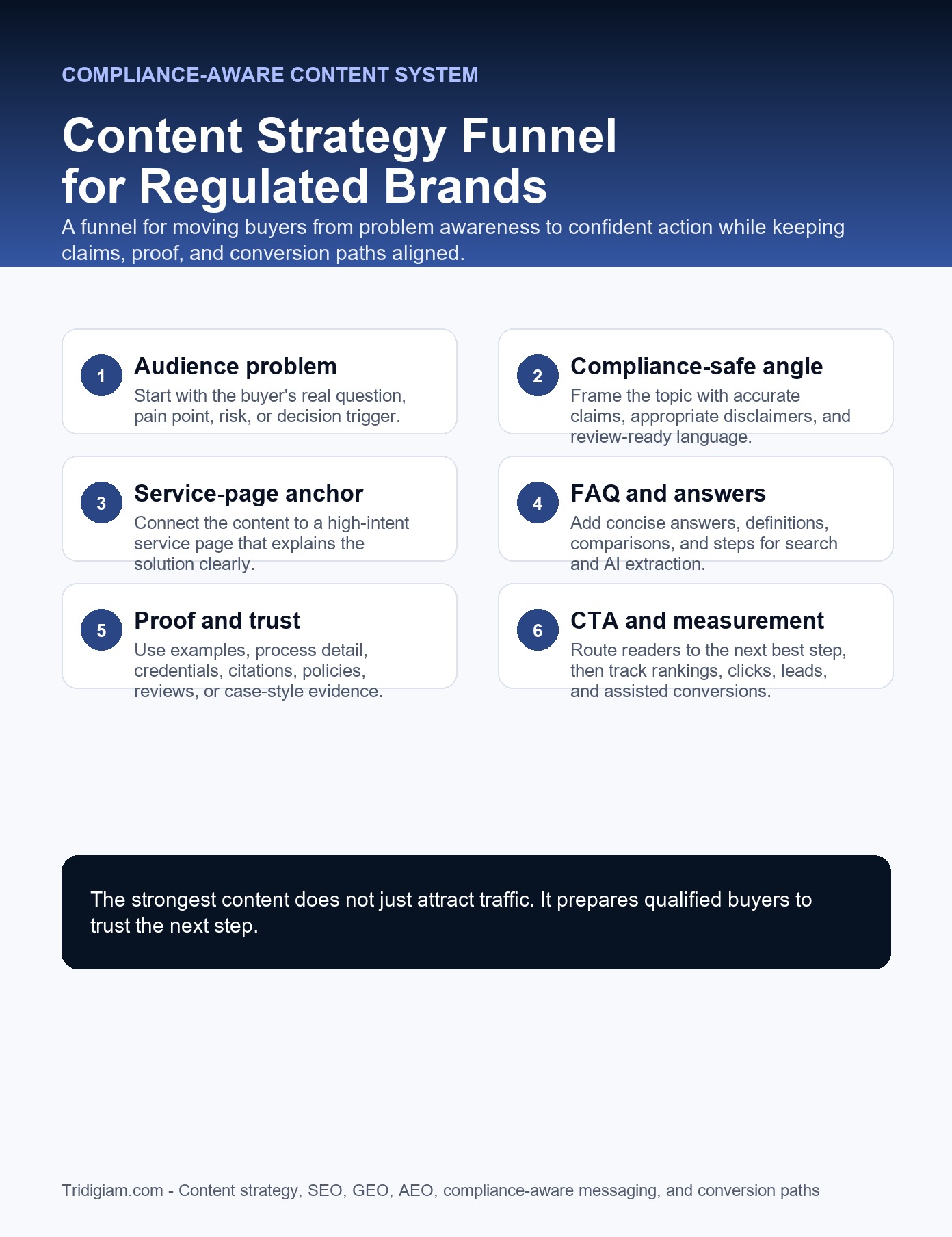
Content Strategy Plan
Elevate your brand with a comprehensive Content Strategy Plan that aligns with your business goals and engages your target audience. Tridigiam crafts data-driven content strategies that drive traffic, boost conversions, and strengthen your online presence.
What IS A Content Strategy Plan?
A Content Strategy Plan is a critical component of effective digital marketing, involving the development of a strategic framework for creating, publishing, and managing content to achieve specific business goals. This plan outlines how to use content effectively to engage the target audience, enhance brand presence, and drive conversions. It includes identifying the right type of content, whether it's blog posts, videos, infographics, or social media updates, tailored to resonate with the audience and reflect the brand's voice and values. A comprehensive Content Strategy Plan also encompasses content scheduling, distribution channels, and performance metrics to ensure content not only reaches but also appeals to the intended audience. It's a dynamic, data-driven approach that adapts to audience responses and market trends, ensuring that the content remains relevant, engaging, and aligned with the evolving goals of the business.
For regulated industries, content strategy has an extra layer of scrutiny — see our guide on navigating compliance in digital marketing for regulated sectors.
Do you need a Content Strategy Plan?
Why Tridigiam?
Key Terms in Content Strategy
- Content Strategy
- A plan for creating, publishing, and managing content that supports business goals.
- Editorial Calendar
- A schedule of what content publishes, when, and on which channel.
- Pillar Content
- A comprehensive page on a core topic that supporting articles link back to.
- Buyer Persona
- A research-based profile of a target customer used to guide content choices.
- Content Audit
- A review of existing content to find what to keep, update, or remove.
- Distribution
- The channels and tactics used to get content in front of an audience.
FAQs for Content Strategy Plans at Tridigiam
WHAT IS A CONTENT STRATEGY PLAN?
A Content Strategy Plan is a detailed roadmap for creating, publishing, and managing content that aligns with your business goals, engages your target audience, and drives measurable results.
WHY DOES MY BUSINESS NEED A CONTENT STRATEGY PLAN?
A Content Strategy Plan helps you produce consistent, high-quality content that resonates with your audience, enhances your brand’s visibility, and supports your marketing objectives, leading to increased traffic and conversions.
WHAT DOES A CONTENT STRATEGY PLAN INCLUDE?
A Content Strategy Plan typically includes content goals, audience research, content types and formats, an editorial calendar, distribution channels, SEO integration, and metrics for measuring success.
HOW DOES TRIDIGIAM DEVELOP A CONTENT STRATEGY PLAN?
We start by analyzing your business goals, target audience, and current content performance, then develop a customized strategy that outlines what content to create, how to distribute it, and how to measure its impact.
HOW LONG DOES IT TAKE TO SEE RESULTS FROM A CONTENT STRATEGY PLAN?
Content marketing is a long-term strategy, so while you may see some early results, it typically takes 3 to 6 months to see significant improvements in traffic, engagement, and conversions.
HOW DO YOU MEASURE THE SUCCESS OF A CONTENT STRATEGY PLAN?
We use key performance indicators (KPIs) such as website traffic, engagement metrics (likes, shares, comments), conversion rates, and lead generation to measure the effectiveness of your content strategy.
CAN TRIDIGIAM HELP WITH CONTENT CREATION AS PART OF THE CONTENT STRATEGY PLAN?
Yes, we offer full content creation services, including blog posts, articles, infographics, videos, and social media content, all aligned with your content strategy and business objectives.
WHAT INDUSTRIES DOES TRIDIGIAM SPECIALIZE IN FOR CONTENT STRATEGY?
Tridigiam specializes in developing content strategies for regulated industries, including healthcare, finance, legal, and real estate, ensuring compliance with industry-specific regulations.
HOW OFTEN SHOULD A CONTENT STRATEGY PLAN BE UPDATED?
A Content Strategy Plan should be reviewed and updated regularly, typically every 6 to 12 months, to reflect changes in your business goals, audience preferences, and industry trends.
HOW DOES A CONTENT STRATEGY PLAN HELP WITH SEO?
A Content Strategy Plan includes SEO-driven content creation, ensuring that your content is optimized for relevant keywords, improves search engine rankings, and drives organic traffic to your website.
WHAT ROLE DOES AUDIENCE RESEARCH PLAY IN A CONTENT STRATEGY PLAN?
Audience research is crucial in understanding your target market’s needs, preferences, and pain points, allowing you to create content that resonates with them and drives engagement.
HOW DO I KNOW WHAT TYPES OF CONTENT TO INCLUDE IN MY CONTENT STRATEGY PLAN?
We help identify the most effective content types and formats for your audience through research and analysis, considering factors like your industry, goals, and what resonates best with your target audience.
CAN TRIDIGIAM HELP WITH CONTENT DISTRIBUTION AS PART OF THE CONTENT STRATEGY PLAN?
Yes, we develop a distribution plan that includes the best channels for reaching your audience, such as social media, email newsletters, and partnerships, ensuring your content reaches the right people at the right time.
HOW DOES A CONTENT STRATEGY PLAN CONTRIBUTE TO BRAND CONSISTENCY?
A Content Strategy Plan ensures that all content aligns with your brand’s voice, message, and values, creating a cohesive brand experience across all platforms and channels.
HOW DO I GET STARTED WITH TRIDIGIAM’S CONTENT STRATEGY PLAN SERVICES?
To get started, contact us for a consultation. We’ll discuss your business goals and how our Content Strategy Plan can help you create impactful content that drives results.
Resources & References
Good content strategy follows principles that university communications teams and content researchers have refined for years. These are sources we lean on:
- University of Washington — Content Strategy Best Practices: Defining goals, audience, and a plan to organize and maintain content.
- University of Minnesota — Plan & Maintain Website Content: A practical content-audit and governance workflow.
- Colgate University — Web Writing & Content Creation Guide: Research-based guidance on writing for how people actually read online.
Marketing & compliance glossary
Key terms that come up in regulated-industry marketing.
- HIPAA-compliant marketing: Marketing that handles protected health information in line with HIPAA privacy and security rules.
- Business Associate Agreement (BAA): A contract binding a vendor that touches PHI to HIPAA safeguards; required for many marketing tools.
- LegitScript certification: Third-party verification that lets healthcare and addiction-treatment advertisers run ads on Google and Meta.
- Protected Health Information (PHI): Individually identifiable health data covered by HIPAA that marketing setups must never expose.
- SEO: Earning organic search visibility by matching helpful content to intent and keeping a site crawlable and trusted.
- GEO (Generative Engine Optimization): Optimizing content to be cited in AI answers from tools like ChatGPT, Perplexity, and Google AI overviews.
- AEO (Answer Engine Optimization): Structuring content to win direct answers in search features and AI assistants.
- PPC: Paid search and social advertising where you pay only when someone clicks.
- Programmatic advertising: Automated, real-time buying of digital ad inventory across many sites and apps.
- Conversion rate optimization (CRO): Improving the share of visitors who take a desired action through better pages, copy, and testing.
- First-party data: Information collected directly from your own audience, increasingly vital as third-party cookies fade.
- Local SEO: Optimizing to appear when nearby people search, via Google Business Profile, citations, and local content.
How we work
We learn your goals and map the regulatory guardrails (HIPAA, LegitScript, FTC) before anything goes live.
We execute the campaigns, content, and tracking, configured to keep your data and claims defensible.
We report on what actually drives calls and conversions, then put more behind what works.
Las Vegas based and built for regulated industries. No guesswork and no guaranteed-outcome claims, just defensible marketing that performs. Request a consultation.