Quick answer: A customer journey map captures the real, often nonlinear path customers take, while the marketing funnel is a simpler linear model of awareness to purchase. The map adds detail the funnel misses. This compares when to use each.
| Factor | Customer Journey Map | Marketing Funnel |
|---|---|---|
| Scope | Before, during, and after the purchase | Steps leading up to the purchase decision only |
| Lens | Customer’s experience and emotions at each touchpoint | Business process for moving prospects toward a sale |
| Typical stages | Awareness, Consideration, Purchase, and post-purchase support | Awareness, Consideration, Decision |
| Post-purchase coverage | Yes, includes retention and support touchpoints | No, ends at the purchase decision |
| Best used for | Improving customer experience end-to-end | Structuring a sales/marketing process toward conversion |
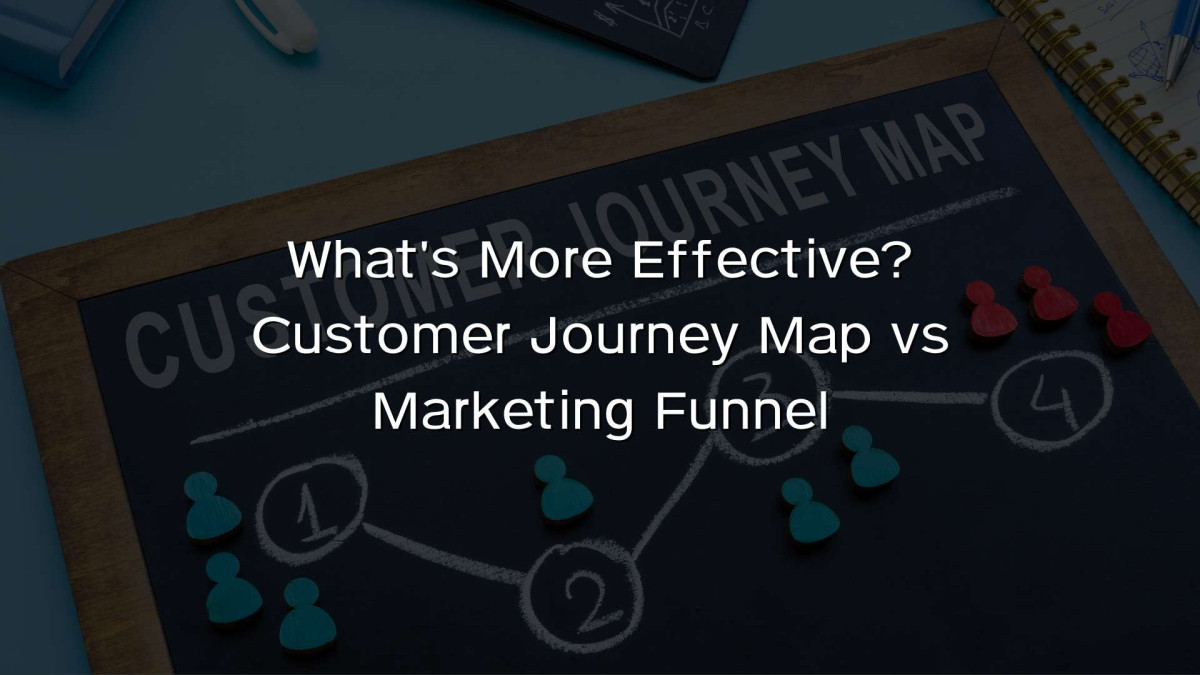
What is a Customer Journey Map?
A customer journey map is a visual way to show how a person interacts with a brand before, during, and after making a purchase. It helps businesses understand what customers need, what they like, and what challenges they face at every step of the buying process. By mapping this journey, businesses can create better marketing and advertising to meet customer needs and improve sales.
The customer journey usually has these stages:
- Awareness: The customer learns about the brand.
- Consideration: They explore products or services.
- Purchase: They make a decision to buy.
- Post-Purchase: The business keeps them engaged and loyal.
As a result of understanding what customers feel and do at each stage, businesses can create focused marketing strategies that work better.
Key Takeaways
- A customer journey map shows the steps a customer takes with a brand, from first contact to follow-up.
- The marketing funnel explains how customers move from learning about a brand to making a purchase.
- Using both tools together helps businesses create personalized and effective marketing campaigns.
- Customer journey maps help businesses find opportunities to improve branding and customer experiences.
- The marketing funnel helps businesses understand customer behavior and tailor their efforts to each stage.
Why the Customer Journey is important
The customer journey shows how people interact with a brand, starting from the moment they hear about it until they buy something—and even after that. Knowing this journey helps businesses:
- Improve how they interact with customers at key points.
- Understand what motivates or frustrates their customers.
- Create strategies that make customers happy and loyal.
How the Marketing Funnel Works
The marketing funnel explains the steps customers take before making a purchase. Each stage has a purpose, therefore helping businesses create plans for each step to help customers move toward buying.
Here are the main stages of the funnel:
- Awareness: Customers first hear about the brand.
- Consideration: They start exploring options.
- Decision: They decide to buy.
As a result of understanding the process, businesses create messages and campaigns that guide customers through these stages.
Combining the Journey Map and Funnel
Using both the customer journey map and the marketing funnel together creates a complete picture of how customers interact with a brand. This helps businesses:
- Focus their ads on the most important touchpoints.
- Make their messages more personal and effective.
- Track what’s working and improve as needed.
This approach creates a smoother experience for customers thus leading to more sales and better relationships.
Why Journey Maps Help with Branding
A customer journey map isn’t just for marketing—it’s also useful for branding. It shows how customers interact with a brand at every stage. With this information, businesses can:
- Personalize their messaging to connect with customers.
- Make sure their branding is consistent everywhere.
- Improve experiences, leading to stronger loyalty and word-of-mouth referrals.
Better Ads Through Customer Journey Mapping
By using a customer journey map, businesses can figure out the best times and places to advertise. Then, they can create ads that are more relevant and effective. This helps customers feel like the brand understands their needs, which can boost engagement and sales.
Making Marketing Work
The marketing funnel helps businesses:
- Create campaigns that match what customers need.
- Track how well ads and other marketing efforts are doing.
- Adjust strategies to get better results.
When done right, the marketing funnel helps businesses grow and keep customers happy.
Customer service done right
Combining the customer journey map with the marketing funnel helps businesses give customers a seamless experience. This means:
- Sending the right messages at the right times.
- Changing strategies in real time based on results.
- Building trust and encouraging repeat business.
Creating a Great Customer Experience
Combining the customer journey map with the marketing funnel helps businesses give customers a seamless experience. This means:
- Sending the right messages at the right times.
- Changing strategies in real time based on results.
- Building trust and encouraging repeat business.
Final Thoughts: A Winning Combination
To make the most of their marketing, businesses should use both the customer journey map and the marketing funnel. Together, these tools help businesses:
- Understand and meet customer needs.
- Create targeted campaigns that get results.
- Build strong, lasting relationships with customers.
When businesses focus on both tools, they can stand out from competitors and give customers a great experience.
If you’re interested in learning more about digital marketing strategies, you should check out Tridigiam’s article on digital marketing. It provides valuable insights into the latest trends and techniques for reaching and engaging with customers online.
FAQs
What is a Customer Journey Map?
It’s a visual tool that shows the steps a customer takes with a brand, from first learning about it to post-purchase interactions.
What is a Marketing Funnel?
A model that shows how customers move from awareness to buying a product.
How are Customer Journey Map and Marketing Funnel different?
A customer journey map focuses on customer experiences and emotions. The marketing funnel focuses on steps leading to a purchase.
Can businesses use both Customer Journey Map and Marketing Funnel together?
Yes! Using both tools gives a full view of how customers interact with a brand and helps improve marketing and customer experiences.
Related Reading
Related service: Learn more about Tridigiam’s strategic marketing services.
Need marketing that actually moves the needle?
Tridigiam is a Las Vegas marketing and advertising agency built for regulated and growth-focused businesses. Call (702) 748-7005 or request a consultation.
Frequently asked questions
Why does a customer journey map capture things the marketing funnel misses?
Real customer behavior rarely moves in a straight line, people research, pause, compare, and return, so a journey map can surface those loops and detours that a linear funnel model simplifies away.
Should a business build a journey map before or after defining its funnel?
Building the journey map first tends to work better, since it’s based on actual customer research and can reveal which funnel stages need more attention or don’t match how customers really behave.
Is a customer journey map a one-time project or an ongoing tool?
It should be revisited periodically, since customer behavior and channels shift over time, and a journey map built two years ago may no longer reflect how people actually engage with the brand today.
Want more like this? Browse our free CRO, SEO, and AI search guides.

Written and reviewed by Chris Goodman, CEO of Tridigiam
Founder of a Las Vegas marketing agency building AI-visibility and compliance-aware marketing systems for regulated industries — healthcare, addiction treatment, and aesthetics. LinkedIn
Related resource: Explore the full set of practical marketing books by Chris Goodman at Marketing Books by Chris Goodman.

Explore knowledge from Chris Goodman, a marketing expert with extensive agency and small business experience, specializing in innovative advertising strategies. Chris has a Bachelor’s in Marketing from RMIT, years working in advertising agencies servicing clients, and years of experience working with small to medium sized businesses operating within regulated industries.