Quick answer: Page speed affects both SEO and PPC: slow pages lower rankings, hurt Core Web Vitals, and reduce ad quality scores and conversions. Faster pages help everywhere. This covers why speed matters for both channels and how to improve it.
Key Takeaways
- Slow pages hurt SEO rankings, Core Web Vitals, ad quality scores, and conversions all at once.
- Faster load times improve performance across both organic and paid search.
- Speed is a shared foundation, not a channel-specific fix.
Page speed SEO and PPC answer map
Page speed affects SEO, PPC, and conversion because it shapes both search visibility and landing-page performance. Faster pages are easier for users to engage with, easier for Google to evaluate through page experience signals, and more likely to turn paid clicks into qualified actions.
- SEO impact: Core Web Vitals, crawlability, mobile usability, and user engagement all improve when pages load quickly and respond smoothly.
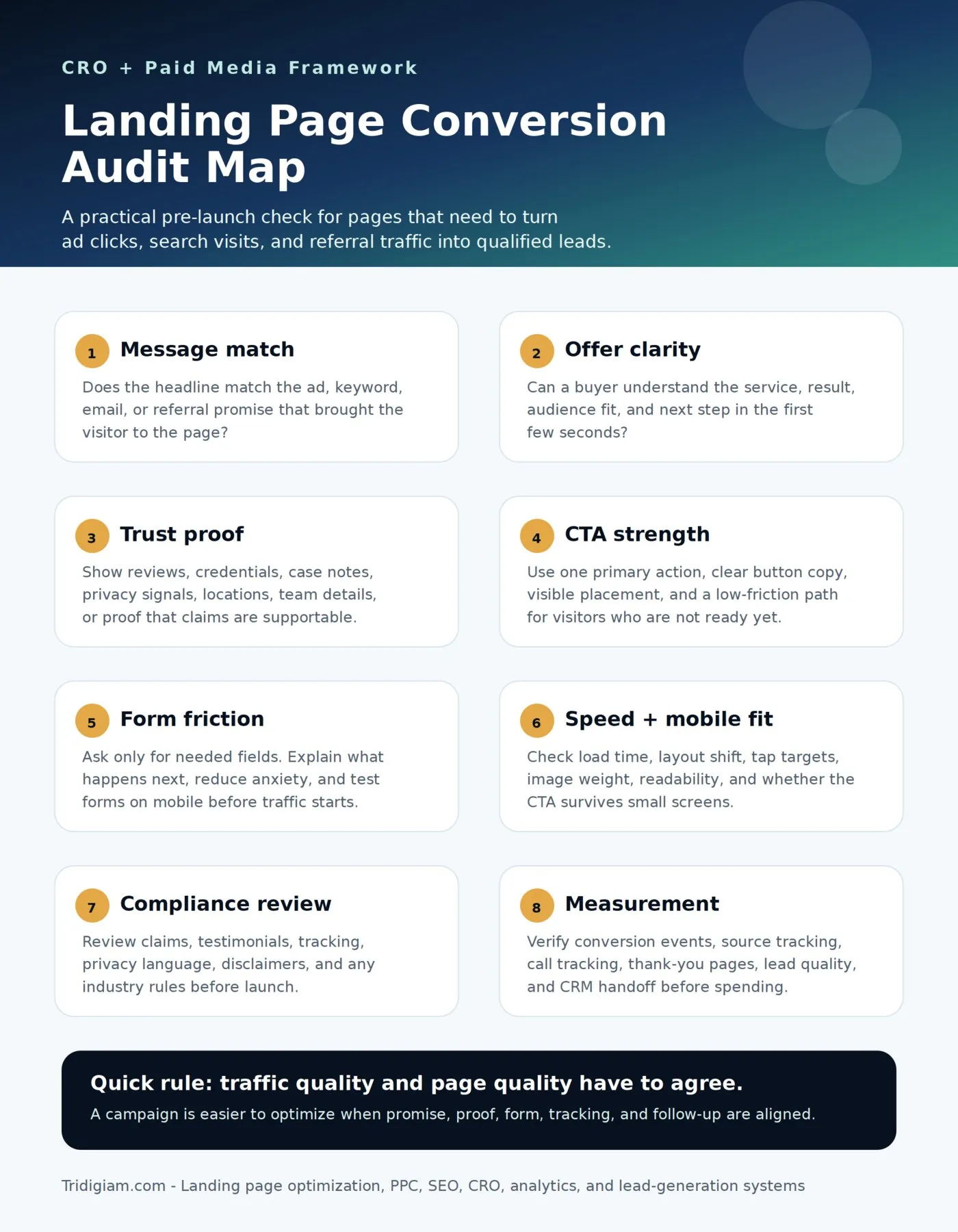
- PPC impact: slow landing pages can waste ad spend by increasing bounce rate, lowering conversion rate, and weakening landing-page experience.
- Conversion impact: every delay can reduce form fills, calls, purchases, booked consultations, and other high-value actions.
- Measurement impact: teams should monitor field data, lab diagnostics, conversion rate, landing-page quality, and revenue together instead of treating speed as an isolated technical score.
- Prioritization impact: fix the pages that receive paid traffic, rank for high-intent terms, support lead generation, or sit closest to revenue first.
Useful source anchors include Google Search Central on page experience in Google Search, Google’s Core Web Vitals, Google’s PageSpeed Insights, Google Ads Help on landing page experience, and Google Ads Help on Quality Score. Tridigiam connects page speed to SEO/PPC/content synergy, technical SEO best practices, SEO marketing fundamentals, Google Search Console data, and data-driven ad optimization.
Questions to answer before improving page speed for SEO and PPC
Which pages are closest to revenue?
Prioritize pages that receive paid traffic, rank for high-intent searches, support lead generation, or influence sales conversations. A small speed improvement on a high-value landing page can matter more than a perfect score on a low-traffic blog post.
Which metric is causing the user experience problem?
Identify whether the issue is loading speed, interactivity, layout shift, server response, render-blocking scripts, heavy media, third-party tags, or mobile performance. The fix depends on the bottleneck.
How will speed improvements be tied to business outcomes?
Track Core Web Vitals, organic traffic, paid landing-page experience, conversion rate, cost per qualified lead, booked calls, and revenue. Speed work should be evaluated by both technical health and commercial impact.
In the digital age where speed is of the essence, the performance of a website, particularly its page speed, plays a pivotal role in the success of SEO (Search Engine Optimization) and PPC (Pay-Per-Click) campaigns. Page speed not only affects user experience but also significantly influences visibility in search engine rankings and the effectiveness of paid advertising campaigns. This article examines the critical impact of page speed on SEO and PPC performance, providing insights into why it's essential for businesses to optimize their websites for speed and how doing so can lead to improved user engagement, higher conversion rates, and a stronger competitive edge in the online marketplace.
Understanding the Impact of Page Speed
Page speed, the time it takes for a webpage to load, is a critical factor in determining a website's user experience and its performance in search engine rankings.
- User Experience and Page Speed: Users expect fast, seamless experiences when navigating websites. Slow-loading pages can lead to increased bounce rates and reduced engagement, as users are likely to abandon a site that doesn't load quickly, diminishing the effectiveness of both SEO and PPC efforts.
- Page Speed and SEO: Search engines like Google consider page speed a ranking factor. Websites that load quickly are often ranked higher in search results, making page speed optimization a crucial component of effective SEO strategies.
- Page Speed in PPC Campaigns: For PPC campaigns, the landing page experience significantly influences the Quality Score assigned by platforms like Google Ads. Faster-loading pages provide a better user experience, potentially leading to higher Quality Scores, lower cost-per-click, and better ad placements.
Optimizing Page Speed for SEO
Improving page speed is essential for enhancing a website's SEO performance. A fast-loading website not only ranks better in search engines but also retains users longer, increasing the chances of conversion.
- Assessing and Monitoring Page Speed: Regularly use tools like Google's PageSpeed Insights to assess your website's speed and identify areas for improvement. Monitoring page speed should be an ongoing part of your SEO strategy.
- Optimizing Images and Media Files: Large images and media files can slow down your website. Optimize these files by compressing them and using appropriate formats to ensure they load quickly without compromising quality.
- Minimizing HTTP Requests: Reduce the number of HTTP requests by minimizing the use of scripts, plugins, and custom fonts. Simplifying your website's design can lead to faster loading times and a better user experience.
Enhancing PPC Performance with Faster Page Speed
A fast-loading landing page can significantly boost the performance of PPC campaigns, improving ad quality scores and increasing conversion rates.
- Improving Quality Score: Page speed is a component of the landing page experience, which is a factor in determining Quality Score. Faster landing pages can lead to higher Quality Scores, more competitive ad placements, and lower costs.
- Reducing Bounce Rates: Users are more likely to stay on a fast-loading landing page, reducing bounce rates and increasing the likelihood of conversion. A positive landing page experience is crucial for the success of PPC campaigns.
- Enhancing Mobile Performance: With the increasing prevalence of mobile browsing, ensuring your landing pages load quickly on mobile devices is essential. Mobile users, in particular, have high expectations for speed, making mobile optimization a critical aspect of PPC performance.
Best Practices for Maximizing Page Speed in SEO and PPC
To fully capitalize on the benefits of fast page speeds for SEO and PPC, consider the following best practices:
- Continuous Optimization: Page speed optimization is not a one-time task. Continuously assess and improve your website's speed to ensure it meets user expectations and search engine standards.
- Balancing Functionality and Speed: While it's important to provide a rich user experience, be mindful of elements that may slow down your site. Strike a balance between functionality and speed, ensuring your website offers both a great user experience and fast loading times.
- Prioritizing Mobile Speed: With Google's mobile-first indexing and the high volume of mobile traffic, prioritize optimizing your website's mobile version. Ensure your site is responsive and loads quickly across all devices.
In conclusion, the impact of page speed on SEO and PPC performance cannot be overstated. A fast-loading website not only provides a better user experience but also improves visibility in search rankings and enhances the effectiveness of paid advertising campaigns. By prioritizing page speed optimization, businesses can significantly improve their online presence, drive user engagement, and achieve higher conversion rates.
If optimizing page speed for your SEO and PPC campaigns seems challenging, Tridigiam is here to assist. Contact us today for a free consultation on digital marketing services. Our team of experts is ready to help you enhance your website's speed, ensuring your digital marketing strategies are optimized for success in today's fast-paced online environment.
Related service: Learn more about Tridigiam's search engine marketing services.
Need marketing that actually moves the needle?
Tridigiam is a Las Vegas marketing and advertising agency built for regulated and growth-focused businesses. Call (702) 748-7005 or request a consultation.
Want more like this? Browse our free CRO, SEO, and AI search guides.
Frequently asked questions
How does page speed affect SEO?
Slow pages lower search rankings and hurt Core Web Vitals scores, which Google uses as a ranking signal, faster pages tend to perform better in search results.
Does page speed affect PPC performance too?
Yes, slow landing pages reduce ad quality scores (raising cost per click) and lower conversion rates, since visitors often abandon a slow-loading page before it finishes loading.
What's the fastest way to improve page speed?
Compress and properly size images, minimize render-blocking scripts, and use caching, these three changes typically deliver the biggest speed gains for the least engineering effort.

Written and reviewed by Chris Goodman, CEO of Tridigiam
Founder of a Las Vegas marketing agency building AI-visibility and compliance-aware marketing systems for regulated industries — healthcare, addiction treatment, and aesthetics. LinkedIn

Explore knowledge from Chris Goodman, a marketing expert with extensive agency and small business experience, specializing in innovative advertising strategies. Chris has a Bachelor’s in Marketing from RMIT, years working in advertising agencies servicing clients, and years of experience working with small to medium sized businesses operating within regulated industries.