
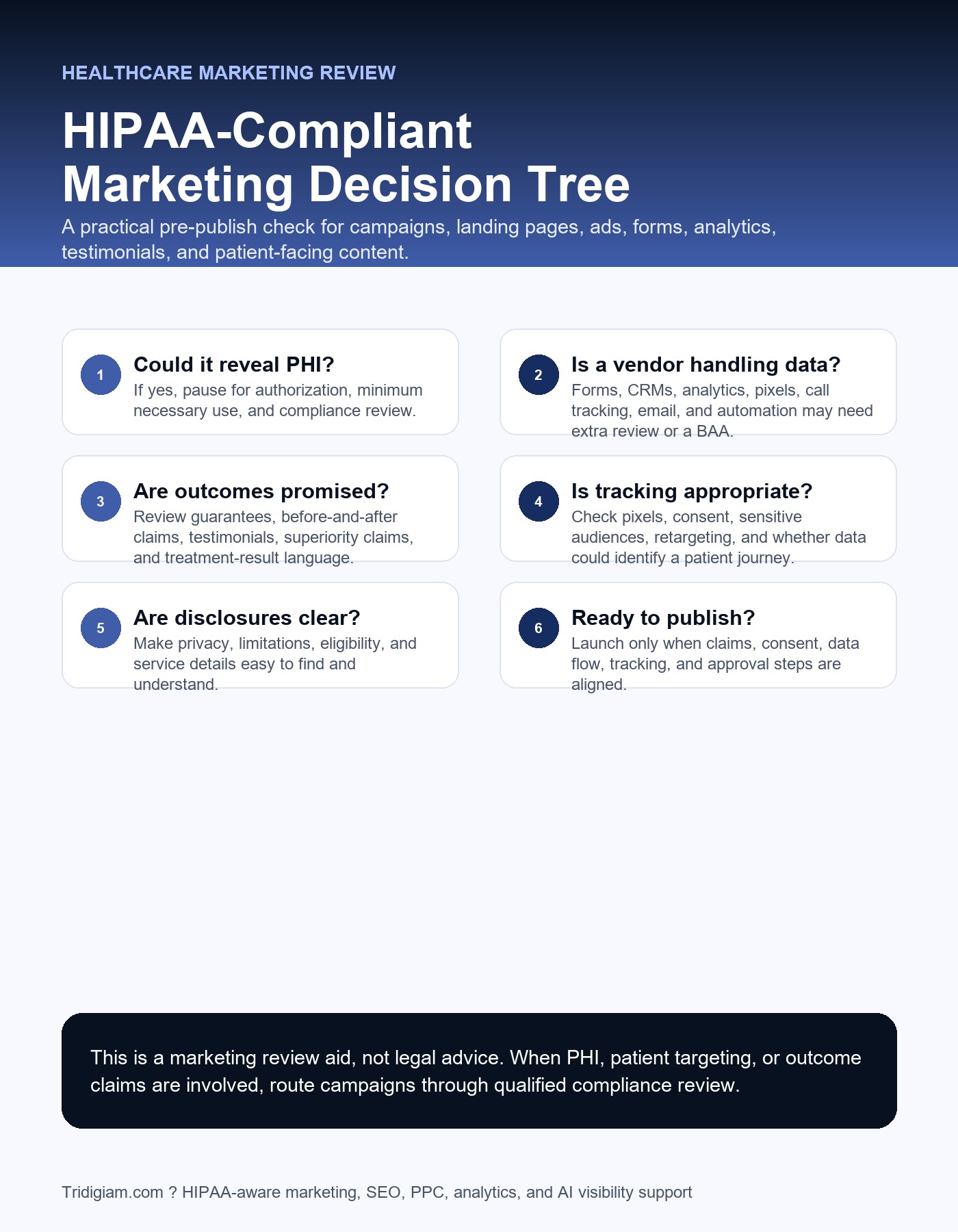
Quick answer: Telehealth marketing attracts and retains virtual patients through local and condition-based SEO, paid search, and content that makes booking a virtual visit easy, all while protecting patient data under HIPAA. Because telehealth crosses state lines, messaging also has to respect licensing and platform rules. Consent-based tracking and a signed BAA keep the program defensible.
In recent years, telehealth marketing has emerged as a critical strategy for healthcare providers seeking to attract and retain patients in a rapidly evolving virtual care landscape. As the global telehealth market continues to expand at an unprecedented rate, continuing to expand at a rapid pace, effective marketing strategies are essential. Telehealth marketing not only involves attracting new patients but also retaining them through enhanced patient engagement and satisfaction. With the shift towards digital engagement and accessibility, telemedicine patient acquisition and online medical practice optimization are key components of a successful telehealth strategy.
Key Takeaways
- The telehealth market is projected to grow significantly, emphasizing the importance of strategic telehealth marketing.
- Consumers increasingly prefer virtual care for its convenience and reduced costs.
- Effective telehealth marketing can decrease patient acquisition costs and increase patient engagement.
- SEO optimization and social media strategies are vital for enhancing online visibility and patient interaction.
- Personalized communication and integrated services are key to retaining virtual patients.
The Growing Demand for Telehealth Services
Telehealth services have seen a surge in demand, driven by technological advancements and changing consumer preferences. As of 2021, a majority of consumers are open to using telehealth, a trend that reflects a broader shift towards virtual care. The convenience of remote consultations, coupled with the potential for cost savings—telehealth visits tend to cost patients less than an equivalent in-person visit—makes telemedicine an attractive option for many.
Moreover, patients most often cite convenience and reduced wait times as reasons for preferring telehealth it offers. This growing demand highlights the crucial role of telehealth marketing in capturing the attention of potential patients. By understanding these consumer preferences, healthcare providers can tailor their marketing strategies to emphasize the benefits of virtual care, making it a cornerstone of their patient acquisition efforts.
Strategic Telehealth Marketing Techniques
Effective telehealth marketing requires a multifaceted approach that incorporates various online and offline strategies. One of the most cost-effective methods is leveraging digital marketing tools such as SEO and social media. SEO optimized specifically for telehealth services can meaningfully increase organic traffic, underscoring the importance of online visibility.
Social media platforms also play a vital role in telehealth marketing. Practices that use these platforms effectively tend to see a real lift in patient engagement and interaction rates. Platforms like Facebook, Instagram, and LinkedIn provide an opportunity to reach a broad audience, engage with potential patients, and build a community around virtual care services.
Additionally, personalized email campaigns tailored to telehealth services can significantly boost patient engagement. Health systems commonly report an increase in engagement through such campaigns, highlighting their effectiveness in maintaining patient interest and satisfaction.
Optimizing Online Medical Practice
An online medical practice must be optimized to support the goals of telehealth marketing. This involves creating a user-friendly website that provides easy access to information about available telehealth services, online appointment scheduling, and digital communication options. A well-designed website not only attracts new patients but also ensures a seamless experience for existing ones.
Implementing features such as chatbots, virtual assistants, and AI-driven appointment scheduling can enhance user experience and streamline operations. In fact, the increasing adoption of AI in telehealth marketing is expected to keep driving efficiency gains. These technological advancements not only improve service delivery but also facilitate better patient-provider interactions, fostering long-term patient relationships.
Enhancing Patient Retention through Virtual Care
Retaining patients in a virtual setting requires a focus on delivering high-quality, personalized care. With strong patient satisfaction ratings overall, telehealth services have already demonstrated their potential to meet patient needs effectively. However, there is always room for improvement.
One strategy is to offer integrated services that address various aspects of patient health. For instance, integrating mental health services into telehealth platforms is an emerging trend, with growing patient interest in such services. Providing comprehensive care that encompasses physical and mental health can differentiate a provider in a competitive market.
Furthermore, maintaining open lines of communication through follow-up emails, newsletters, and virtual check-ins can enhance patient loyalty. Personalized communication not only addresses individual patient concerns but also fosters a sense of connection and trust, essential components of patient retention.
Leveraging Data and Analytics for Telehealth Marketing
Data and analytics play a crucial role in refining telehealth marketing strategies. By analyzing patient data, healthcare providers can gain insights into patient behavior, preferences, and needs, allowing for more targeted marketing efforts. This data-driven approach enables providers to identify trends, segment their audience, and tailor their messaging to resonate with specific patient groups.
Moreover, analytics can help track the effectiveness of marketing campaigns, providing valuable feedback that can be used to optimize future efforts. For instance, monitoring website traffic, social media engagement, and patient acquisition rates can reveal areas of success and opportunities for improvement.
As telehealth continues to evolve, the ability to make data-informed decisions will be a key differentiator for providers seeking to maintain a competitive edge in the virtual care space.
Future Trends in Telehealth Marketing
The future of telehealth marketing promises exciting developments driven by technological advancements and changing consumer expectations. One significant trend is the growing role of artificial intelligence (AI) in enhancing marketing efforts. AI-driven tools are expected to meaningfully improve user targeting and service personalization, offering more efficient ways to connect with patients.
Additionally, as more healthcare organizations increase their telehealth marketing budgets, we can expect a greater emphasis on integrated marketing strategies that combine traditional and digital channels. This holistic approach will allow providers to reach a broader audience and enhance patient engagement across multiple touchpoints.
Furthermore, the integration of telehealth services with other areas of healthcare, such as mental health and chronic disease management, will continue to grow. By offering a comprehensive suite of services, providers can better meet the diverse needs of their patients, ensuring long-term satisfaction and loyalty.
Conclusion
As the telehealth market continues its rapid expansion, effective telehealth marketing strategies are more important than ever for attracting and retaining virtual patients. By leveraging digital tools, optimizing online medical practices, and focusing on personalized patient care, healthcare providers can position themselves for success in this competitive landscape. Embracing data-driven insights and future trends will further enhance their ability to meet the evolving needs of patients.
If you are looking to enhance your telehealth marketing efforts and reach a wider audience, Tridigiam is here to help. Our team of experts specializes in creating tailored marketing strategies that drive patient acquisition and engagement. Contact us today to learn more about how we can support your telehealth initiatives.
FAQs
What is telehealth marketing?
Telehealth marketing involves promoting virtual healthcare services to attract and retain patients. It encompasses various strategies, including digital marketing, SEO, social media engagement, and personalized communication, to enhance visibility and patient satisfaction.
How can healthcare providers attract new telehealth patients?
Healthcare providers can attract new telehealth patients by optimizing their online presence, utilizing social media, implementing SEO strategies, and offering convenient digital services such as online appointment scheduling and virtual consultations.
Why is patient retention important in telehealth?
Patient retention is crucial in telehealth as it ensures sustained engagement and satisfaction, leading to long-term relationships and improved health outcomes. Retaining patients reduces acquisition costs and fosters loyalty, contributing to the overall success of telehealth services.
What role does SEO play in telehealth marketing?
SEO plays a vital role in telehealth marketing by enhancing online visibility and driving organic traffic to healthcare providers’ websites. Effective SEO strategies increase the likelihood of potential patients finding and choosing telehealth services.
How can data analytics improve telehealth marketing strategies?
Data analytics can improve telehealth marketing strategies by providing insights into patient behavior and preferences, enabling providers to tailor their messaging and services to better meet patient needs. Analytics also help track the effectiveness of marketing campaigns, guiding future efforts.
Related Reading
Related service: Learn more about Tridigiam’s marketing for regulated and healthcare businesses.
Resources
Need marketing that actually moves the needle?
Tridigiam is a Las Vegas marketing and advertising agency built for regulated and growth-focused businesses. Call (702) 748-7005 or request a consultation.
Frequently asked questions
What makes telehealth marketing different from marketing a physical clinic?
Telehealth marketing has to account for state licensing lines, since a provider can typically only treat patients in states where they’re licensed, so targeting and landing pages usually need to be built around specific service areas.
How do you track ad performance without violating HIPAA?
Consent-based tracking setups, combined with a signed Business Associate Agreement with ad and analytics platforms, let a practice measure conversions without exposing protected health information.
What content works best for attracting virtual patients?
Condition-specific content that explains what a virtual visit looks like for a given issue, paired with a simple, low-friction booking flow, tends to convert better than generic convenience-focused messaging.
Want more like this? Browse our free CRO, SEO, and AI search guides.

Written and reviewed by Chris Goodman, CEO of Tridigiam
Founder of a Las Vegas marketing agency building AI-visibility and compliance-aware marketing systems for regulated industries — healthcare, addiction treatment, and aesthetics. LinkedIn
Related book: For a practical system to build local visibility, reviews, citations, and trust signals, see The Local Trust Stack by Chris Goodman.

Explore knowledge from Chris Goodman, a marketing expert with extensive agency and small business experience, specializing in innovative advertising strategies. Chris has a Bachelor’s in Marketing from RMIT, years working in advertising agencies servicing clients, and years of experience working with small to medium sized businesses operating within regulated industries.