Quick answer: A SWOT analysis lists your Strengths, Weaknesses, Opportunities, and Threats, while a TOWS analysis takes the next step and pairs them into actual strategies. SWOT diagnoses; TOWS acts. This explains the difference and how to use both.
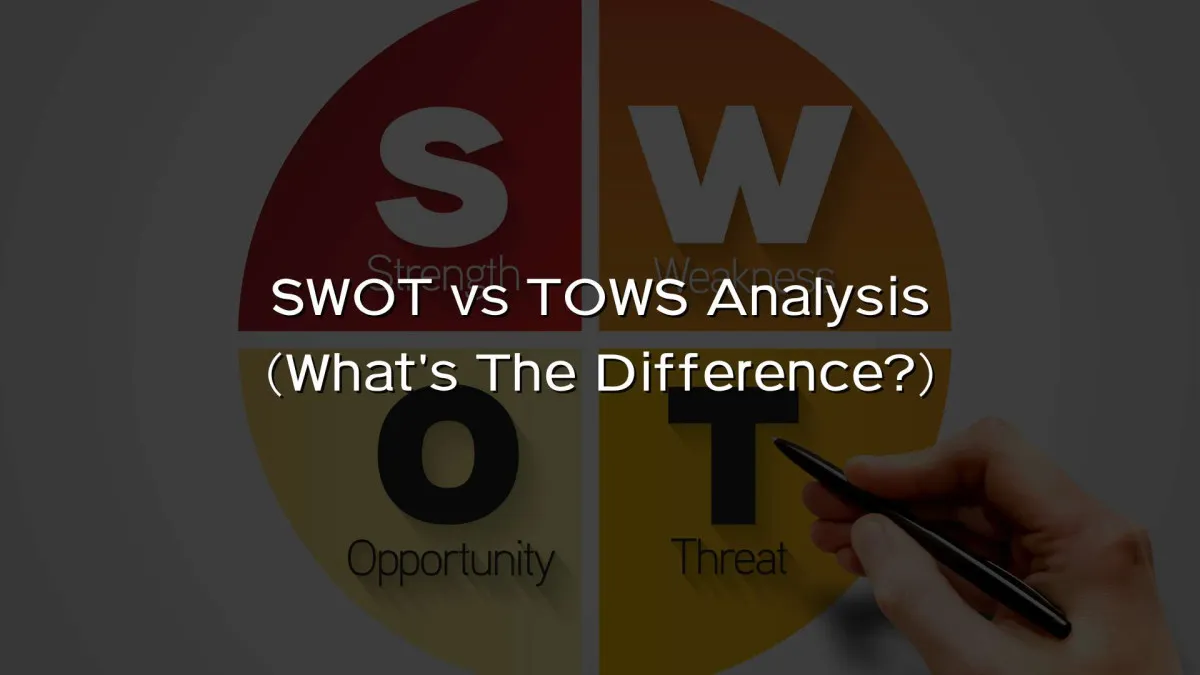
One tool for strategic planning is the SWOT analysis, which is used to assess a project or business’s strengths, weaknesses, opportunities, & threats. SWOT analysis aids companies in evaluating their market position & pinpointing areas for development in marketing and advertising. Internal variables that are under the organization’s control include things like product quality, marketing prowess, & brand reputation that determine its strengths and weaknesses. Threats and opportunities result from outside forces beyond the organization’s control, such as competitive markets, market trends, and prevailing economic conditions.
Key Takeaways
- SWOT analysis helps identify a company’s strengths, weaknesses, opportunities, and threats in marketing and advertising.
- TOWS analysis is crucial for strategic marketing as it focuses on matching strengths with opportunities and overcoming weaknesses to minimize threats.
- SWOT analysis can be applied to branding strategies to understand the brand’s position in the market and identify areas for improvement.
- TOWS analysis is essential for creating effective advertising campaigns by leveraging strengths to capitalize on opportunities and mitigate weaknesses against threats.
- Integrating SWOT analysis into marketing plans helps in developing a comprehensive understanding of the market and creating strategies to capitalize on opportunities and minimize threats.
Unlocking Strategic Marketing with SWOT and TOWS Analysis
In the world of marketing, understanding your competitive environment is key to growth. That’s where a SWOT analysis comes in—it gives businesses valuable insights into their strengths, weaknesses, opportunities, and threats. This simple framework helps companies identify what sets them apart from competitors and where they need improvement.
| Factor | SWOT | TOWS |
|---|---|---|
| Starting point | Internal + external factors, identified independently | Builds directly on an existing SWOT |
| Core question | What are our strengths, weaknesses, opportunities, threats? | How do we use those factors together to act? |
| Output | A list/inventory of factors | Specific strategic actions (e.g. strength-to-opportunity moves) |
| Direction | Analysis first | Strategy second, built from the analysis |
| Best used for | Getting a clear snapshot of where the business stands | Turning that snapshot into a concrete growth game plan |
Strengths and Weaknesses
Every business has strengths. Maybe it’s a well-loved product, an unbeatable service, or brand recognition. By pinpointing these, companies can focus on what they do best and build marketing strategies around them. But no business is perfect. A SWOT analysis also highlights weaknesses. It might be a gap in the product line or ineffective advertising. Recognizing these weaknesses is crucial because it shows where improvement is needed to stay competitive.
Opportunities and Threats
Beyond internal factors, external elements shape a company’s success too. Identifying opportunities in the market, like new trends or changing customer preferences, allows businesses to stay ahead. On the flip side, threats—like new competitors or shifts in the economy—need to be addressed. A business that knows the risks can prepare and adapt, avoiding surprises down the road.
Going Deeper with TOWS Analysis
While SWOT helps identify factors, TOWS takes it a step further by suggesting strategic actions. How can you use your strengths to overcome threats? Can you address weaknesses by tapping into new opportunities? TOWS analysis helps answer these questions and gives businesses a game plan for growth.
Making the Most of Your Strengths
When it comes to strategic marketing, using your strengths is essential. A TOWS analysis helps businesses craft focused marketing strategies that highlight their competitive advantages. By leveraging these, companies can create advertising campaigns that resonate with their target audience and set them apart from the competition.
Managing Weaknesses and Threats
No strategy is complete without acknowledging weaknesses. TOWS analysis helps businesses anticipate challenges and develop backup plans. This proactive approach ensures that companies are not caught off guard by market shifts or internal shortcomings. It’s all about staying prepared.
Crafting a Winning Strategy
TOWS analysis doesn’t just focus on risks—it provides a clear roadmap to success. By addressing weaknesses and leveraging strengths, businesses can create comprehensive marketing strategies that align with their overall goals. Whether it’s branding, advertising, or strategic planning, TOWS ensures that every part of the marketing effort works in harmony.
Branding with SWOT and TOWS
Creating a strong brand identity is more important than ever. Businesses can use SWOT and TOWS to develop branding strategies that play to their strengths and improve on their weaknesses. By identifying what makes them unique, companies can craft a brand story that resonates with customers and sets them apart from competitors.
Addressing weaknesses in branding—like poor messaging or a lack of customer connection—can greatly improve a company’s market position. Meanwhile, identifying opportunities in the market allows businesses to capitalize on emerging trends, keeping their brand fresh and relevant.
Strategic Advertising
Advertising should always support a company’s broader marketing objectives. Using TOWS analysis, businesses can develop advertising campaigns that speak directly to their strengths while mitigating risks. A well-crafted campaign can seize opportunities, address weaknesses, and position the brand in the best light.
Conclusion
SWOT and TOWS analysis are powerful tools for any business looking to succeed in a competitive market. SWOT offers a broad view of where a company stands, while TOWS provides actionable strategies. Together, they help businesses create marketing, branding, and advertising strategies that play to their strengths, address their weaknesses, and capitalize on market opportunities.
By using these tools, businesses can make informed decisions that lead to sustainable growth and long-term success. So, whether you’re building a brand or launching a new advertising campaign, don’t overlook the power of SWOT and TOWS in shaping your marketing efforts.
If you’re interested in learning more about leveraging social media for business success, you should check out this article on boosting business with organic social media marketing and how to measure ROI. It provides valuable insights into using social media to grow your business and measure the return on investment.
FAQs
What is SWOT analysis?
SWOT analysis is a strategic planning tool used to identify the strengths, weaknesses, opportunities, and threats of a business or project. It helps in understanding the internal and external factors that can impact the success of a business.
What is TOWS analysis?
TOWS analysis is a variation of SWOT analysis that focuses on the external opportunities and threats first, and then examines the internal strengths and weaknesses. It helps in developing strategies that align with the external environment.
What is the difference between SWOT and TOWS analysis?
The main difference between SWOT and TOWS analysis is the sequence in which the factors are considered. SWOT analysis starts with internal factors (strengths and weaknesses) and then looks at external factors (opportunities and threats), while TOWS analysis starts with external factors and then considers internal factors.
Related service: Learn more about Tridigiam’s strategic marketing services.
Need marketing that actually moves the needle?
Tridigiam is a Las Vegas marketing and advertising agency built for regulated and growth-focused businesses. Call (702) 748-7005 or request a consultation.
Frequently asked questions
Should a business do a SWOT analysis before or after a TOWS analysis?
SWOT comes first. It identifies the raw strengths, weaknesses, opportunities, and threats, and TOWS then pairs those elements together to generate specific strategic actions, so TOWS depends on a completed SWOT.
What’s an example of a TOWS strategy pairing?
Pairing a strength with an opportunity, using an established reputation to enter a growing market segment, is a classic TOWS pairing, since it turns a static SWOT observation into an actionable strategy.
Is TOWS analysis necessary if a business already has a SWOT?
Not strictly necessary, but a SWOT alone often stays diagnostic without producing clear next steps, while TOWS forces the SWOT findings into specific strategic options worth evaluating.
Want more like this? Browse our free CRO, SEO, and AI search guides.

Written and reviewed by Chris Goodman, CEO of Tridigiam
Founder of a Las Vegas marketing agency building AI-visibility and compliance-aware marketing systems for regulated industries — healthcare, addiction treatment, and aesthetics. LinkedIn

Explore knowledge from Chris Goodman, a marketing expert with extensive agency and small business experience, specializing in innovative advertising strategies. Chris has a Bachelor’s in Marketing from RMIT, years working in advertising agencies servicing clients, and years of experience working with small to medium sized businesses operating within regulated industries.