
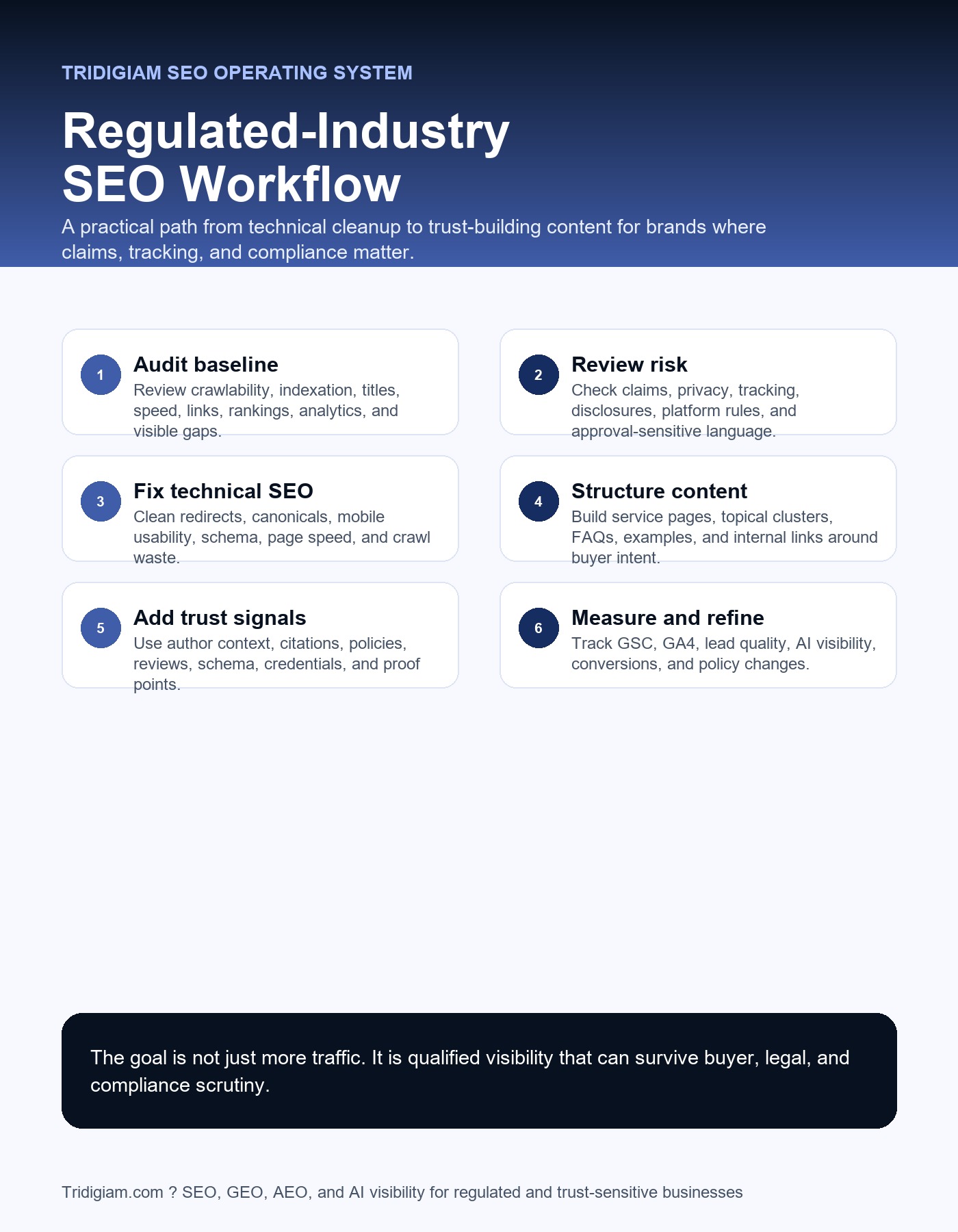
Healthcare schema markup answer map
Healthcare schema markup is structured data that helps search engines understand the entities on a medical website: the organization, providers, services, locations, medical topics, FAQs, reviews, and author/reviewer signals. It should match visible page content, avoid unsupported claims, and be validated before deployment. Schema can improve eligibility for certain search features and clarify meaning, but it does not replace trustworthy content, compliant claims, or strong on-page expertise.- Use schema to clarify entities: mark up the practice, provider, location, service, article, FAQ, review, and medical-topic relationships that already exist on the page.
- Keep markup consistent with visible content: do not add credentials, ratings, services, claims, or medical details that users cannot verify on the page.
- Choose healthcare types carefully: MedicalWebPage, Physician, MedicalOrganization, MedicalCondition, FAQPage, Article, and LocalBusiness-related types may fit different pages.
- Validate before publishing: use Google’s Rich Results Test, Search Console, and structured-data checks to catch syntax and eligibility issues.
- Pair schema with E-E-A-T signals: schema works best when the page also has helpful content, sources, dates, authorship, reviewer context, and clear internal links.
Questions to answer before implementing healthcare schema
Which schema types matter most for healthcare websites?
Most healthcare sites should start with Organization or MedicalOrganization, LocalBusiness or medical practice location details, provider/profile markup where appropriate, Article or BlogPosting for educational content, FAQPage when FAQs are visible, and medical topic types only when the page truly supports them.Does schema markup improve healthcare SEO rankings?
Schema markup helps search engines understand and classify content, and it can make pages eligible for certain rich results. It should not be treated as a standalone ranking fix. The page still needs helpful content, accurate medical or compliance information, strong internal links, and trustworthy source signals.What are the biggest schema mistakes on healthcare sites?
Common mistakes include marking up claims that are not visible, using medical types incorrectly, adding fake ratings or unsupported reviews, duplicating conflicting entity data, failing validation, and using schema to imply credentials, services, or outcomes the page does not substantiate.Key Takeaways
- Use JSON-LD format to implement medical schema markup on healthcare websites.
- Validate structured data with Google’s Rich Results Test tool before publishing pages.
- Include all relevant medical details in schema to support search engine understanding.
- Apply schema carefully to YMYL pages to meet high trust and quality standards.
- Structured data helps search engines interpret complex healthcare content accurately.
What Is Healthcare Schema Markup and Why It Matters for E-E-A-T
Google’s Search Quality Evaluator Guidelines explicitly rate Experience, Expertise, Authoritativeness, and Trustworthiness as the primary metrics for evaluating content quality in Your Money or Your Life topics Google. Healthcare websites operate entirely within this high-risk category. Search engines scrutinize medical information more heavily than general commercial content because inaccurate data can directly impact patient safety. Structured data provides the machine-readable context that helps search algorithms verify these trust signals without relying solely on visible page text. Schema markup acts as a direct communication channel between your website’s code and search engine crawlers. It translates complex medical credentials, facility details, and treatment information into a standardized format that bots can parse instantly. This technical layer supports the surface-level content by confirming who wrote an article or which hospital provides a service. The connection between structured data and E-E-A-T is functional rather than decorative. Many healthcare sites fail to declare their author’s medical degrees or organizational affiliations in code. Without this explicit declaration, search engines must infer expertise from surrounding text alone. This inference process is slow and prone to error. Properly implemented schema removes that ambiguity by attaching verified credential data directly to the content entity. It allows Google to associate a specific physician profile with their published articles automatically. This technical validation strengthens domain authority over time. Users see rich results that display star ratings, appointment availability, or doctor bios directly in search snippets. These enhanced displays increase click-through rates while reinforcing the perceived legitimacy of the practice. The structured data does not replace high-quality writing but it ensures that the existing quality is recognized by the ranking algorithms.Essential Medical Schema Types: Physician, Hospital, and MedicalWebPage
Google’s structured data documentation defines specific types for healthcare entities to distinguish clinical information from general web content. Using the correct schema type ensures search engines understand whether a page describes a doctor, a hospital facility, or a medical article. This distinction prevents confusion in search results and helps users find the right resource quickly. The Physician schema applies to individual practitioners. It captures details like specialty, education, and contact information. Search engines use this data to display rich snippets that highlight professional credentials. Patients often look for these specific details before booking an appointment or verifying a provider’s background. Accurate markup reduces friction in the patient journey by making key facts visible at a glance. Hospital schema serves larger medical facilities. It includes operating hours, emergency services status, and accepted insurance plans. This type helps users locate care options during urgent situations. The MedicalWebPage type targets informational content about diseases, procedures, or treatments. It signals that the page contains health-related information rather than promotional material. Search engines may apply additional quality checks to pages marked with this schema due to their impact on user well-being.- Physician: For individual doctors and specialists
- Hospital: For clinics, hospitals, and urgent care centers
- MedicalWebPage: For articles about health conditions or treatments
| Schema Type | Used For |
|---|---|
| Physician | Individual doctors and specialists |
| Hospital | Clinics, hospitals, and urgent care centers |
| MedicalWebPage | Articles about health conditions or treatments |
Implementing JSON-LD: A Step-by-Step Technical Guide for Developers
Developers should place JSON-LD script tags directly within the HTML head element of every page requiring structured data. This method separates the markup from visible content and prevents rendering conflicts in modern browsers. Search engines parse this format efficiently without disrupting the user experience on mobile or desktop devices. Begin by defining the entity type using schema.org vocabulary. For a physician profile, usePhysician. A hospital landing page requires Hospital. Medical articles need MedicalWebPage or Article with specific medical attributes. Each property must map to actual data on the page. Do not fabricate ratings or credentials that do not appear in visible HTML text.
Populate required fields with accurate information. Include name, URL, image, and description for all entities. Add contact details like telephone numbers and addresses for local healthcare providers. Verify that these details match the business listing on Google Business Profile to maintain consistency across search signals. Consistency builds trust with algorithms that prioritize authoritative sources.
Use a structured object format for nested data. List staff members as an array within the physician schema. Define opening hours using ISO 8601 time formats. Avoid HTML entities inside JSON strings. Escape special characters properly to prevent parsing errors. Clean syntax ensures search bots can read the entire structure without interruption.
Test the implementation before publishing. Use Google Rich Results Test to validate syntax and eligibility for rich snippets. Check for warnings or critical errors in the report. Fix any missing required properties immediately. Deploy only after the test shows no errors and all intended features are eligible for display.
Navigating YMYL Guidelines: Best Practices for Trust and Accuracy
Google evaluates YMYL content with heightened scrutiny because the information directly impacts user well-being and financial security. This elevated standard means search engines look for clear signals of professional competence and editorial oversight. Schema markup provides a direct channel to communicate those credentials to the algorithm. It allows you to explicitly define author qualifications, review dates, and publisher identity in a machine-readable format. This structured data supports the E-E-A-T framework by making expert attributes visible. You can link authors to their LinkedIn profiles or professional registries using the `author` property within JSON-LD. This verification step helps distinguish medical advice from general health blogs. Search engines rely on these connections to assess the reliability of the content before displaying it in rich results. Avoid common pitfalls that undermine trust signals. Do not invent review counts or fabricate star ratings for services you have not actually received feedback for. Google penalizes misleading structured data by removing enhanced search appearances entirely. Instead, focus on accurate representation of your practice hours, accepted insurance plans, and verified patient testimonials. Regular audits ensure your markup remains compliant with evolving standards. The Marketing Wind notes that consistency between on-page text and structured data matters for maintaining credibility. If your JSON-LD claims a physician has board certification, the webpage must clearly state that same fact. Misalignment creates confusion for both users and crawlers. Tridigiam helps healthcare clients align their technical implementation with compliance requirements. We ensure every data point reflects reality and supports long-term visibility goals.Validating Your Data: Using Google’s Rich Results Test and Search Console
Google’s Rich Results Test acts as the primary validation tool for checking if your structured data meets eligibility requirements for enhanced search displays. This free utility parses JSON-LD code and highlights syntax errors before you publish pages to live servers. Healthcare websites face strict compliance standards, so catching invalid markup early prevents potential penalties from search engines that monitor YMYL content closely. You should run every new medical page through this test during the development phase. The tool provides a clear visual breakdown of detected entities and flags any missing required properties for schemas like Physician or MedicalWebPage. If the test reports errors, fix them immediately rather than deploying broken code to production environments. Deploying incorrect schema can confuse search crawlers and diminish the visibility of your clinical services in local search results. After validation, monitor performance data in Google Search Console to track how well your structured data performs over time. The Enhancements reports section within Search Console shows the number of pages with detected entities and identifies any remaining issues that the Rich Results Test might have missed in bulk scenarios. This ongoing monitoring ensures your schema remains accurate as you update provider directories or add new treatment information. Regular audits help maintain high visibility in search results without risking compliance violations.- Run all JSON-LD code through the Rich Results Test before publishing.
- Review Search Console Enhancements reports weekly for new warnings.
- Correct errors immediately to prevent search engine penalties.
Future-Proofing Strategy: Adapting to Post-2026 Structured Data Updates
Search engine algorithms update their parsing logic quarterly to accommodate new structured data standards and combat spam signals. Healthcare websites must treat schema markup as a living document rather than a one-time technical implementation. Static JSON-LD code becomes obsolete when search engines introduce new properties for medical entities or modify eligibility criteria for rich results. Maintaining visibility requires a proactive monitoring schedule that aligns with platform updates. You should review your structured data against the latest Google Search Central documentation every six months. This routine check ensures your markup includes newly supported fields for physician profiles, hospital details, or medical procedure pages. Ignoring these changes risks losing enhanced search features that drive qualified patient traffic. Automation tools can assist in identifying deprecated properties or syntax errors across large site architectures. Sitebulb offers capabilities to audit and optimize schema usage at scale, reducing the manual effort required for complex healthcare sites. Integrating these checks into your regular SEO workflow prevents technical debt from accumulating. Regulatory compliance adds another layer of complexity to future-proofing efforts. As data privacy regulations tighten globally, your structured data must balance visibility with patient confidentiality. Avoid exposing protected health information through public-facing markup fields. Focus on high-level entity attributes like NPI numbers, practice locations, and service categories that enhance trust without violating privacy laws. This approach supports long-term search performance while maintaining strict adherence to industry standards.Common Implementation Errors and How to Avoid Penalties
Mismatched content between your page text and JSON-LD data triggers manual actions far faster than missing schema entirely. Search engines cross-reference the visible HTML with the structured code to verify accuracy. When a physician’s listed credentials in the markup differ from the profile details shown on screen, trust signals collapse immediately. This discrepancy creates immediate compliance risks for regulated industries. Healthcare providers must ensure that every attribute aligns precisely with verified patient-facing information. Inaccurate medicalWebPage or Physician schema can lead to demotions in search rankings or removal from rich results entirely. The penalty is not just a loss of visibility but a signal to users that the site lacks operational integrity. Common technical errors include using deprecated properties or incorrect date formats. Google’s documentation specifies strict requirements for temporal data and contact information fields. A single formatting error in the `medicalSpecialty` or `availableService` fields can cause the entire block to fail validation. These failures often go unnoticed until search performance drops significantly.- Audit your schema quarterly to catch drift from updated provider profiles.
- Use Google’s Rich Results Test Google before pushing changes to production.
- Verify that author and publisher data matches official licensing records.
Conclusion
Medical structured data improves how search engines interpret clinical content. Proper schema markup helps patients find accurate health information faster. It also supports compliance with accessibility standards for digital health resources. tridigiam.com assists regulated industries in implementing these technical SEO strategies correctly. We work toward measurable visibility improvements for healthcare websites. Our approach ensures your medical content meets both user needs and regulatory requirements. Contact our team to review your current structured data implementation.Frequently Asked Questions
What is the recommended format for implementing medical schema markup?
Use JSON-LD format to implement medical structured data. This method separates the markup from visible page content, reducing the risk of breaking site design while ensuring search engines can easily parse and understand the specific healthcare information provided.How should healthcare websites validate their schema implementation?
Validate all medical structured data using Google’s Rich Results Test. This tool checks for syntax errors and confirms that the markup meets requirements for potential rich results, ensuring search engines can correctly interpret the specialized healthcare content on your pages.Does schema markup help with YMYL healthcare pages?
Yes. Schema helps clarify context for Your Money or Your Life pages. By explicitly defining medical details like symptoms, treatments, and conditions, you provide clear signals that support search engines in assessing the relevance and authority of your specialized health content.Can AI tools generate healthcare schema markup?
AI tools can assist in generating initial schema drafts for health content. However, manual review remains necessary to ensure accuracy and compliance with medical standards. Automated generation helps speed up the process but requires expert verification to maintain data integrity and avoid errors.Is schema markup necessary for new healthcare websites?
Implementing schema is highly recommended for new sites. It provides immediate context to search engines about your medical services and content structure. Early adoption helps establish clear signals for relevance and can support better visibility as the site builds authority over time.
If your team needs a clearer workflow for structured data, trust signals, and AI visibility, Tridigiam Marketing Academy includes practical training for regulated teams implementing schema and answer-ready content. Start the schema and AI search training.
Resources
Need marketing that actually moves the needle?
Tridigiam is a Las Vegas marketing and advertising agency built for regulated and growth-focused businesses. Call (702) 748-7005 or request a consultation.

Explore knowledge from Chris Goodman, a marketing expert with extensive agency and small business experience, specializing in innovative advertising strategies. Chris has a Bachelor’s in Marketing from RMIT, years working in advertising agencies servicing clients, and years of experience working with small to medium sized businesses operating within regulated industries.