

Quick answer: Native advertising in healthcare blends ads into a site or app’s natural content, which means extra care is needed to keep FDA and HCP disclosure rules satisfied. Ads must clearly disclose their commercial nature and avoid implying they’re independent editorial content, since the FTC and platform policies both require transparent labeling for sponsored health content.
Navigating native advertising in healthcare requires a deep understanding of compliance rules to avoid legal pitfalls and maintain trust with consumers. With the FDA and HCP regulations strictly monitoring claims and disclosures, getting it right is crucial for any healthcare marketer aiming to engage audiences effectively.
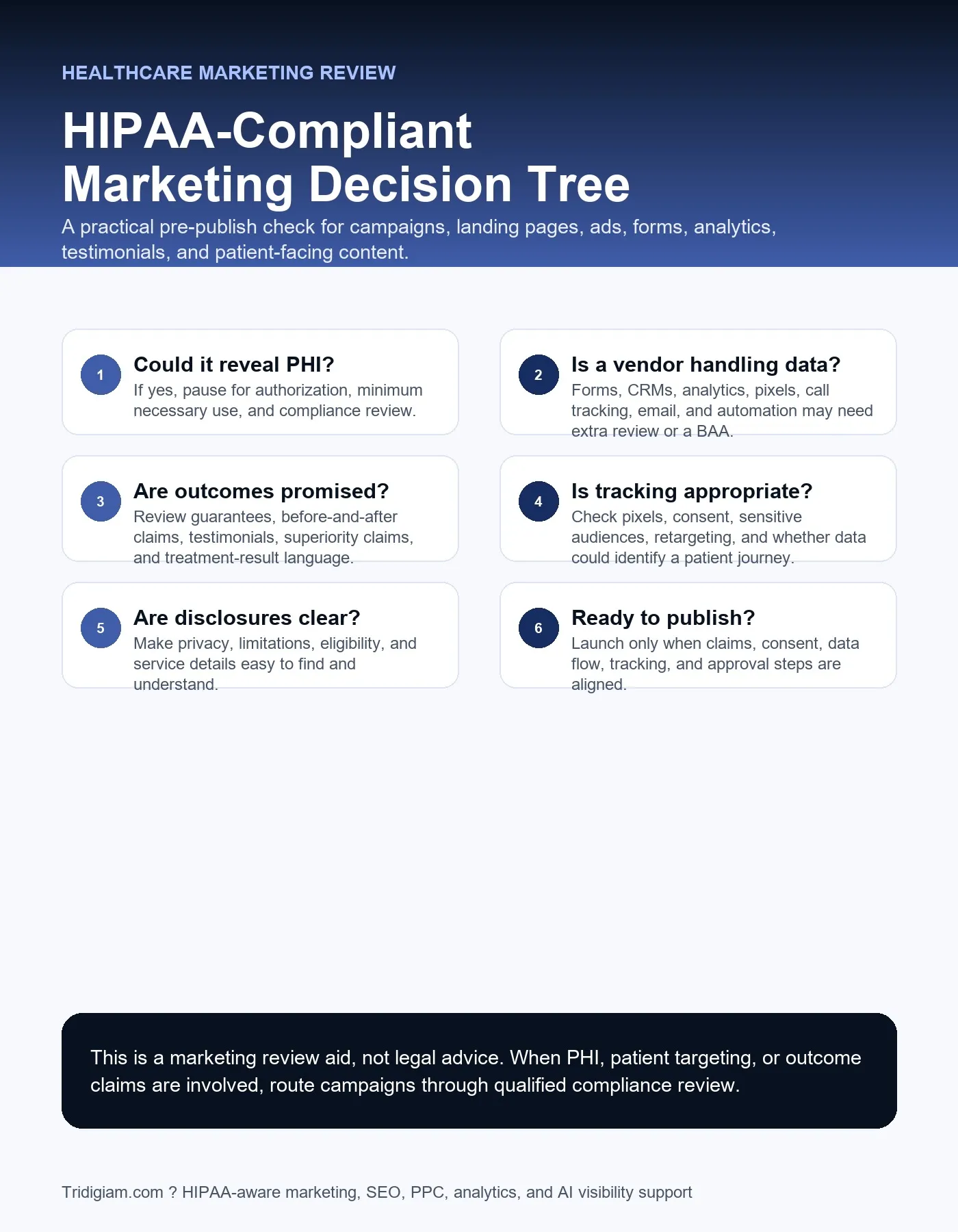
Native advertising in healthcare answer map
Native advertising in healthcare can work, but it has to be unmistakably labeled as advertising, truthful about health claims, and built so patient data is not exposed through targeting or measurement. The core risk is that sponsored content can borrow the trust of editorial health information while also triggering HIPAA, FTC, FDA-adjacent, platform, and privacy concerns.
- Disclose the ad relationship clearly: labels like sponsored, advertisement, or paid content should be visible before a patient engages with the content.
- Do not disguise promotion as independent medical advice: native placements should not imply editorial neutrality when a healthcare brand paid for the placement.
- Substantiate health claims: treatment, safety, outcome, efficacy, comparison, and wellness claims need appropriate support and legal/clinical review.
- Protect patient data: avoid condition-revealing targeting, retargeting, tracking pixels, form flows, or analytics events that disclose PHI or sensitive health interest.
- Keep landing pages compliant: the ad, article, CTA, form, follow-up workflow, and measurement layer should all tell the same truthful and privacy-safe story.
Useful source anchors include the FTC’s Native Advertising: A Guide for Businesses, the FTC Enforcement Policy Statement on Deceptively Formatted Advertisements, FTC guidance on health-related advertising claims, FTC Health Products Compliance Guidance, HHS guidance on HIPAA marketing, and HHS guidance on online tracking technologies. Tridigiam connects native healthcare advertising to healthcare digital marketing, healthcare content marketing, HIPAA-compliant marketing, HIPAA-conscious paid ads, HIPAA-conscious analytics, and AI Search Optimization.
Questions to answer before running native advertising in healthcare
What makes native advertising risky for healthcare brands?
Native advertising is risky because it can look like independent editorial content while promoting a healthcare service, product, or provider. If the sponsorship is unclear, the health claims are unsupported, or the tracking reveals sensitive patient interest, the campaign can create compliance and trust problems.
How should sponsored healthcare content be labeled?
Sponsored healthcare content should be labeled clearly and early enough that a reasonable person understands it is advertising before relying on the message. The label should not be buried, vague, or contradicted by the page design.
What should be reviewed before a healthcare native ad goes live?
Review the disclosure label, headline, claim substantiation, landing page, calls to action, author or sponsor presentation, tracking tags, audience targeting, forms, analytics, retargeting, and follow-up workflows.
Key Takeaways
- Native ads in healthcare must clearly disclose their commercial nature and avoid appearing as independent editorial content.
- FDA and HCP disclosure rules apply on top of standard FTC transparency requirements.
- Privacy regulations shape how demographic and targeting data can be used in healthcare campaigns.
- HIPAA compliance must be maintained throughout the campaign, not just on the landing page.
Understanding Native Advertising in Healthcare
Native advertising in healthcare involves integrating ads into the natural content of a website or app, making them look like part of the organic content. For marketing managers and agency owners, understanding native advertising is crucial to ensure compliance with strict regulations while effectively reaching target audiences.
In healthcare, transparency and adherence to privacy laws are paramount. Ads must clearly disclose their commercial nature and avoid misleading users about the source or intent of the message. According to The New Rules of Healthcare Co-Marketing Strategy in 2026, healthcare advertisers need to balance engaging content with regulatory compliance.
Demographic data plays a key role in targeting ads effectively, but it must be handled carefully. Advertisers should comply with privacy regulations like HIPAA and GDPR to protect sensitive information. The NAI’s Best Practices for Health Advertising guide highlights the importance of maintaining user trust through transparent practices.
Effective native advertising in healthcare requires a deep understanding of both audience preferences and regulatory requirements. Advertisers must ensure that their campaigns are not only engaging but also compliant, fostering long-term brand credibility and campaign success.
Key Compliance Rules for Native Advertising in Healthcare
Compliance rules are crucial for native advertising in healthcare, ensuring that all ads meet stringent legal and ethical standards. First, transparency is paramount; any sponsored content must clearly identify itself as such to avoid misleading consumers. According to the Native Ads Compliance & Policy Checklist for 2026, this means using labels like “Sponsored” or “Advertisement” prominently.
Second, healthcare marketers must adhere to the Health Insurance Portability and Accountability Act (HIPAA) regulations when handling patient data. This involves securing personal health information and obtaining necessary consents before using it for marketing purposes. For detailed guidance on HIPAA compliance in advertising, refer to HIPAA-compliant marketing & advertising: How to run compliant campaigns.
Third, the Federal Trade Commission (FTC) and Food and Drug Administration (FDA) require truthful and non-misleading claims in healthcare ads. Any performance or efficacy claims must be supported by credible evidence. The New Rules of Healthcare Co-Marketing Strategy in 2026 provides insights into the evolving standards for healthcare marketing compliance.
Lastly, privacy regulations such as GDPR and CCPA must be considered when advertising to patients. Marketers should ensure they obtain proper consent and handle data securely. The Healthcare Advertiser’s Guide to Navigating Changes in Privacy Regulations offers comprehensive guidance on these aspects.
| Requirement | What It Means |
|---|---|
| Transparency | Sponsored content must clearly identify itself, using labels like “Sponsored” or “Advertisement,” per the Native Ads Compliance & Policy Checklist for 2026. |
| HIPAA | Healthcare marketers must secure personal health information and obtain necessary consents before using patient data for marketing. |
| FTC / FDA Truthful Claims | Performance or efficacy claims must be truthful, non-misleading, and supported by credible evidence. |
| Privacy Regulations (GDPR/CCPA) | Marketers must obtain proper consent and handle patient data securely when advertising to patients. |
Best Practices for Transparent and Ethical Native Ads
Transparency and ethical standards are paramount when executing native advertising campaigns in healthcare. To maintain compliance and build trust, it is essential to clearly disclose sponsored content as required by regulatory bodies such as the NAI The NAI Unveils Best Practices for Health Advertising. This includes using clear labels like “Sponsored” or “Promoted,” ensuring that consumers can easily distinguish advertisements from editorial content.
Another best practice is to regularly update and refresh your demographic data. Accurate and current information helps target ads more effectively while respecting consumer privacy Health Union, LLC. Additionally, conducting A/B testing can refine ad performance without compromising user data integrity or regulatory compliance.
Ensuring that your campaigns adhere to HIPAA regulations is also crucial. This involves safeguarding patient information and ensuring that marketing materials do not inadvertently disclose protected health information HIPAA-compliant marketing & advertising. By following these guidelines, you can maintain a high level of transparency and ethical integrity in your native advertising efforts.
Navigating Privacy Regulations in Healthcare Advertising
Navigating privacy regulations is critical when executing native advertising campaigns in healthcare. Compliance with laws such as the Health Insurance Portability and Accountability Act (HIPAA) ensures that patient data remains confidential and secure.
Healthcare marketers must adhere to stringent guidelines, especially concerning demographic data used for targeting. According to Purple Lab, understanding evolving privacy regulations is essential to avoid legal pitfalls and maintain trust with patients.
Best practices include implementing a thorough compliance checklist, as outlined by Anstrex. This ensures that all elements of native advertising are transparent and compliant with regulatory standards.
Additionally, the Network Advertising Initiative (NAI) has unveiled specific best practices for health advertising (The NAI). These guidelines emphasize transparency and ethical data usage to protect consumer privacy.
By following these compliance rules and best practices, healthcare marketers can effectively navigate the complex landscape of privacy regulations while delivering targeted and impactful native advertising campaigns.
Utilizing Demographic Data for Targeted Campaigns
Utilizing demographic data for targeted native advertising campaigns can significantly enhance the effectiveness of healthcare marketing efforts. However, it is crucial to adhere to compliance rules and best practices to maintain transparency and ethical standards. Targeted campaigns should leverage up-to-date demographic information to ensure relevance and engagement without compromising patient privacy.
When utilizing demographic data, healthcare marketers must navigate complex regulatory landscapes such as HIPAA HIPAA-compliant marketing & advertising: How to run compliant campaigns in health. Best practices include segmenting audiences based on age, location, and health interests while avoiding the collection of sensitive personal information. For instance, targeting users interested in heart health without collecting specific medical history can help maintain compliance.
Moreover, transparency is key when using demographic data for native advertising. Advertisers should clearly disclose sponsored content to avoid misleading consumers Native Ads Compliance & Policy Checklist for 2026 (Prep Now). By following these guidelines, healthcare marketers can create effective and compliant native advertising campaigns that resonate with their target audience while upholding ethical standards.
A/B Testing Strategies for Effective Native Ad Campaigns
A/B testing is crucial for optimizing native ad campaigns in the healthcare industry. By comparing two versions of an ad, you can determine which elements perform better and refine your strategy accordingly. For instance, test different headlines or calls-to-action to see what resonates more with your audience.
Ensure that any A/B testing adheres to compliance rules outlined by regulatory bodies like the NAI (Network Advertising Initiative). The NAI’s guidelines emphasize transparency in advertising practices, which is particularly important in healthcare. According to their best practices, ads must clearly indicate when content is sponsored and avoid misleading claims.
Additionally, consider testing with different demographic segments to see which groups respond best. This approach helps tailor your campaigns more effectively while complying with privacy regulations like HIPAA. For instance, using demographic data for targeted campaigns can improve engagement but must be handled carefully to maintain patient confidentiality (HIPAA-compliant marketing).
A/B testing also helps ensure that your native ads remain fresh and relevant. Regularly updating ad content can prevent audience fatigue and keep engagement levels high, as recommended in the New Rules of Healthcare Co-Marketing Strategy for 2026.
Ensuring HIPAA Compliance in Your Marketing Efforts
Ensuring HIPAA compliance is critical when running native advertising campaigns in healthcare. Under the Health Insurance Portability and Accountability Act (HIPAA), personally identifiable health information must be protected. Marketing managers and agency owners must be vigilant about handling patient data securely.
To maintain compliance, avoid using any personal health information or identifiers such as names, addresses, or medical record numbers in your advertising efforts. Instead, focus on anonymized demographic data for targeted campaigns. For instance, use aggregated data to understand broad audience segments without compromising individual privacy.
Implementing a robust consent process is also essential. Ensure that individuals have explicitly given permission for their data to be used in marketing activities. Transparency with your audience about how their data will be utilized can help build trust and adhere to regulatory standards.
Regularly review and update your compliance policies to stay current with evolving regulations. Utilize tools and resources like the HIPAA-compliant marketing guidelines from Piwik PRO and the NAI’s best practices for health advertising to ensure your campaigns remain compliant.
Maintaining HIPAA compliance not only protects patient data but also safeguards your brand’s reputation and ensures the effectiveness of your native advertising efforts in healthcare.
Conclusion
Compliance with regulations is crucial for native advertising in healthcare to maintain trust and avoid legal issues. Tridigiam.com can help regulated businesses navigate these complexities effectively. Contact us to learn more about our services tailored to your industry needs.
Frequently asked questions
What counts as native advertising in healthcare?
Native advertising is sponsored content designed to match the look and feel of the platform it appears on, such as a sponsored article on a health news site or an in-feed social post styled like organic content.
What compliance rules apply to healthcare native ads?
Native healthcare ads must be clearly disclosed as sponsored content under FTC rules, avoid unsubstantiated claims, and follow platform-specific healthcare advertising policies from Google, Meta, and content networks.
Is native advertising effective for regulated healthcare brands?
Yes, when done correctly, since it can build trust and awareness without the strict targeting and language restrictions of some paid search and social ad formats, though it still requires careful compliance review.
Want more like this? Browse our free CRO, SEO, and AI search guides.

Written and reviewed by Chris Goodman, CEO of Tridigiam
Founder of a Las Vegas marketing agency building AI-visibility and compliance-aware marketing systems for regulated industries — healthcare, addiction treatment, and aesthetics. LinkedIn
Resources
Need marketing that actually moves the needle?
Tridigiam is a Las Vegas marketing and advertising agency built for regulated and growth-focused businesses. Call (702) 748-7005 or request a consultation.

Explore knowledge from Chris Goodman, a marketing expert with extensive agency and small business experience, specializing in innovative advertising strategies. Chris has a Bachelor’s in Marketing from RMIT, years working in advertising agencies servicing clients, and years of experience working with small to medium sized businesses operating within regulated industries.