

Quick answer: Local SEO helps a medical practice show up when nearby patients search for care, through an optimized Google Business Profile, consistent name-address-phone citations, local landing pages, and compliantly collected reviews. Done well, it puts your practice in the map pack and local results where most patient searches start.
In today’s digital age, the initial step for patients seeking healthcare is often an online search. Most patients now begin their healthcare journey by exploring options through a search engine, which underscores the crucial role of local SEO for medical practices. As the competition among healthcare providers intensifies, dominating patient searches in your locality becomes imperative. This article explores effective strategies for medical practices to enhance their visibility in local searches, understand patient behaviors, and leverage healthcare local marketing techniques. By the end of this guide, you’ll be equipped to optimize your practice’s digital presence for 2025 and beyond.
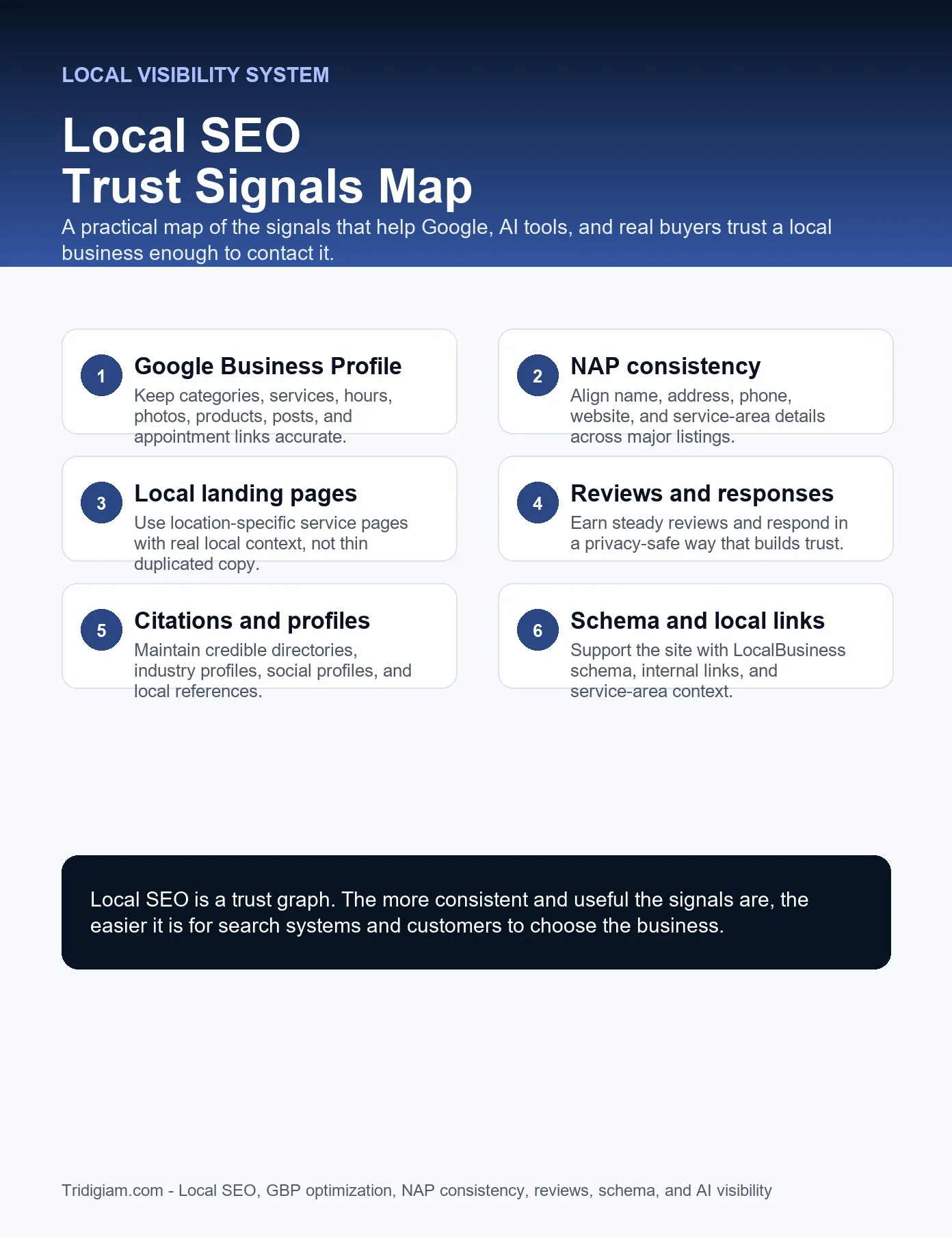
Key Takeaways
- Local SEO is essential for attracting patients who start their healthcare searches online.
- Online reviews play a significant role in patient decisions, underscoring the need for reputation management.
- Mobile-friendly and voice-search optimized websites are vital due to increasing mobile and voice search trends.
- Medical practices that optimize for local SEO can see a significant increase in patient acquisition and foot traffic.
- Being visible in Google’s local pack results can considerably boost your practice’s click-through rates.
Understanding the Importance of Local SEO for Medical Practices
The landscape of healthcare marketing is rapidly evolving, with local SEO for medical practices becoming a pivotal element in the strategy to attract and retain patients. A significant share of all searches carry local intent, meaning potential patients are looking for services “near them.” Given that searchers strongly favor businesses that appear on the first page of search results, it is vital for medical practices to secure a prominent position in local search results.
Local SEO involves optimizing your online presence to attract more business from relevant local searches. It differs from traditional SEO by focusing efforts on a specific geographical area. By leveraging local SEO, medical practices can ensure they are visible to patients looking for healthcare services within their vicinity. This visibility not only increases the likelihood of appointment bookings but also enhances the practice’s credibility and trustworthiness.
Moreover, medical practices that are highly optimized for local SEO can experience a meaningful increase in quality leads from organic search results. This statistic highlights the potential return on investment that effective local SEO strategies can offer.
Optimizing Your Google My Business Profile
A crucial component of medical local search optimization is claiming and optimizing your Google My Business (GMB) profile. This free tool is pivotal as it allows your practice to appear in relevant local searches and Google Maps. To optimize your GMB profile effectively, ensure that it is complete and accurate, featuring your practice’s correct address, phone number, and office hours.
Moreover, regularly update your GMB profile with new posts about your services, promotions, and any changes in your practice. Adding high-quality photos of your practice’s interiors and staff can also enhance engagement and attract more clicks. According to HubSpot, businesses with complete GMB profiles receive 7 times more clicks than those without.
Encouraging patients to leave reviews on your GMB profile is another powerful strategy. Since most patients trust online reviews as much as personal recommendations, a stream of positive reviews can significantly impact your practice’s reputation and patient acquisition.
Understanding and Managing Online Reviews
Online reviews are a critical aspect of doctor SEO and healthcare marketing. Studies indicate that a majority of patients factor online reviews into their choice of healthcare provider. Therefore, actively managing your practice’s online reputation is essential.
To manage reviews effectively, engage with patients by responding to their feedback, both positive and negative. Acknowledging positive reviews shows gratitude and builds loyalty, while addressing negative reviews demonstrates your commitment to patient satisfaction and improvement. Consistent engagement can enhance your practice’s image and encourage more patients to leave feedback.
Furthermore, integrating patient testimonials on your website can boost your credibility and SEO. User-generated content, such as reviews and testimonials, is highly valued by search engines and can improve your site’s rankings.
The Role of Mobile and Voice Search in Local SEO
With mobile searches for local services rising sharply over the past several years, ensuring your website is mobile-friendly is no longer optional. A significant portion of patients use their smartphones to search for healthcare providers, making it crucial for medical practices to have a responsive website design that provides a seamless user experience across devices.
Additionally, the rise of voice search poses new opportunities and challenges for healthcare local marketing. Voice search continues to account for a growing share of all searches. Optimizing for voice search involves focusing on natural language and question-based queries that patients might use to find medical services. Implementing an FAQ section on your site, rich with semantic keywords, can help capture these voice search queries.
Leveraging Local Content and Backlinks
Creating locally-focused content is a powerful way to enhance your practice’s local SEO. Blog posts about local healthcare events, health tips relevant to your community, or case studies from your practice can engage a local audience. This not only positions your practice as an authority in your field but also improves local search rankings through relevant keywords.
Backlinks from reputable local websites are another key factor in improving local SEO. Partnerships with local businesses and getting listed in local directories can provide valuable backlinks that enhance your site’s authority and visibility in search results. According to BrightLocal, backlinks are one of the top factors that influence local search rankings.
Utilizing Social Media for Local SEO
Social media platforms are effective tools for enhancing healthcare local marketing. Engaging with your local community through social media can boost your practice’s visibility and patient engagement. Share informative content, respond to patient inquiries, and participate in local events to increase your reach and influence.
Integrating social media with your local SEO strategy involves maintaining consistent NAP (Name, Address, Phone Number) details across all platforms and ensuring your social profiles link back to your website. This consistency helps search engines verify your practice’s legitimacy and can improve local search rankings.
Local SEO Tactic
What It Involves
Google Business Profile Optimization
Claim and complete your GBP with accurate name, address, phone, and category info so your practice appears in local searches and Maps
Online Review Management
Actively respond to patient reviews, both positive and negative, since most patients base provider choice on reviews
Mobile and Voice Search Optimization
Ensure a responsive, fast-loading website, since mobile searches for local healthcare services keep climbing
Local Content and Backlinks
Publish locally-focused blog content and earn backlinks to build authority and improve local rankings
Social Media Engagement
Share informative content and participate in local community activity to boost visibility and patient engagement
| Local SEO Tactic | What It Involves |
|---|---|
| Google Business Profile Optimization | Claim and complete your GBP with accurate name, address, phone, and category info so your practice appears in local searches and Maps |
| Online Review Management | Actively respond to patient reviews, both positive and negative, since most patients base provider choice on reviews |
| Mobile and Voice Search Optimization | Ensure a responsive, fast-loading website, since mobile searches for local healthcare services keep climbing |
| Local Content and Backlinks | Publish locally-focused blog content and earn backlinks to build authority and improve local rankings |
| Social Media Engagement | Share informative content and participate in local community activity to boost visibility and patient engagement |
Conclusion
In conclusion, mastering local SEO for medical practices is essential for standing out in an increasingly competitive healthcare landscape. By optimizing your online presence through tools like Google My Business, managing online reviews, adapting to mobile and voice search trends, and leveraging local content and social media, your practice can significantly enhance its visibility and attract more patients. As patient behaviors and technological trends evolve, staying informed and adaptive will ensure your practice remains at the forefront of local search results.
If you need expert assistance in implementing these strategies, consider partnering with Tridigiam, a digital marketing agency specializing in healthcare SEO. Our team can help you achieve and maintain a competitive edge in local searches.
FAQ
What is local SEO for medical practices?
Local SEO for medical practices involves optimizing a medical practice’s online presence to appear in local search results. This includes strategies like optimizing Google My Business profiles, managing online reviews, and using locally-focused keywords to attract patients in the practice’s geographical area.
How can medical practices improve their online reviews?
Medical practices can improve online reviews by encouraging satisfied patients to leave feedback, responding to reviews promptly and professionally, and using patient feedback to make improvements. Engaging with reviews not only boosts reputation but also encourages more patients to share their experiences.
Why is mobile optimization important for medical practices?
Mobile optimization is crucial because a significant number of patients use mobile devices to search for healthcare providers. A mobile-friendly website ensures a seamless user experience, which is essential for retaining potential patients and improving search engine rankings.
How does voice search impact local SEO for doctors?
Voice search changes how patients find medical services by using natural language and question-based queries. Optimizing for these queries, incorporating long-tail keywords, and having a comprehensive FAQ section can help practices capture voice-driven search traffic.
What role do backlinks play in local SEO?
Backlinks from reputable local websites enhance a practice’s authority and visibility in search results. Collaborating with local businesses and being listed in local directories can provide valuable backlinks that improve local SEO and attract more patients.
Related guides from Tridigiam
- Dental marketing strategies — SEO and PPC plays specific to dental practices.
- Google Ads for doctors — Patient-acquisition Google Ads framework for medical practices.
- Mental health marketing for therapists — Local SEO and outreach plays for therapy practices building waiting lists in their community.
Related service: Learn more about Tridigiam’s marketing for regulated and healthcare businesses.
Resources
Need marketing that actually moves the needle?
Tridigiam is a Las Vegas marketing and advertising agency built for regulated and growth-focused businesses. Call (702) 748-7005 or request a consultation.
Frequently asked questions
What’s the single highest-impact local SEO fix for a medical practice?
Fully completing and regularly updating the Google Business Profile, including categories, services, hours, and photos, tends to move the needle fastest since it directly feeds the map pack results patients see first.
Do patient reviews actually affect local search rankings?
Yes, review volume, recency, and rating all factor into local rankings. Reviews need to be collected in ways that respect platform rules and patient privacy, without incentivizing or fabricating them.
Why do NAP citations matter for medical practice SEO?
Search engines cross-check a practice’s name, address, and phone number across directories and citation sources. Inconsistent NAP data can quietly suppress local rankings even when on-site SEO is solid.
Want more like this? Browse our free CRO, SEO, and AI search guides.

Written and reviewed by Chris Goodman, CEO of Tridigiam
Founder of a Las Vegas marketing agency building AI-visibility and compliance-aware marketing systems for regulated industries — healthcare, addiction treatment, and aesthetics. LinkedIn
Related book: For a practical system to build local visibility, reviews, citations, and trust signals, see The Local Trust Stack by Chris Goodman.

Explore knowledge from Chris Goodman, a marketing expert with extensive agency and small business experience, specializing in innovative advertising strategies. Chris has a Bachelor’s in Marketing from RMIT, years working in advertising agencies servicing clients, and years of experience working with small to medium sized businesses operating within regulated industries.