Quick answer: Technical SEO is the foundation that lets search engines crawl, render, and index your site: site speed, mobile-friendliness, clean URLs, structured data, sitemaps, and no crawl errors. Great content cannot rank if the technical base is broken. This covers the best practices that keep a site healthy and indexable.
Technical SEO best practices answer map
Technical SEO makes a website easier for search engines and AI systems to crawl, render, understand, index, and trust. The highest-impact work usually combines clean architecture, fast pages, mobile usability, indexation control, structured data, canonical accuracy, internal links, and ongoing monitoring.
- Crawlability: search engines need accessible URLs, clean navigation, useful internal links, XML sitemaps, and no accidental robots.txt blocks.
- Indexability: canonical tags, redirects, noindex rules, duplicate handling, and status codes should clearly tell search engines which pages belong in results.
- Performance: Core Web Vitals, mobile speed, server response, media weight, and third-party scripts affect user experience and search performance.
- Understanding: structured data, headings, schema, entity clarity, and concise answers help search engines and AI answer systems interpret the page.
- Monitoring: Search Console, crawl reports, analytics, log files, and regular QA help catch technical issues before they suppress traffic or conversions.
Useful source anchors include Google’s SEO Starter Guide, Google Search Central on Google crawlers, Google’s guide to canonicalization and duplicate URLs, Google’s introduction to structured data, and Google Search Central on page experience. Tridigiam connects technical SEO to page speed for SEO and PPC, schema markup for healthcare, Google Search Console data, SEO marketing fundamentals, and AI Overviews for healthcare SEO.
Questions to answer before prioritizing technical SEO fixes
Is the issue blocking crawling, indexing, understanding, or conversion?
Classify each technical issue by the outcome it affects. A crawl block, duplicate canonical, slow landing page, broken internal link, or missing schema can all matter, but they do not deserve the same priority.
Which pages create the most business risk if they underperform?
Prioritize service pages, high-intent content, paid landing pages, local pages, comparison pages, and pages that support sales conversations. Technical SEO work should start where visibility and conversion matter most.
How will the site be monitored after fixes go live?
Use Search Console, analytics, crawl tools, sitemap checks, redirect tests, Core Web Vitals, and public-page QA to confirm fixes stay fixed. Technical SEO is a maintenance system, not a one-time cleanup.
Key Takeaways
- Technical SEO ensures search engines can effectively crawl and index your website, improving visibility in search results.
- It enhances user experience through better website speed, mobile responsiveness, and accessibility.
- Following technical SEO best practices safeguards your website from common issues like duplicate content, broken links, and slow load times.
Introduction
Imagine building a stunning home only to discover that the foundation isn’t stable. This is how a website without technical SEO works—it might look great, but it lacks the structure needed to perform well.
Technical SEO refers to the behind-the-scenes elements of your website that make it easy for search engines to crawl, index, and rank your content. It’s the foundation of search engine optimization, ensuring that your website is not only accessible to search engines but also provides a positive experience for visitors.
In this article, we’ll dive into what technical SEO is, why it’s essential, and how you can apply best practices to boost your website’s performance and rankings.
What is Technical SEO?
Technical SEO refers to optimizing the technical aspects of a website to improve its crawlability and indexability. While on-page SEO focuses on content and off-page SEO centers around backlinks, technical SEO ensures that search engines can understand your website efficiently.
Key components of technical SEO include:
- XML Sitemaps: These help search engines navigate your site’s structure.
- Robots.txt File: Guides search engines on which pages to crawl or avoid.
- Structured Data: Adds context to your content, helping search engines understand it better.
For instance, structured data can turn a product page into a rich snippet, displaying extra details like pricing and availability directly in search results. Without technical SEO, search engines might struggle to properly index your site, hurting its visibility.
Why Technical SEO So Important and is Crucial for Website Optimization
Technical SEO plays a key role in boosting your website’s rankings and ensuring a seamless user experience. Here’s why it’s indispensable:
- Improved Rankings: Search engines reward websites that are technically optimized with higher rankings. For example, Google prioritizes mobile-friendly and fast-loading websites.
- Better User Experience: Technical SEO addresses load times, mobile responsiveness, and secure browsing, ensuring users stay longer on your site.
- Avoiding Penalties: Broken links, duplicate content, and security issues can harm your website’s reputation and rankings. Technical SEO helps prevent these problems.
Without technical SEO, your site risks losing visibility and traffic. For example, a slow-loading website can frustrate users, leading them to leave before your content loads, which increases your bounce rate—a negative signal to search engines.
Key Technical SEO Best Practices
| Practice | Why It Matters |
|---|---|
| Crawlability | Maintain a clean XML sitemap and robots.txt so search engines can reach every page |
| Site speed | Compress images, use caching, minimize code to cut load times |
| Mobile optimization | Responsive design that works cleanly across all screen sizes (mobile-first indexing) |
| Duplicate content | Use canonical tags to mark the original version of a page |
| Internal linking | Strategic links that help both users and search engines navigate the site |
| Schema markup | Structured data that helps search engines understand and display your content |
Ensure Crawlability
Search engines rely on tools like XML sitemaps and robots.txt files to crawl your site. A well-maintained sitemap ensures that every page is accessible, while the robots.txt file prevents unnecessary pages from being indexed.
Using tools like Google Search Console, you can monitor your site’s crawl status and fix any errors.
Boost Website Speed
Website speed is critical for both user satisfaction and rankings. Compress large images, use caching tools, and minimize unnecessary code to reduce load times. Pages that take longer than a few seconds to load see meaningfully higher abandonment rates, so speed optimization is non-negotiable.
Mobile Optimization
With mobile-first indexing, Google prioritizes websites optimized for mobile devices. A responsive design ensures your site works seamlessly on screens of all sizes, offering a smooth experience to users.
Fix Duplicate Content Issues
Duplicate content confuses search engines and can dilute your rankings. Use canonical tags to indicate the original version of a page and ensure all your content is unique.
Improve Internal Linking Structure
Strategic internal linking helps search engines and users navigate your site. For example, linking from your homepage to specific service pages can guide visitors to key content while improving your site’s crawlability.
Implement Schema Markup
Schema markup, or structured data, helps search engines understand your content better. It can turn standard search results into rich snippets, displaying details like ratings, dates, or locations.
Conducting a Technical SEO Audit
Performing a technical SEO audit ensures your website stays optimized. Here’s a simple checklist:
- Use SEO Tools: Tools like Screaming Frog SEO, AIOSEO, and Yoast SEO can identify issues like broken links, crawl errors, and missing metadata.
- Fix Crawl Errors: Check Google Search Console for crawl issues and resolve them immediately.
- Review Metadata: Ensure every page has optimized titles and meta descriptions that include target keywords.
- Monitor Site Speed: Test your site’s load time using tools like PageSpeed Insights or GTmetrix.
- Update XML Sitemap: Keep your sitemap current and submit it to Google for better indexing.
An audit not only identifies technical SEO issues but also helps maintain a strong foundation for ongoing optimization.
Conclusion
Technical SEO is the backbone of a well-optimized website. From improving rankings to enhancing user experience, its benefits are far-reaching. By addressing crawlability, speed, and mobile responsiveness, you can create a website that satisfies both search engines and users.
At Tridigiam, we understand the importance of a strong technical SEO foundation. Call us today at 702-748-7005 to take the first step toward optimizing your website for better performance and visibility!
FAQs
What is technical SEO, and why is it important?
Technical SEO refers to optimizing your website’s technical aspects to help search engines crawl, index, and rank it effectively. It’s important because it improves visibility, user experience, and overall performance.
How do I know if my website has technical SEO issues?
Use tools like Screaming Frog, Google Search Console, or AIOSEO to identify issues like crawl errors, broken links, or slow load times.
What tools can help me with a technical SEO audit?
Tools like Yoast SEO, AIOSEO, and Screaming Frog are excellent for running comprehensive audits and fixing technical issues.
How often should I update my technical SEO?
Perform a technical SEO audit at least twice a year to identify and resolve new issues. Regular updates keep your website optimized and competitive.
Can I improve SEO without technical SEO?
While content and backlinks are important, neglecting technical SEO can hurt your rankings. A technically sound website ensures that your other SEO efforts pay off.
What should be included in a technical SEO checklist?
A technical SEO checklist should include tasks like ensuring a mobile-friendly design, improving site speed, resolving crawl errors, optimizing site architecture, using HTTPS, implementing structured data, and fixing broken links.
What is the importance of technical SEO?
Technical SEO ensures that your website is accessible, crawlable, and optimized for search engines, helping improve visibility and providing a better user experience.
What is on-page SEO?
On-page SEO refers to optimizing individual web pages, including content, keywords, meta tags, and internal links, to improve search engine rankings and drive relevant traffic.
What is structured data for a technically optimized website?
Structured data is code added to your website to help search engines understand the content, enabling rich results like star ratings, FAQs, and other enhanced search appearances.
What are some technical SEO tools that are free?
Free tools like Google Search Console, Screaming Frog (free version), GTmetrix, and PageSpeed Insights help analyze and fix technical SEO issues.
What is a crawl and why is it technical SEO important?
A crawl is when search engine bots navigate through a website to index its content. Technical SEO is crucial to ensure that bots can efficiently access and understand your site, improving its ranking potential.
Related Reading
Related service: Learn more about Tridigiam's search engine marketing services.
Frequently asked questions
What's the most common technical SEO issue that quietly hurts rankings?
Slow page speed and poor mobile rendering are among the most common, since both directly affect crawl efficiency and user experience, two things search engines weight heavily regardless of how strong the content is.
How often should a site run a technical SEO audit?
A full audit every quarter, with lighter automated monitoring in between for crawl errors and broken links, catches most issues before they compound into a bigger ranking problem.
Does technical SEO matter if the content is already excellent?
Yes, technical issues can prevent even excellent content from being crawled or indexed properly, so strong content and a healthy technical foundation both have to be in place for pages to rank well.
Want more like this? Browse our free CRO, SEO, and AI search guides.

Written and reviewed by Chris Goodman, CEO of Tridigiam
Founder of a Las Vegas marketing agency building AI-visibility and compliance-aware marketing systems for regulated industries — healthcare, addiction treatment, and aesthetics. LinkedIn
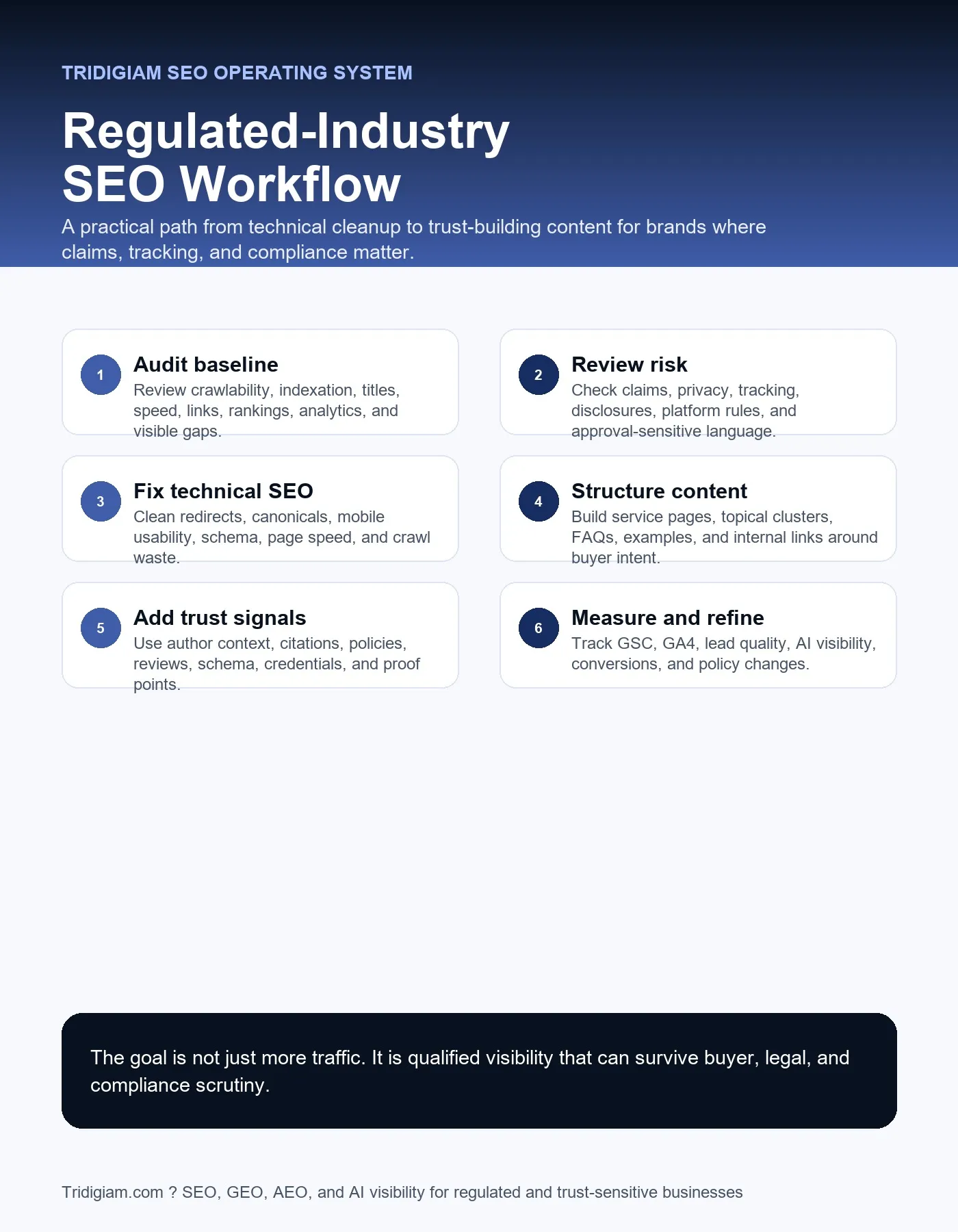
Technical SEO is also the foundation for AI visibility. Tridigiam Marketing Academy walks through the practical SEO, GEO, AEO, schema, crawlability, and trust-signal workflows teams need before AI systems can reliably understand and cite their content. Build the technical SEO foundation for AI visibility.
Need marketing that actually moves the needle?
Tridigiam is a Las Vegas marketing and advertising agency built for regulated and growth-focused businesses. Call (702) 748-7005 or request a consultation.

Explore knowledge from Chris Goodman, a marketing expert with extensive agency and small business experience, specializing in innovative advertising strategies. Chris has a Bachelor’s in Marketing from RMIT, years working in advertising agencies servicing clients, and years of experience working with small to medium sized businesses operating within regulated industries.