
Quick answer: Landing page optimization improves a page’s layout, copy, speed, and calls to action so more visitors take the desired action. The biggest wins usually come from a clear single goal, fast load, trust signals, and testing. Small, measured changes compound into higher conversion.
Any digital marketing strategy must include landing page optimization. It entails making website element improvements in order to boost conversions. By generating more leads and sales, a landing page that is properly optimized can have a big impact on a marketing campaign‘s success. Enterprises can optimize their marketing expenditures by prioritizing enhancements to the user experience and page relevancy. The fact that landing page optimization directly affects conversion rate is one of the main arguments in favor of its significance.
Key Takeaways
- Landing page optimization is crucial for improving conversion rates and maximizing the effectiveness of marketing campaigns.
- Key elements for optimization include clear and compelling headlines, relevant and engaging content, and a visually appealing design.
- Crafting compelling call-to-actions is essential for guiding visitors towards desired actions and increasing conversion rates.
- A/B testing allows for continuous improvement by comparing different versions of a landing page to determine which performs better.
- Utilizing data and analytics helps in understanding user behavior and preferences, and informs optimization strategies for better results.
- Streamlining the user experience by removing distractions and making the navigation intuitive can lead to higher conversions.
- Monitoring and evaluating performance on an ongoing basis is necessary for identifying areas of improvement and ensuring the effectiveness of optimization efforts.
Introduction
A landing page with a high conversion rate has the potential to convert website visitors into leads or customers, ultimately increasing sales for the company. An optimized landing page can also enhance visitor satisfaction and engagement by improving the overall user experience. This can lead to increased brand loyalty and repeat business. By ensuring that their online presence is effective in turning visitors into customers, landing page optimization can give businesses a competitive edge in the market.
Key Components of Landing Page Optimization
Headline and Imagery
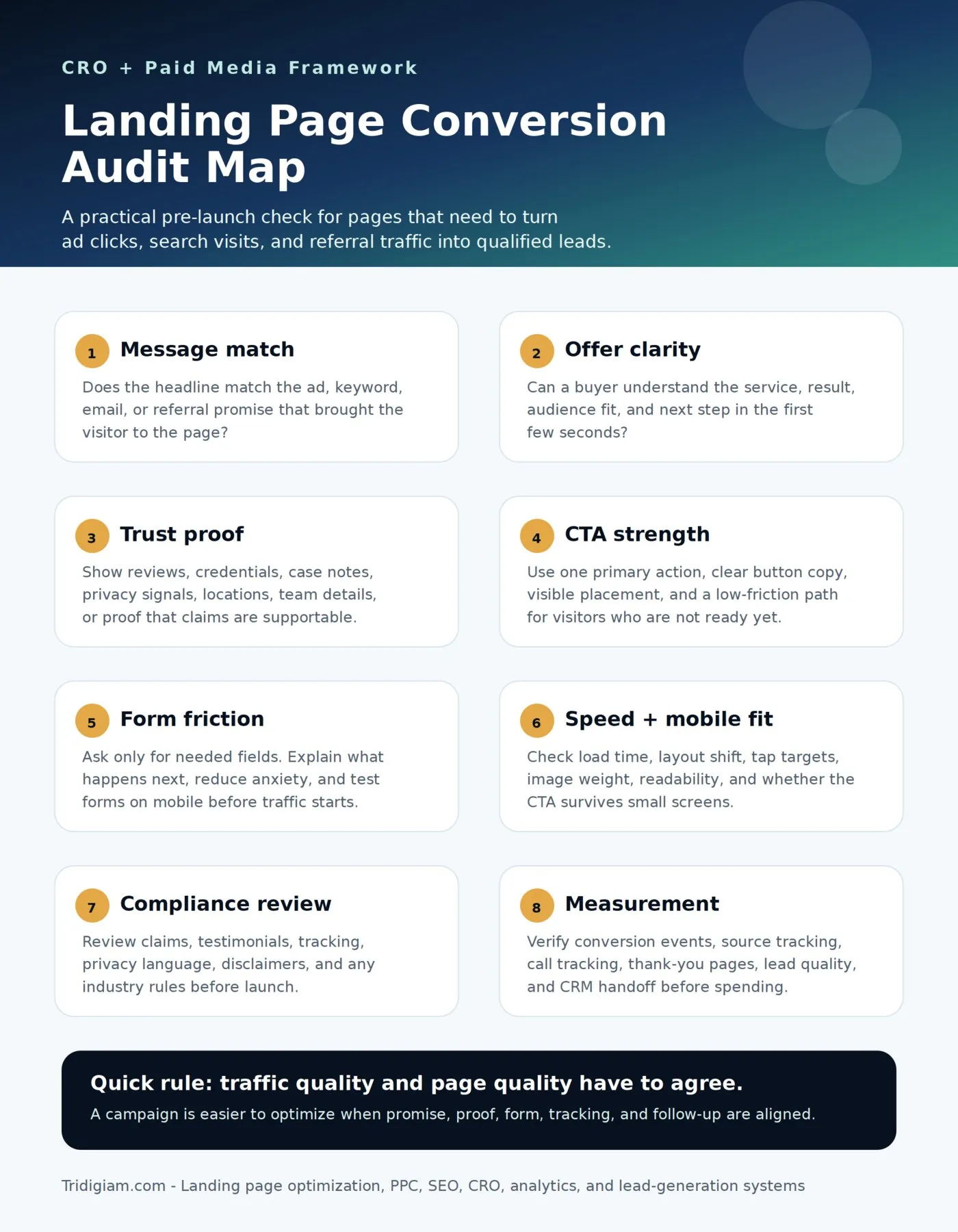
A page’s headline should be compelling and clearly convey the value proposition because it is often the first thing that visitors see. In order to draw readers in and effectively communicate the page’s message, imagery is essential. Having pertinent and high-quality images can improve the overall user experience and help make a good first impression.
Convincing Copy and Form Fields
The copy on a landing page should be convincing, succinct, and clear. It should clearly convey the advantages of the product or service and compel users to act. Form fields are another crucial component to optimize, as they directly impact the conversion rate. Reduced friction and higher conversion rates can be achieved by limiting the number of form fields and only requesting necessary information.
Overall Design and Mobile Friendliness
The landing page’s overall design should be aesthetically pleasing, user-friendly, and mobile-friendly. Companies can create a more engaging and productive landing page by paying attention to these essential components, leading to more leads and conversions.
The Importance of Call-to-Action (CTA)
Creating Effective CTAs
A call-to-action (CTA) is an essential element of a landing page because it invites users to take a specific action, such as purchasing something or providing their contact details. To maximize a landing page’s effectiveness and encourage conversions, create clear and compelling CTAs. Businesses should employ action-oriented verbiage like “Buy Now,” “Sign Up,” or “Get Started” that makes it obvious what customers should do next.
Design and Placement of CTAs
The CTA should be prominently displayed on the page and positioned to draw in visitors. Businesses can use contrasting colors and strategic placement, in addition to persuasive language, to highlight the CTA. Testing several iterations is crucial to determine which CTAs are most effective at reaching the intended audience. By consistently improving and optimizing their CTAs, businesses can raise conversion rates and enhance landing page effectiveness.
The Role of A/B Testing
Implementing A/B Testing
The process of comparing two versions of a webpage to determine which one converts better is known as A/B testing. By implementing A/B testing, businesses can gain important insights into which aspects of their landing pages are most successful in generating conversions. This allows for data-driven decisions and gradual enhancement of page functionality.
Elements to Test
Businesses can run A/B tests on various components of their landing pages, including headlines, images, copy, CTAs, and form fields. By experimenting with different versions of these elements, businesses can identify which iterations most effectively connect with their target audience and generate the highest conversion rates. This iterative approach to optimization can lead to increased conversion rates.
Leveraging Data and Analytics
Key Metrics to Analyze
Landing page optimization strategies are greatly influenced by data and analytics. By examining key metrics like bounce rate, time on page, conversion rate, and click-through rate, businesses can gain valuable insights into how users interact with their landing pages. This data can help identify areas for improvement and prioritize optimization efforts based on what will have the most significant impact on performance.
Utilizing User Feedback
In addition to analyzing website analytics, businesses can use user reviews and behavior data to guide their optimization efforts. Understanding where users drop off and how they navigate through a landing page can provide crucial information about potential friction points that need addressing. Employing data and analytics facilitates informed decision-making and better optimization outcomes.
Enhancing User Experience (UX)
Simplifying User Experience
The user experience is a critical factor in determining the success of a landing page. A simple and intuitive user experience can significantly impact the conversion rate by reducing friction and making it easier for users to take action. Companies should focus on creating a straightforward path for visitors, minimizing distractions and obstacles that might prevent conversions.
Improving Page Load Speed
Improving the speed at which pages load is one way to simplify the user experience. Businesses should prioritize website performance optimization to ensure users have a seamless experience. Slow-loading pages can lead to higher bounce rates and lower conversion rates. Additionally, companies should ensure that their landing pages are easy to navigate and that the conversion process is simple and clear.
Continuous Monitoring and Assessment
Importance of Tracking Performance
For continuous optimization efforts, tracking and assessing landing page performance is crucial. By regularly monitoring key metrics and evaluating performance data, businesses can pinpoint areas for improvement and decide how best to optimize their pages for better results. This ongoing process allows businesses to remain adaptable and responsive to shifts in consumer behavior and industry trends.
Tools for Monitoring
Businesses should use tools like Google Analytics to track important metrics such as conversion rate, bounce rate, and time on page. Setting up goals and tracking events can provide insights into how users interact with their landing pages and identify areas that need improvement. Additionally, consistently evaluating user feedback and conducting usability testing can offer qualitative insights into how visitors perceive their landing pages.
Conclusion
Through consistent monitoring and assessment of performance, businesses can ensure their optimization efforts align with their objectives and yield significant results. Effective landing page optimization involves focusing on key components such as compelling headlines, engaging imagery, convincing copy, and strategic CTAs. By leveraging data and analytics, simplifying the user experience, and continuously testing and refining strategies, businesses can achieve higher conversion rates and overall success.
Looking to enhance your digital marketing strategy beyond landing page optimization? Check out our article on “The Art of Social Listening” to learn how to effectively monitor and analyze conversations about your brand and industry on social media. Understanding the sentiments and trends in these conversations can help you craft shareable content that resonates with your audience, as discussed in our guide on “Crafting Shareable Content: A Viral Guide.” Additionally, explore our insights on “Building Brand Loyalty on Social Media” to discover strategies for fostering long-term customer relationships through engaging and personalized interactions. Embrace these valuable resources to elevate your social media presence and drive meaningful results for your business. (source)
| Landing Page Element | What to Optimize |
|---|---|
| Headline & Imagery | A compelling headline that clearly conveys the value proposition, paired with relevant, high-quality images. |
| Copy & Form Fields | Convincing, succinct copy that states the benefit and compels action; limit form fields to only what’s necessary. |
| Design & Mobile-Friendliness | An aesthetically pleasing, user-friendly, mobile-responsive layout. |
| Call-to-Action (CTA) | Clear, action-oriented CTA language like “Buy Now” or “Get Started” that makes the next step obvious. |
FAQs
What is landing page optimization?
Landing page optimization is the process of improving elements on a website to increase conversions. This involves testing different elements such as headlines, images, and call-to-action buttons to determine the most effective combination.
Why is landing page optimization important?
Landing page optimization is important because it can significantly impact the success of a website. By improving the conversion rate of a landing page, businesses can increase leads, sales, and overall revenue.
What are some key elements to optimize on a landing page?
Key elements to optimize on a landing page include the headline, call-to-action button, form length, images, and overall layout. These elements can have a significant impact on the conversion rate of the page.
How can A/B testing be used for landing page optimization?
A/B testing involves creating two versions of a landing page with one element being different between the two versions. By testing these versions with real users, businesses can determine which version performs better and use that information to optimize the landing page.
What are some best practices for landing page optimization?
Best practices for landing page optimization include having a clear and compelling headline, a strong call-to-action, minimal form fields, high-quality images, and a mobile-responsive design. It’s also important to continuously test and iterate on the page for ongoing improvement.
Related service: Learn more about Tridigiam’s website design and deployment.
Need marketing that actually moves the needle?
Tridigiam is a Las Vegas marketing and advertising agency built for regulated and growth-focused businesses. Call (702) 748-7005 or request a consultation.
Want more like this? Browse our free CRO, SEO, and AI search guides.
Frequently asked questions
What’s the single biggest factor in landing page optimization?
Having one clear goal per page, a landing page trying to sell a product, capture a lead, and promote a download at the same time usually converts worse than a page focused on a single, well-supported action.
How much does page speed actually affect landing page conversions?
Significantly, even a one or two second delay in load time measurably increases bounce rate, especially on mobile, so speed optimization is one of the highest-leverage fixes available.
How long should you test a landing page change before drawing conclusions?
Long enough to reach a statistically meaningful sample size for your traffic level, which usually means at least a week or two of consistent traffic rather than judging results after a day or two.

Written and reviewed by Chris Goodman, CEO of Tridigiam
Founder of a Las Vegas marketing agency building AI-visibility and compliance-aware marketing systems for regulated industries — healthcare, addiction treatment, and aesthetics. LinkedIn

Explore knowledge from Chris Goodman, a marketing expert with extensive agency and small business experience, specializing in innovative advertising strategies. Chris has a Bachelor’s in Marketing from RMIT, years working in advertising agencies servicing clients, and years of experience working with small to medium sized businesses operating within regulated industries.