

Quick answer: Website design for regulated industries must balance usability with strict rules on privacy, accessibility, claims, and data handling. Getting compliance wrong risks penalties and trust. This covers designing compliant sites for regulated fields.
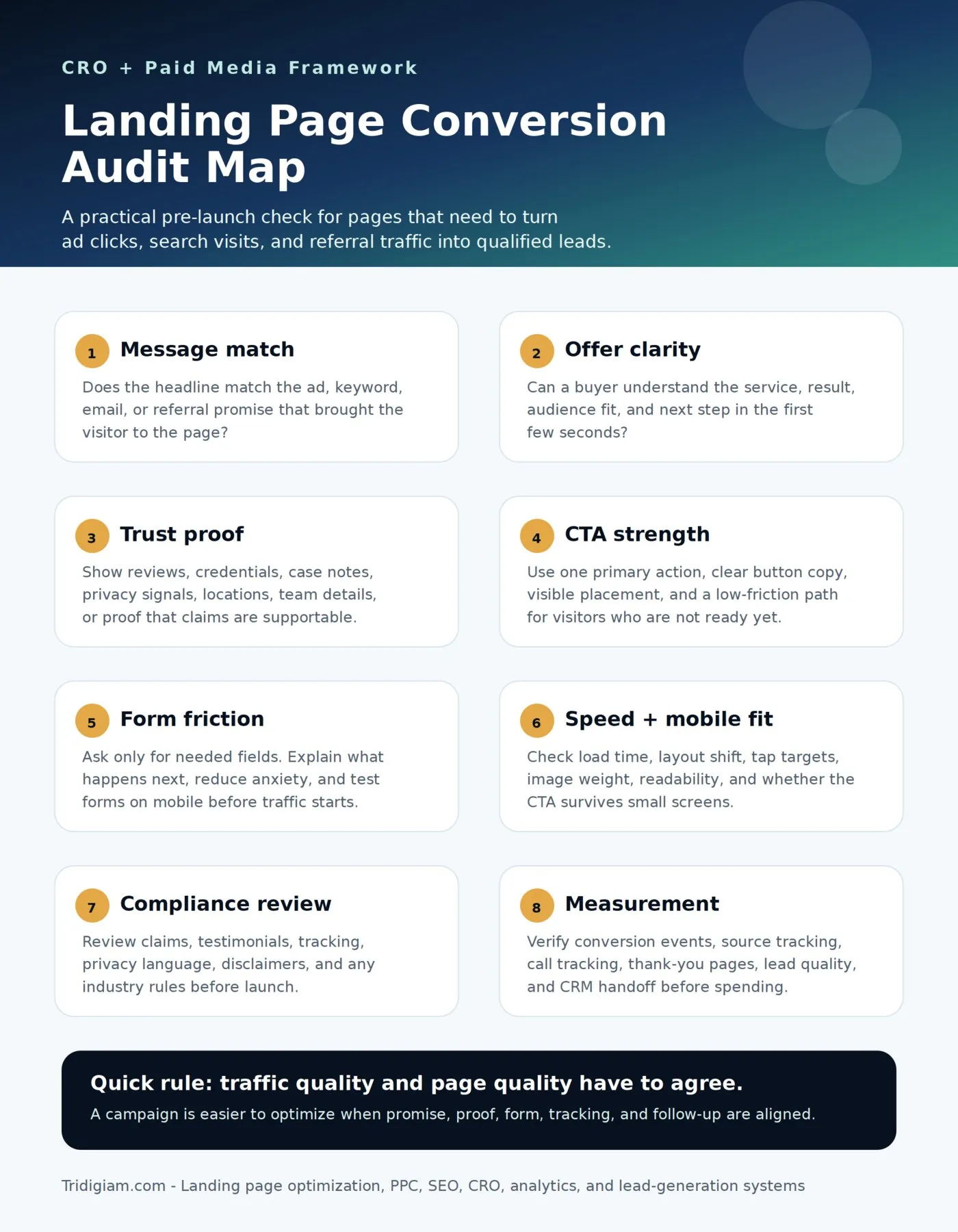
Regulated website design compliance answer map
Website design for regulated industries should make trust, accessibility, privacy, claims review, and conversion clarity part of the design system from the start. Healthcare, legal, financial, insurance, and other regulated businesses need pages that are persuasive and usable without creating avoidable risk around data collection, advertising claims, testimonials, accessibility, or required disclosures.
- Privacy and data: map forms, tracking scripts, chat tools, analytics, pixels, and CRM handoffs before collecting regulated or sensitive information.
- Claims and disclosures: make qualifications, limitations, financing terms, testimonials, outcomes, and required disclaimers visible near the claims they explain.
- Accessibility: design for keyboard navigation, readable contrast, clear labels, alt text, error messages, and mobile usability.
- SEO and AEO: publish helpful, reliable, people-first content that answers regulated buyers' questions without overpromising results.
- Conversion safety: keep scheduling, consultation, quote, and contact flows clear while routing high-risk requests to human review when needed.
Useful source anchors include FTC guidance on advertising and marketing, FTC advertising and marketing basics, HHS guidance on HIPAA marketing, W3C guidance on WCAG accessibility standards, Google guidance on helpful, reliable, people-first content, and Google's SEO Starter Guide. Tridigiam connects this topic to healthcare digital marketing, regulated search ad compliance, regulated businesses in AI search, good web design practices, and schema markup for technical SEO.
Questions to answer before designing a regulated-industry website
What regulated data could the website collect or transmit?
Review every form, call tracking tool, chat widget, analytics tag, pixel, scheduling embed, CRM integration, and file upload. If the site may collect health, legal, financial, insurance, or other sensitive data, privacy and security decisions should be made before launch rather than patched after traffic arrives.
Which claims need proof, qualification, or legal review?
Identify claims about outcomes, savings, expertise, guarantees, treatment, coverage, case results, testimonials, and comparisons. Put supporting context and disclosures close to the claim so users can understand the limitation before they convert.
Can users complete key actions accessibly and confidently?
Test the main conversion paths on mobile, desktop, keyboard-only navigation, and assistive technology where possible. Regulated websites need more than visual polish; they need readable content, clear choices, accessible forms, and a trustworthy path to the next step.
It is imperative for businesses in every industry to have a robust online presence in the current digital era. That being said, the significance of website design & compliance increases significantly for regulated industries like healthcare, finance, and pharma. Strict rules and regulations apply to these industries, and to keep the confidence of consumers and regulatory agencies, websites in these sectors must comply with these requirements. Sectors under the purview of laws and regulations designed to safeguard consumers and maintain equitable business practices are regulated sectors. These sectors must take extra security measures to protect sensitive data because they deal with it frequently, including financial and medical records. To protect their clients' security and privacy, their websites must be created & designed with compliance in mind.Key Takeaways
- Website design and compliance are crucial for regulated industries to maintain credibility and avoid legal issues.
- Best practices for website design in regulated industries include clear navigation, accessible content, and mobile responsiveness.
- Compliance considerations for website design include privacy policies, accessibility standards, and data protection regulations.
- SEO strategies for regulated industries should focus on relevant keywords, quality content, and local search optimization.
- UI/UX design tips for regulated industries include clear calls to action, minimizing clutter, and prioritizing user needs.
Best Practices for Website Design in Regulated Industries
User-Centered Design
Businesses should abide by a number of best practices and guidelines when it comes to website design for regulated industries. These procedures improve the website's usability and accessibility, in addition to assisting in ensuring compliance. User-centered design is a fundamental tenet of website design for regulated industries. With this method, the website is designed with the target audience's needs and preferences in mind. Businesses can develop a user-friendly, visually appealing, and intuitive website by centering the design process around the user.Accessibility
Accessibility is a critical component of website design for regulated industries, in addition to user-centered design. Websites need to be accessible to people with disabilities so that everyone can use the services and information offered. Features like keyboard navigation, screen reader compatibility, and alternative image text are included.Layout and Navigation
The website's layout, navigation, and content organization should also be carefully planned to ensure a seamless user experience. Logical page hierarchy, well-organized content, and clear and intuitive navigation menus are essential for users to quickly and easily find the information they need.Mobile-Friendly and Responsive Design
Developing a mobile-friendly and responsive website is a crucial aspect of website design in industries subject to regulations. Websites must be optimized for various screen sizes and resolutions due to the growing popularity of mobile devices. Regardless of the device used, this guarantees that users can access the website and its content.Ensuring Compliance in Website Design
Legal and Regulatory Requirements
Compliance is a crucial component of website design for regulated industries. Websites must comply with legal and regulatory requirements to preserve the security and privacy of user data and uphold the confidence of both customers and regulatory agencies.Privacy Policies, Terms of Use, and Disclaimers
Including privacy policies, terms of use, and disclaimers are crucial for website compliance. These documents provide expectations for website use and describe how the website gathers, utilizes, and safeguards users' personal information. Users should be able to access and understand privacy policies easily.Web Content Accessibility Guidelines (WCAG)
Many nations, including the US, have made website accessibility a legal necessity. The Web Content Accessibility Guidelines (WCAG) provide standards for creating websites that are accessible to people with disabilities. To ensure compliance, websites should be developed and designed with these guidelines in mind.Search Engine Optimization (SEO) for Regulated Industries
Keyword Research and Optimization
Search engine optimization, or SEO, is the process of making a website more visible in search engine results. SEO plays a key role in helping regulated industries increase their online presence and drive organic traffic to their websites. Businesses should prioritize improving a website's content and structure to optimize it for search engines.Website Structure and Internal Linking
SEO is heavily influenced by website structure in addition to keyword optimization. In addition to having well-organized content and internal linking, websites should have a clear and logical structure. In addition to making the website easier for users to navigate, this aids search engines in deciphering the hierarchy of the content.Avoiding Black Hat SEO Techniques
Maintaining compliance is just as important for regulated industries as optimizing a website for search engine optimization. It is imperative for businesses to adhere to specific guidelines and best practices to avoid using black hat SEO tactics, which may lead to penalties from search engines. Techniques like keyword stuffing, hidden text, and link schemes are examples of black hat SEO strategies.UI/UX Design in Regulated Industries
User Interface (UI) Design
In regulated industries, a website's success can be greatly impacted by the design of its user interface (UI) and user experience (UX), which are critical components of website engagement. A website design that is aesthetically pleasing and easy to use can improve user engagement and the overall user experience.User Experience (UX) Design
In industries where regulations apply, companies should concentrate on producing a professional, clean UI that represents their brand. In addition to visual design, the website's user experience (UX) should be carefully considered. The menus and navigational elements on the website should be simple and easy to understand.Digital Marketing Strategies for Regulated Industries
Targeting the Right Audience
Companies in regulated industries can greatly benefit from digital marketing to connect with their target market and establish their brand. Businesses must target the right audience when creating digital marketing campaigns. This entails conducting market research to comprehend the preferences and needs of the intended audience and adjusting marketing messages as necessary.Developing a Strong Brand Identity
Developing a strong brand identity is also essential for enterprises operating in regulated sectors. A powerful brand sets a company apart from its rivals and fosters consumer trust and credibility. Digital marketing techniques like social media and content marketing can help achieve brand awareness and a strong online presence.| Focus Area | Key Considerations |
|---|---|
| Compliance | Privacy policies, terms of use, and disclaimers; Web Content Accessibility Guidelines (WCAG) for accessibility |
| SEO | Relevant keyword research, quality content, and local search optimization |
| UI/UX | Clear calls to action, minimizing clutter, and prioritizing user needs |
| Digital Marketing | Strategies aligned with legal and regulatory requirements for the industry |
Conducting Website Compliance Audits
Regular Compliance Audits
Carrying out routine website compliance audits is critical to ensure a website complies with legal requirements. These audits assist in locating any compliance problems and offer a chance to fix them before they worsen.Reviewing Policies and Features
Businesses should conduct a website compliance audit to check that their website's disclaimers, terms of use, and privacy policies are current and compliant with regulations. They ought to also check that the website's accessibility features adhere to the guidelines specified in the WCAG.Conclusion
For companies operating in regulated sectors, website design and compliance are essential. Businesses can design a user-centered, accessible website that improves user experience and upholds credibility and trust with customers and regulatory bodies by adhering to best practices and guidelines for website design. Businesses can enhance their online presence, foster customer and regulatory trust, and spur business growth by prioritizing these factors. If you're interested in learning more about website design and compliance for regulated industries, you may also find our article on 3D Design Animation by Tridigiam informative. This article explores how incorporating 3D design and animation can enhance the user experience and engagement on your website, while still adhering to the strict regulations of your industry. Check it out here for valuable insights and practical tips. Additionally, Tridigiam offers various services, including press releases and branding kits, to help businesses establish a strong online presence. Learn more about their offerings here and here.FAQs
What are regulated industries?
Regulated industries are those that are subject to government regulations and oversight, such as healthcare, finance, and pharmaceuticals.Why is website design and compliance important for regulated industries?
Website design and compliance are important for regulated industries, which must adhere to strict regulations and guidelines to protect consumers and maintain industry standards.What are some common regulations that regulated industries must follow?
Common regulations regulated industries must follow include HIPAA for healthcare, PCI DSS for finance, and FDA regulations for pharmaceuticals.What are some key considerations for website design in regulated industries?
Key considerations for website design in regulated industries include ensuring the website is secure, accessible, and user-friendly and complies with all relevant regulations and guidelines.What are some best practices for website compliance in regulated industries?
Best practices for website compliance in regulated industries include conducting regular audits and assessments, implementing strong security measures, and staying up-to-date on changes to regulations and guidelines.What are the consequences of non-compliance in regulated industries?
In regulated industries, the consequences of non-compliance can include fines, legal action, damage to reputation, and loss of business.Related service: Learn more about Tridigiam's marketing for regulated and healthcare businesses.
Resources
Need marketing that actually moves the needle?
Tridigiam is a Las Vegas marketing and advertising agency built for regulated and growth-focused businesses. Call (702) 748-7005 or request a consultation.
Want more like this? Browse our free CRO, SEO, and AI search guides.
Frequently asked questions
What makes website design different for regulated industries?
Regulated industries like healthcare, finance, and legal services must balance usability with strict rules around privacy, accessibility, permitted claims, and how data is collected and handled. A generic site design approach can create real legal exposure.
What compliance risks come with a poorly designed regulated-industry website?
Risks include mishandling protected data, making claims that aren't substantiated or that violate advertising rules, and failing accessibility requirements, any of which can trigger regulatory penalties or loss of consumer trust.
Who should review a regulated-industry website before it goes live?
Ideally, a combination of legal or compliance counsel familiar with the specific industry's rules and a development team experienced in that vertical. Marketing copy, forms, and data flows all deserve a compliance pass before launch.

Written and reviewed by Chris Goodman, CEO of Tridigiam
Founder of a Las Vegas marketing agency building AI-visibility and compliance-aware marketing systems for regulated industries — healthcare, addiction treatment, and aesthetics. LinkedIn

Explore knowledge from Chris Goodman, a marketing expert with extensive agency and small business experience, specializing in innovative advertising strategies. Chris has a Bachelor’s in Marketing from RMIT, years working in advertising agencies servicing clients, and years of experience working with small to medium sized businesses operating within regulated industries.