
Quick answer: Healthcare content marketing builds patient trust by publishing accurate, helpful, expert-reviewed content that answers real patient questions, while staying inside HIPAA and FTC rules. Authority content that is clear, sourced, and reviewed by qualified professionals earns search visibility and credibility without making claims a practice cannot defend.
In the ever-evolving landscape of healthcare, building trust with patients is more critical than ever. Healthcare content marketing provides a strategic avenue for healthcare providers to establish authority and connect with patients on a deeper level. By focusing on creating authoritative and engaging content, healthcare organizations can not only enhance patient education but also foster a sense of trust and reliability. This article delves into the intricacies of healthcare content marketing, exploring effective strategies for building patient trust through authoritative content.
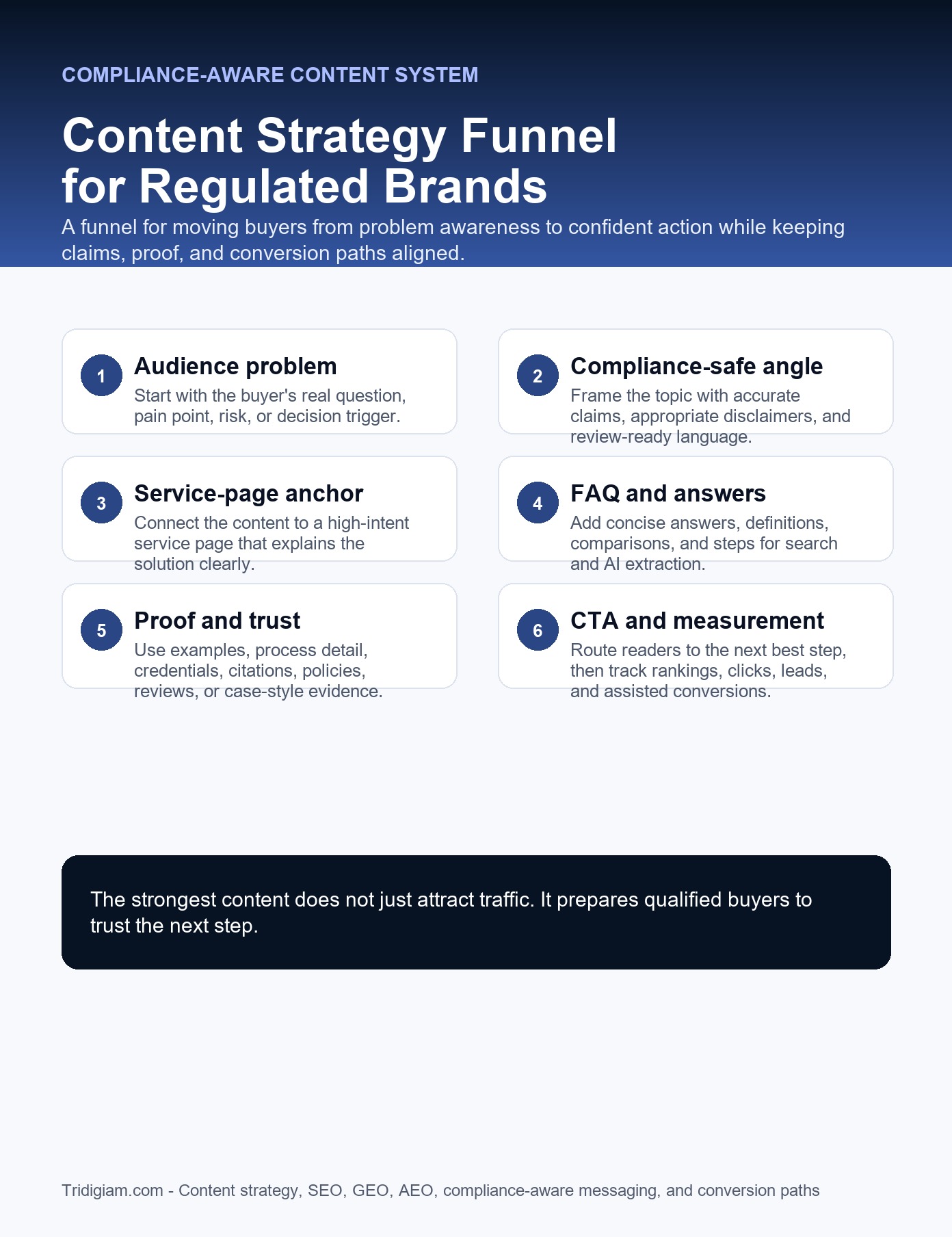
Healthcare content marketing answer map
Healthcare content marketing should help patients make safer, better-informed decisions while giving search engines and AI systems clear evidence of experience, expertise, authoritativeness, and trust. The strongest programs answer real patient questions, cite reliable sources, review medical or compliance-sensitive claims, and avoid collecting or exposing PHI through content funnels.
- Prioritize patient usefulness: build articles, service pages, FAQs, and guides around what patients need to understand before choosing care, not just keywords.
- Show expertise visibly: include author or reviewer context, source links, dates, clinical or operational experience, and clear boundaries about what the content can and cannot promise.
- Keep claims supportable: treatment outcomes, safety claims, before-and-after language, testimonials, and comparative claims should be reviewed before publication.
- Protect privacy in funnels: downloadable guides, quizzes, forms, email captures, and analytics should avoid exposing PHI to unapproved marketing systems.
- Structure content for AI answers: use concise summaries, question-based sections, internal links, source citations, and entity-rich language that makes the page easy to quote and cite.
Useful source anchors include Google Search Central’s guidance on creating helpful, reliable, people-first content, Google’s Search Quality Rater Guidelines overview, FTC guidance on health-related advertising claims, FTC Health Products Compliance Guidance, and HHS guidance on HIPAA marketing. Tridigiam connects content strategy to healthcare digital marketing, HIPAA-compliant marketing, YMYL SEO for healthcare, healthcare schema markup, healthcare SEO for Google answers, and AI Search Optimization.
Questions to answer before publishing healthcare authority content
What makes healthcare content trustworthy?
Trustworthy healthcare content is accurate, helpful, clearly sourced, reviewed when appropriate, transparent about authorship, and careful about medical claims. It should help a patient understand options without exaggerating outcomes or replacing clinical judgment.
How does healthcare content support SEO and AI search visibility?
Healthcare content supports SEO and AI visibility by answering specific patient questions, connecting related topics, citing authoritative sources, using clear headings, and giving search or AI systems concise passages that can be understood and cited.
What compliance risks exist in healthcare content marketing?
Risks include unsupported treatment claims, misleading testimonials, condition-specific lead magnets that expose PHI, tracking on sensitive content, and content funnels that send patient-identifiable information into unapproved analytics, CRM, email, or ad platforms.
Key Takeaways
- Healthcare content marketing is significantly more cost-effective than traditional marketing, generating more leads at a lower cost.
- Patients increasingly rely on online resources, making an effective content strategy crucial for engagement.
- By 2025, a majority of healthcare companies will prioritize high-quality content to boost patient education.
- Blogs and articles authored by medical professionals are highly trusted by patients.
- SEO-optimized content can significantly improve conversion rates in healthcare marketing.
- Personalized content is vital for patient engagement, with high positive response rates.
- Mobile-first strategies are imperative as patient interactions on mobile devices increase.
- Regularly updated healthcare blogs can dramatically increase website traffic.
- User-generated content enhances credibility and trust through shared experiences.
- Video content will dominate healthcare marketing, reflecting patient consumption preferences.
The Importance of Healthcare Content Marketing
Healthcare content marketing is not just a trend; it is a necessity in today’s digital world. Content marketing is generally far less expensive than traditional marketing methods while generating substantially more leads. This is particularly significant in healthcare, where the primary goal is to build trust and provide value to patients. In an industry where misinformation can have dire consequences, credible and authoritative content serves as a beacon of truth and reliability.
Moreover, the large majority of patients turn to online resources when researching potential healthcare providers. This highlights the importance of having a strong content marketing strategy in place to engage and educate patients effectively. By providing accurate, up-to-date information, healthcare providers can position themselves as leaders in their field, ultimately increasing patient trust and loyalty.
Developing a Robust Medical Content Strategy
Creating a robust medical content strategy is vital for healthcare organizations aiming to connect with their audience. A well-planned strategy involves understanding the needs and preferences of the target audience, producing relevant content, and distributing it through the right channels. Healthcare companies are increasingly investing in producing higher quality and more engaging content to improve patient education.
To develop an effective strategy, healthcare organizations should start by identifying the key topics that resonate with their audience. This involves conducting thorough research to understand the questions and concerns that patients have. Once these topics are identified, the next step is to create content that is not only informative but also engaging. This could include blog posts, videos, infographics, and more, tailored to the needs of the audience.
Enhancing Patient Education Through Content
Patient education is a cornerstone of effective healthcare content marketing. By providing valuable information, healthcare providers can empower patients to make informed decisions about their health. Many patients trust healthcare information from blogs and articles published by medical professionals. This underscores the importance of adopting a strong content marketing strategy focused on patient education.
Content that educates and informs patients can take many forms, from detailed blog posts explaining medical procedures to videos demonstrating how to manage chronic conditions. The key is to present information in a way that is easy to understand and accessible to a broad audience. By doing so, healthcare providers can not only enhance patient education but also build trust and credibility.
Implementing a Successful Healthcare Blog Strategy
A well-executed healthcare blog strategy can significantly boost patient engagement and trust. Healthcare blogs that consistently update their content have been shown to substantially increase website traffic over time. This highlights the necessity of a well-planned blog strategy that focuses on providing valuable and timely information to patients.
To implement a successful blog strategy, healthcare organizations should focus on creating content that addresses the needs and interests of their audience. This includes writing about common health concerns, providing tips for healthy living, and sharing success stories from patients. By consistently providing valuable content, healthcare providers can establish themselves as trusted sources of information, fostering a sense of community and trust among their patients.
The Role of SEO in Healthcare Content Marketing
Search engine optimization (SEO) plays a crucial role in healthcare content marketing. By incorporating effective SEO practices, healthcare providers can increase the visibility of their content, making it easier for patients to find the information they need. Healthcare content marketing can meaningfully improve conversion rates when combined with effective SEO practices.
To optimize healthcare content for search engines, organizations should focus on using relevant keywords, creating high-quality backlinks, and ensuring that their content is mobile-friendly. With patient interactions increasingly occurring on mobile devices, a mobile-first approach is essential for reaching a wider audience. By prioritizing SEO, healthcare providers can ensure that their content reaches the right audience, ultimately enhancing patient trust and engagement.
The Impact of Personalized Content in Healthcare
Personalized content is increasingly important in healthcare marketing, as it allows providers to connect with patients on a more personal level. Personalized content tends to generate a strong positive response from patients, demonstrating its effectiveness in engaging patients and building trust.
To create personalized content, healthcare providers should focus on understanding the unique needs and preferences of their patients. This could involve segmenting their audience based on demographics, health conditions, or other factors, and tailoring content to meet their specific needs. By delivering personalized content, healthcare providers can enhance patient engagement and foster a deeper sense of trust and loyalty.
The Growing Importance of Video Content
Video content is set to play a major role in healthcare content marketing, with its share of overall healthcare content continuing to grow. This shift reflects changing preferences in how patients consume information, with many preferring video content over traditional text-based formats.
Healthcare providers can leverage video content to engage patients in a more dynamic and interactive way. This could include creating videos that explain complex medical procedures, offering virtual tours of healthcare facilities, or sharing patient testimonials. By embracing video content, healthcare providers can meet the changing needs of their audience, ultimately enhancing patient engagement and trust.
| Content Pillar | What It Involves |
|---|---|
| Healthcare Blog Strategy | Write about common health concerns, share practical health tips, and feature patient success stories to build trust and community. |
| SEO | Use relevant keywords, build high-quality backlinks, and keep content mobile-friendly so patients can find accurate information. |
| Personalized Content | Segment the audience by demographics or health conditions and tailor content to their specific needs. |
| Video Content | Explain complex procedures, offer virtual facility tours, or share patient testimonials in a more dynamic format. |
| Patient Education | Use blog posts and videos to explain procedures and help patients understand and manage chronic conditions in accessible language. |
Conclusion: Building Trust with Tridigiam
The importance of healthcare content marketing cannot be overstated. By focusing on creating authoritative and engaging content, healthcare providers can build trust with their patients, enhance patient education, and ultimately improve patient outcomes. Whether it’s through developing a robust medical content strategy, enhancing patient education, or leveraging video content, the opportunities for building trust through content marketing are vast.
As the healthcare industry continues to evolve, partnering with a digital marketing agency like Tridigiam can help healthcare providers navigate the complexities of content marketing. With expertise in creating authoritative and engaging content, Tridigiam is well-equipped to help healthcare organizations build patient trust and achieve their marketing goals.
FAQs
What is healthcare content marketing?
Healthcare content marketing involves creating and distributing valuable, relevant content to attract and engage patients. It focuses on building trust and providing value by educating patients and addressing their needs and concerns.
How does content marketing build patient trust?
Content marketing builds patient trust by providing accurate, authoritative information that patients can rely on. By consistently delivering valuable content, healthcare providers can establish themselves as trusted sources of information, fostering a sense of trust and reliability.
Why is SEO important in healthcare content marketing?
SEO is crucial in healthcare content marketing because it improves the visibility of content, making it easier for patients to find the information they need. By optimizing content for search engines, healthcare providers can reach a wider audience and enhance patient engagement.
How can video content enhance patient engagement?
Video content can enhance patient engagement by presenting information in a more dynamic and interactive way. It allows healthcare providers to explain complex topics clearly and engagingly, meeting the changing preferences of patients.
What role does personalization play in healthcare content marketing?
Personalization plays a critical role in healthcare content marketing by allowing providers to connect with patients on a more personal level. By tailoring content to meet the specific needs of different patient segments, healthcare providers can enhance engagement and build trust.
Related service: Learn more about Tridigiam’s marketing for regulated and healthcare businesses.
Resources
Need marketing that actually moves the needle?
Tridigiam is a Las Vegas marketing and advertising agency built for regulated and growth-focused businesses. Call (702) 748-7005 or request a consultation.
Frequently asked questions
What is authority content in a healthcare marketing context?
Authority content is accurate, well-sourced material, ideally reviewed by a qualified clinician, that answers real patient questions in plain language. It’s built to earn trust and search visibility rather than to make promotional claims.
Does healthcare content need a clinical reviewer?
For anything discussing symptoms, treatment, or medical advice, yes. A named reviewer with relevant credentials adds credibility for readers and reduces the risk of publishing inaccurate or non-defensible claims.
How does content marketing help with patient trust specifically?
Consistent, accurate content signals competence before a patient ever calls, and search engines increasingly reward expert-reviewed healthcare content with better visibility, which compounds the trust effect.
Want more like this? Browse our free CRO, SEO, and AI search guides.

Written and reviewed by Chris Goodman, CEO of Tridigiam
Founder of a Las Vegas marketing agency building AI-visibility and compliance-aware marketing systems for regulated industries — healthcare, addiction treatment, and aesthetics. LinkedIn

Explore knowledge from Chris Goodman, a marketing expert with extensive agency and small business experience, specializing in innovative advertising strategies. Chris has a Bachelor’s in Marketing from RMIT, years working in advertising agencies servicing clients, and years of experience working with small to medium sized businesses operating within regulated industries.