Quick answer: AI in predictive analytics forecasts market trends by spotting patterns across historical and real-time data, helping marketers anticipate demand, timing, and shifts before competitors. It supports planning and budget decisions, but the forecasts guide judgment rather than replace it.
Predictive analytics is a field where artificial intelligence (AI) has advanced significantly in recent years. Artificial Intelligence (AI) has become a vital tool for businesses trying to make more accurate predictions about future trends and outcomes because of its exceptionally fast processing and analysis of vast amounts of data. Because machine learning algorithms have advanced, AI systems are now able to learn from data, recognize patterns, and make highly accurate predictions. This is why predictive analytics has seen a surge in the use of AI. Growing access to large amounts of data is one of the main reasons propelling AI’s success in predictive analytics.
Key Takeaways
- AI is increasingly being used in predictive analytics to make accurate forecasts and predictions.
- AI is revolutionizing digital marketing by enabling personalized and targeted marketing strategies.
- Artificial intelligence plays a crucial role in forecasting market trends by analyzing large volumes of data.
- AI has a significant impact on predictive analytics in digital marketing by improving customer targeting and campaign effectiveness.
- Leveraging AI can help in making accurate market trend predictions and staying ahead of the competition.
The Rise of AI in Predictive Analytics and Digital Marketing
The need for advanced analytics tools to make sense of the vast amounts of data that businesses are collecting and storing has increased dramatically in recent years. This problem has seen the rise of artificial intelligence (AI), which can quickly sort through enormous datasets to find insightful information and generate predictions that can aid in better decision-making for businesses. Predictive analytics’ power may now be used in operations by companies of all kinds thanks to the rising accessibility and affordability of AI technology. AI gives companies more insight into the behavior and preferences of their customers, enabling the creation of more individualized and focused marketing campaigns, which is completely changing the landscape of digital marketing.
Personalized and Targeted Marketing Campaigns
Businesses can evaluate enormous volumes of customer data to spot patterns and trends and make highly accurate predictions about future consumer behavior with the use of AI-powered predictive analytics. This enables companies to develop more impactful and successful marketing campaigns by customizing their efforts to the unique requirements and preferences of their target market. AI is also transforming digital marketing by automating many tedious and repetitive processes like campaign optimization, content creation, and data analysis. This ensures that marketing initiatives are more successful and efficient while freeing up marketers’ precious time and resources to concentrate on more strategic projects.
Discovering New Market Opportunities
AI-driven solutions can also assist companies in finding unexplored market niches and developing trends, which can lead to new growth and expansion opportunities. By evaluating vast amounts of data from numerous sources to find patterns and correlations that can be utilized to project future market movements, AI plays a critical role in predicting market trends. AI-powered predictive analytics tools can process data from sources like social media, online forums, news articles, and financial reports to obtain a thorough understanding of market dynamics and consumer behavior.
Accurate Market Predictions
AI can predict market trends more precisely and promptly by utilizing machine learning algorithms to detect subtle signals and trends that human analysts might miss. Businesses may also modify their strategies in response to AI by using it to predict changes in consumer demand and preferences as well as changes in the competitive landscape. This proactive approach to predicting market trends allows companies to take advantage of new opportunities and reduce risks, providing them with a competitive advantage. AI can also give firms real-time insights into market trends, enabling them to respond quickly and intelligently to shifting market conditions.
Enhancing Digital Marketing with Predictive Analytics
Predictive analytics in digital marketing has greatly benefited from artificial intelligence (AI), which helps companies better understand their target market and provide more individualized and pertinent marketing experiences. Businesses can examine enormous volumes of customer data to find patterns and trends that can be utilized to forecast future customer behavior by utilizing AI-powered predictive analytics tools. This makes it possible for companies to customize their marketing campaigns to the unique requirements and preferences of their target market, leading to more successful and memorable advertising campaigns.
Automating Marketing Processes
By automating numerous manual tasks like data analysis, content creation, and campaign optimization, AI significantly impacts predictive analytics in digital marketing. This automation ensures that marketers’ efforts are more successful and efficient while saving time and resources. AI-driven solutions can also assist companies in finding unexplored market niches and developing trends, leading to new growth and expansion opportunities. As a result, AI’s revolutionary influence on predictive analytics in digital marketing enables companies to make more informed decisions and reap greater rewards from their marketing endeavors.
Training AI for Market Predictions
By applying cutting-edge machine learning algorithms to analyze vast amounts of data from various sources, businesses can use AI to forecast market trends accurately. Businesses can train AI-powered predictive analytics tools to find patterns and correlations that can be used to accurately forecast future market movements by feeding them historical market data. Companies may also use real-time data streams to feed their AI models, giving them access to timely insights into changing customer behavior and market trends. Utilizing AI to forecast market trends accurately involves applying these insights to guide strategic choices and maximize marketing initiatives.
The Future of AI in Predictive Analytics for Digital Marketing
As machine learning algorithms and AI technology continue to drive innovation in this field, the future of AI in predictive analytics for digital marketing looks bright. We can anticipate seeing even more advanced AI-powered predictive analytics tools in the upcoming years, capable of processing and analyzing even larger data volumes more quickly and precisely. Businesses will be able to deliver more individualized and focused marketing campaigns thanks to these advancements, which will give them deeper insights into consumer behavior and preferences.
Integrating AI with Emerging Technologies
To create more immersive and engaging marketing experiences, AI in predictive analytics for digital marketing will likely integrate with other cutting-edge technologies, like augmented reality (AR) and virtual reality (VR). Additionally, AI-powered chatbots and virtual assistants are expected to become more prevalent in customer interactions, offering personalized recommendations and assistance based on predictive analytics insights.
Overcoming Challenges with AI
While AI has a lot of promise for predicting market trends, businesses must overcome some obstacles to take full advantage of this technology. Ensuring the accuracy and consistency of the data used to train AI-powered predictive analytics models is a significant challenge. Businesses must invest in data quality management tools to guarantee that the data utilized for forecasting is precise, comprehensive, and representative of the target market. When using AI for market trend forecasting, businesses also need to address issues related to data security and privacy. Protecting sensitive customer information is paramount, and businesses must adhere to data protection laws and implement strong security measures.
Building Expertise in AI
Businesses also need to ensure they have the knowledge and tools required to use AI for market trend forecasting more effectively. This may involve funding educational initiatives or collaborating with outside specialists to develop and apply AI-powered predictive analytics systems. By overcoming these obstacles, businesses can optimize the potential of artificial intelligence (AI) in market trend forecasting.
Conclusion
Artificial intelligence (AI) has revolutionized digital marketing by enabling companies to make more informed decisions and get better returns on their marketing investments. By leveraging AI for predictive analytics, businesses can stay ahead of market trends, deliver more personalized and effective marketing campaigns, and achieve better outcomes. As AI technology continues to evolve, its role in digital marketing will only grow, offering new opportunities for businesses to engage with their target audience and remain competitive in an ever-changing landscape.
In a world where data is king, the use of AI in predictive analytics has become increasingly crucial for businesses to stay ahead of market trends. A recent article on Tridigiam’s website delves into the impact of organic social media marketing on brand visibility and customer engagement. As companies strive to leverage AI to forecast market trends, understanding the role of organic social media marketing in shaping consumer behavior becomes essential. To learn more about this topic, check out the insightful article on organic social media marketing.
FAQs
What is AI in Predictive Analytics?
AI in predictive analytics refers to the use of artificial intelligence and machine learning algorithms to analyze data and make predictions about future events or trends. This technology can be used to forecast market trends, customer behavior, and other business outcomes.
How does AI in Predictive Analytics work?
AI in predictive analytics works by using historical data to train machine learning models, which can then be used to make predictions about future events. These models can identify patterns and relationships in the data that humans may not be able to detect, allowing for more accurate and reliable predictions.
What are the benefits of using AI in Predictive Analytics for forecasting market trends?
Some of the benefits of using AI in predictive analytics for forecasting market trends include improved accuracy and reliability of predictions, the ability to analyze large and complex datasets, and the potential for identifying new opportunities and risks in the market.
What are some common applications of AI in Predictive Analytics for forecasting market trends?
Some common applications of AI in predictive analytics for forecasting market trends include predicting consumer demand for products, identifying potential market opportunities, and forecasting changes in market conditions such as price fluctuations or supply chain disruptions.
What are some potential challenges or limitations of using AI in Predictive Analytics for forecasting market trends?
Some potential challenges or limitations of using AI in predictive analytics for forecasting market trends include the need for high-quality data to train machine learning models, the potential for bias in the data or algorithms, and the need for expertise in data science and machine learning to effectively use these technologies.
Related service: Learn more about Tridigiam’s digital marketing services.
Need marketing that actually moves the needle?
Tridigiam is a Las Vegas marketing and advertising agency built for regulated and growth-focused businesses. Call (702) 748-7005 or request a consultation.
Want more like this? Browse our free CRO, SEO, and AI search guides.
Frequently asked questions
How accurate is AI at forecasting market trends?
AI forecasts are only as good as the historical data and variables fed into the model, so they’re useful for spotting probable directions and patterns but shouldn’t be treated as guaranteed predictions, especially in volatile markets.
What kind of data does AI predictive analytics need to work well?
It needs clean, consistent historical data over a meaningful time period, ideally covering sales, engagement, seasonality, and external factors relevant to the market being forecasted.
Can small businesses use AI predictive analytics, or is it just for large companies?
Smaller businesses can use it too, many affordable tools now offer predictive analytics features, though the forecasts will only be as reliable as the amount of historical data the business actually has to work with.

Written and reviewed by Chris Goodman, CEO of Tridigiam
Founder of a Las Vegas marketing agency building AI-visibility and compliance-aware marketing systems for regulated industries — healthcare, addiction treatment, and aesthetics. LinkedIn
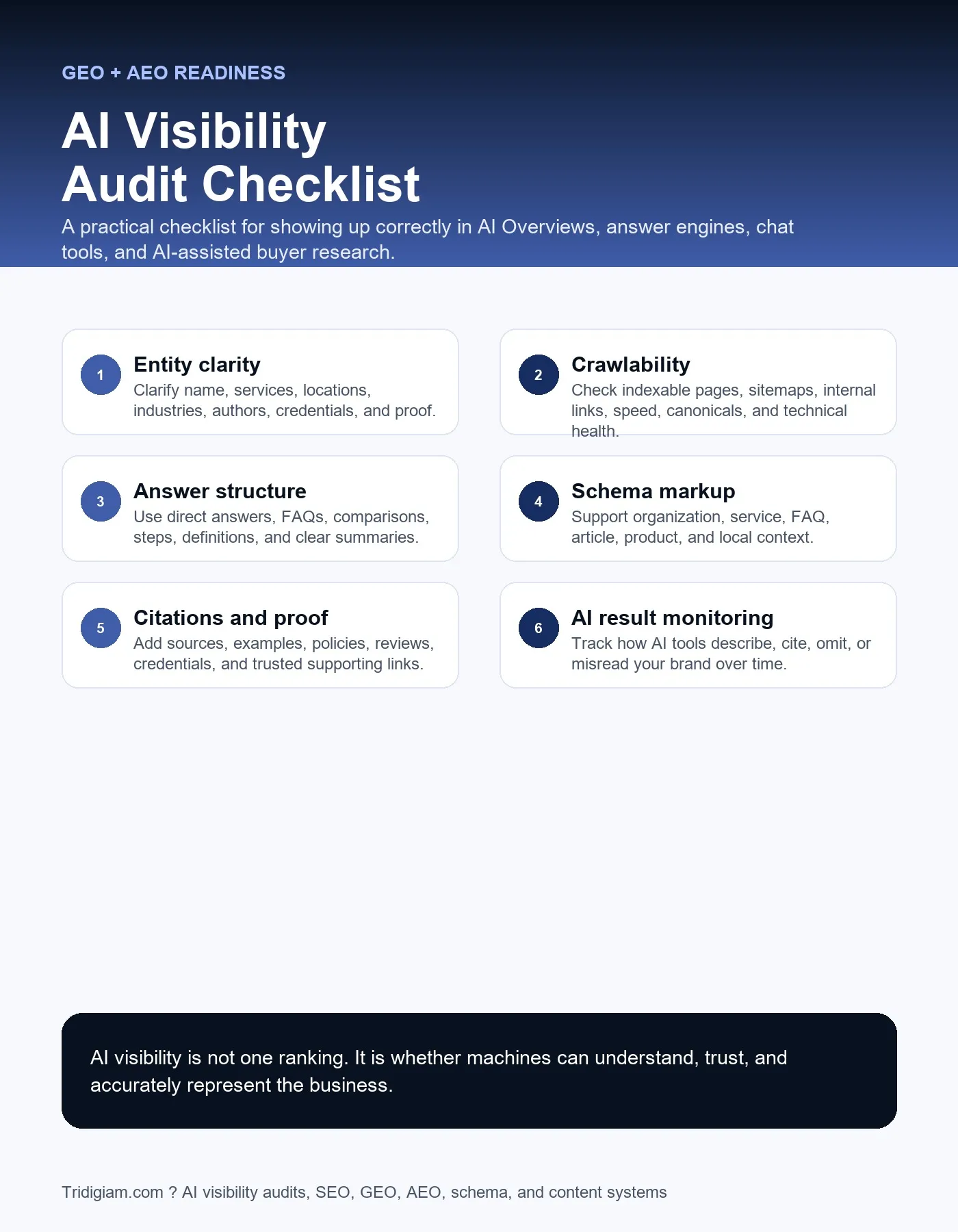
Related book: Want a clearer way to audit AI search visibility? See The AI Visibility Audit by Chris Goodman.

Explore knowledge from Chris Goodman, a marketing expert with extensive agency and small business experience, specializing in innovative advertising strategies. Chris has a Bachelor’s in Marketing from RMIT, years working in advertising agencies servicing clients, and years of experience working with small to medium sized businesses operating within regulated industries.