
Quick answer: AI and voice search optimization means structuring content to answer the natural, conversational questions people ask voice assistants, with clear answers, FAQ formatting, and local accuracy. As more search happens by voice and AI assistants, concise, well-structured answers win the response.
Artificial intelligence (AI) has been used in digital marketing much more frequently in the last few years. By offering cutting-edge tools and methods for data analysis, consumer behavior analysis, & personalized marketing strategies, artificial intelligence (AI) has completely changed the way businesses approach marketing. Marketers can now design more focused and successful campaigns with AI, which will increase conversion rates and improve return on investment. AI has also made it possible for marketers to automate time-consuming jobs like content production, social media management, and email marketing, freeing them up to concentrate on more strategic and creative aspects of their jobs. Also, AI has enabled marketers to collect and evaluate massive amounts of data in real-time, offering insightful knowledge about the preferences and trends of their target audience. This has made it possible for companies to better adapt their marketing strategies to the requirements and demands of their target market.
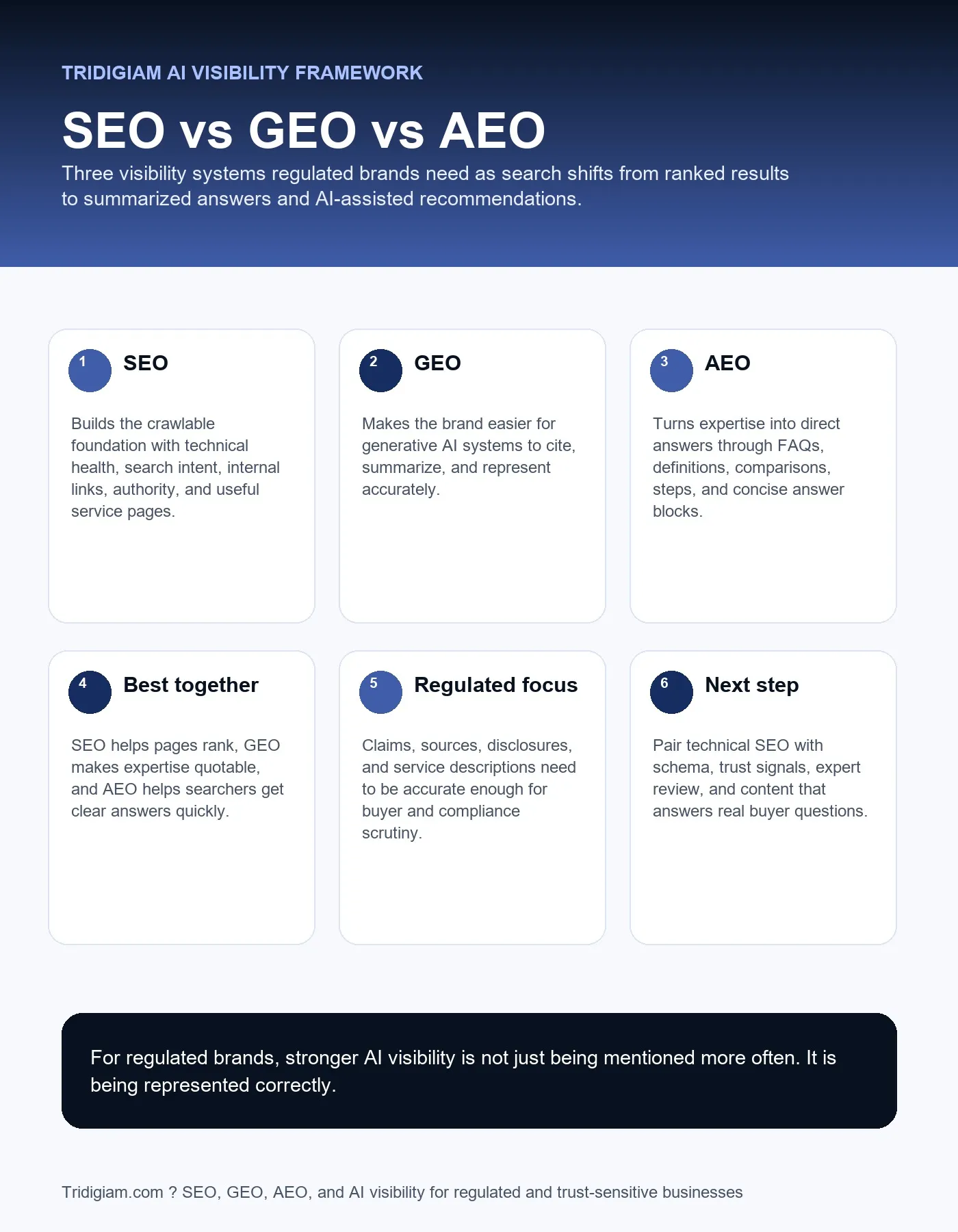
AI and voice search optimization answer map
AI and voice search optimization means making content easy to understand, extract, and speak back as a direct answer. The strongest pages use natural-language headings, concise answers, structured data, local context, entity clarity, and trustworthy supporting details so search engines and AI answer systems can match the page to conversational questions.
- Answer conversational intent: write for how people ask questions aloud, including who, what, where, when, why, how, and “near me” variations.
- Lead with direct answers: place a concise answer immediately after important headings, then expand with details, examples, and next steps.
- Support local discovery: for local businesses, align service pages, location pages, reviews, Google Business Profile details, and local citations.
- Use structured data carefully: schema, headings, lists, and clear internal links help search systems understand entities, services, authorship, and page purpose.
- Build trust: cite sources, show expertise, avoid vague claims, and keep regulated or YMYL answers accurate, qualified, and reviewable.
Useful source anchors include Google’s SEO Starter Guide, Google’s guide to helpful, reliable, people-first content, Google’s introduction to structured data, Google Business Profile Help on improving local ranking, and OpenAI’s overview of ChatGPT search. Tridigiam connects AI and voice search optimization to FLUQs for AI search visibility, AI search trust signals, schema markup, local SEO fundamentals, and SEO vs GEO vs AEO.
Questions to answer before optimizing for AI and voice search
What question would someone ask out loud?
Convert keyword targets into natural questions, then answer them plainly. Voice and AI-search queries often include context, urgency, location, comparison language, and next-step intent.
Can the answer be extracted without losing meaning?
Use a clear heading, direct answer, supporting bullets, source links, and internal links. If a voice assistant or AI answer engine summarizes the page, the answer should remain accurate without needing the entire article.
What trust signal supports the answer?
Add proof through sources, author expertise, local business details, schema, reviews, examples, or compliance boundaries. AI and voice answers are more useful when they are both concise and trustworthy.
Key Takeaways
- AI is revolutionizing digital marketing by providing advanced tools for data analysis, customer targeting, and personalized content creation.
- Voice search optimization is crucial for businesses to adapt to the growing trend of voice search usage among consumers.
- AI can be leveraged to improve voice search optimization by understanding natural language processing and user intent.
- AI has a significant impact on voice search strategy by enabling businesses to provide more accurate and relevant search results to users.
- Implementing AI-driven voice search techniques can enhance user experience and increase the visibility of businesses in voice search results.
- Future trends in AI and voice search optimization include the integration of AI with other emerging technologies such as augmented reality and virtual assistants.
- AI plays a crucial role in shaping voice search in digital marketing by enabling businesses to understand and cater to the evolving search behavior of consumers.
If you’re interested in learning more about AI and Voice Search Optimization, you should check out the article “Crafting an SEO and PPC Strategy for Niche Markets” on Tridigiam’s website. This article discusses the importance of tailoring your SEO and PPC strategies to niche markets and how AI can help in this process. It provides valuable insights into how businesses can leverage AI technology to optimize their online presence and reach their target audience more effectively.
FAQs
What is AI and Voice Search Optimization?
AI and Voice Search Optimization refers to the process of optimizing digital content to be easily discoverable through voice-activated search queries. This involves using artificial intelligence (AI) technology to understand and respond to natural language queries.
Why is AI and Voice Search Optimization important?
With the increasing popularity of voice-activated virtual assistants such as Siri, Alexa, and Google Assistant, optimizing content for voice search is crucial for businesses to remain competitive and ensure their content is easily accessible to users.
How does AI impact Voice Search Optimization?
AI plays a crucial role in Voice Search Optimization by enabling virtual assistants to understand and interpret natural language queries, provide accurate and relevant search results, and continuously improve their understanding of user intent and context.
What are the benefits of AI and Voice Search Optimization?
Some of the benefits of AI and Voice Search Optimization include improved user experience, increased website traffic, higher conversion rates, and the ability to reach a wider audience, especially those who prefer using voice search over traditional text-based search.
What are some best practices for AI and Voice Search Optimization?
Best practices for AI and Voice Search Optimization include creating conversational and natural-sounding content, optimizing for long-tail keywords and question-based queries, providing clear and concise answers, and ensuring that content is structured in a way that is easily accessible to virtual assistants.
Related service: Learn more about Tridigiam’s digital marketing services.
Resources
Need marketing that actually moves the needle?
Tridigiam is a Las Vegas marketing and advertising agency built for regulated and growth-focused businesses. Call (702) 748-7005 or request a consultation.
Want more like this? Browse our free CRO, SEO, and AI search guides.
Frequently asked questions
How is optimizing for voice search different from optimizing for typed search queries?
Voice queries tend to be longer and more conversational, closer to how people actually speak, so content needs direct, clearly structured answers to natural-language questions rather than short keyword phrases typed search traditionally targeted.
Does having an FAQ section actually help with voice search visibility?
Yes, FAQ-formatted content with clear questions and concise answers tends to align well with how voice assistants pull direct answers, since the structure mirrors the question-and-answer format a voice query itself represents.
Why does local accuracy matter more for voice search than typed search?
A large share of voice queries are local in intent, like asking for a nearby business, so accurate, consistent business information across listings and the website carries extra weight in whether a voice assistant surfaces the right answer.

Written and reviewed by Chris Goodman, CEO of Tridigiam
Founder of a Las Vegas marketing agency building AI-visibility and compliance-aware marketing systems for regulated industries — healthcare, addiction treatment, and aesthetics. LinkedIn
Related book: Want a clearer way to audit AI search visibility? See The AI Visibility Audit by Chris Goodman.

Explore knowledge from Chris Goodman, a marketing expert with extensive agency and small business experience, specializing in innovative advertising strategies. Chris has a Bachelor’s in Marketing from RMIT, years working in advertising agencies servicing clients, and years of experience working with small to medium sized businesses operating within regulated industries.